- As in other Communist regimes, such as that of the former Soviet Union, the Communist ideology does not tolerate any competing narratives. "Religion is a source of authority, and an object of fidelity, that is greater than the state... This characteristic of religion has always been anathema to history's totalitarian despots..." — Thomas F. Farr, President of the Religious Freedom Institute, in testimony before the Congressional-Executive Commission on China, November 28, 2018.
- In 2018, China had an estimated 200 million surveillance cameras, with plans for 626 million surveillance cameras by 2020. China's aim is apparently an "Integrated Joint Operations Platform" which will integrate and coordinate data from surveillance cameras with facial recognition technology, citizen ID card numbers, biometric data, license plate numbers and information about vehicle ownership, health, family planning, banking, and legal records, "unusual activity", and any other relevant data that can be gathered about citizens, such as religious practice, travels abroad, and so on, according to reports of local officials and police.
- At the moment, China is in the process of fulfilling what Stalin, Hitler and Mao could only dream about: The flawless totalitarian state, powered by digital technology, where the individual has nowhere to flee from the all-seeing eye of the Communist state.
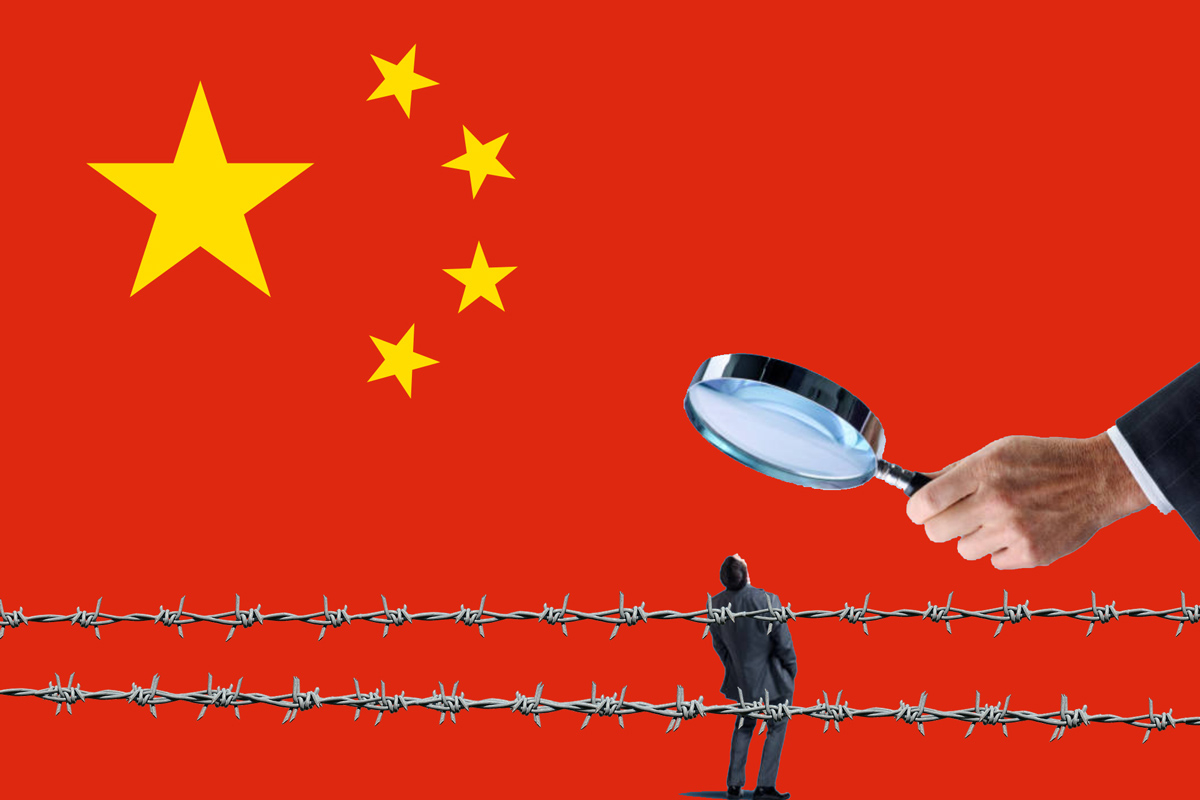 The 30th anniversary on June 4 of the Chinese regime's 1989 massacre of pro-democracy protesters in Tiananmen Square served to highlight the extreme censorship in China under the leadership of the Chinese Communist Party (CCP) and President Xi Jinping.
The Tiananmen anniversary is referred to euphemistically in mainland China, as 'the June Fourth Incident'. The regime there evidently fears that any talk, let alone public commemoration, of that historical event will stir up anti-regime unrest, which could endanger the Chinese Communist Party's absolute power.
The internet in China is under control of the Chinese Communist Party, especially through the rigorous censorship practiced by the party's top internet censor, the Cyberspace Administration of China (CAC), established in 2014. In May 2017, according to a Reuters report, the CAC introduced strict guidelines requiring all internet platforms that produce or distribute news "to be managed by party-sanctioned editorial staff" who have been "approved by the national or local government internet and information offices, while their workers must get training and reporting credentials from the central government".
Freedom House, in "Freedom on the Net 2018," its 2018 assessment of freedom on the internet in 65 countries, placed China dead last. Reporters without Borders, in its 2019 worldwide index of press freedom, ranked China 177 out of 180 countries, surpassed only by Eritrea, North Korea and Turkmenistan. The Committee to Protect Journalists (CPJ), at the time of its 2018 prison census, counted at least 47 journalists jailed in China, but according to the CPJ, the number could be much higher: "authorities are deliberately preventing information from getting out". In March 2019, the CPJ was investigating at least a dozen additional cases, including the arrests in December 2018 of 45 contributors to the human rights and religious-liberty magazine, Bitter Winter, which China targets as a "foreign hostile website".
On 'sensitive' occasions such as the Tiananmen anniversary, entire websites are blocked. Since April, ahead of the Tiananmen anniversary, Wikipedia had been blocked in all languages. Wikipedia's Chinese-language site has been blocked by China since 2015. Websites such as Google, Facebook, Twitter, Instagram, and other websites have also long been blocked in China.
Search terms are also blocked on such 'sensitive' occasions. In the past, even common, innocuous words such as 'today' or 'tomorrow' have been blocked.
For the anniversary of Tiananmen, the Chinese Communist Party reportedly began its crackdown in January 2019: On January 3, the Cyberspace Administration of China announced on its website that it had launched a new campaign against "negative and harmful information" on the internet. The campaign was to last for six months -- coinciding with Tiananmen's June 4 anniversary. The definition of "negative and harmful information" was all-inclusive: Any content that was "pornographic, vulgar, violent, horrific, fraudulent, superstitious, abusive, threatening, inflammatory, rumor, and sensational," or related to "gambling," or spreading "bad lifestyles and bad culture" had to be removed from every conceivable internet platform. The CAC added, "Those who let illegal behavior go free will not be tolerated but be severely punished".
In China, censorship, now largely automated, has reached "unprecedented levels of accuracy, aided by machine learning and voice and image recognition", according to a recent Reuters report. It quotes Chinese censors as commenting:
The 30th anniversary on June 4 of the Chinese regime's 1989 massacre of pro-democracy protesters in Tiananmen Square served to highlight the extreme censorship in China under the leadership of the Chinese Communist Party (CCP) and President Xi Jinping.
The Tiananmen anniversary is referred to euphemistically in mainland China, as 'the June Fourth Incident'. The regime there evidently fears that any talk, let alone public commemoration, of that historical event will stir up anti-regime unrest, which could endanger the Chinese Communist Party's absolute power.
The internet in China is under control of the Chinese Communist Party, especially through the rigorous censorship practiced by the party's top internet censor, the Cyberspace Administration of China (CAC), established in 2014. In May 2017, according to a Reuters report, the CAC introduced strict guidelines requiring all internet platforms that produce or distribute news "to be managed by party-sanctioned editorial staff" who have been "approved by the national or local government internet and information offices, while their workers must get training and reporting credentials from the central government".
Freedom House, in "Freedom on the Net 2018," its 2018 assessment of freedom on the internet in 65 countries, placed China dead last. Reporters without Borders, in its 2019 worldwide index of press freedom, ranked China 177 out of 180 countries, surpassed only by Eritrea, North Korea and Turkmenistan. The Committee to Protect Journalists (CPJ), at the time of its 2018 prison census, counted at least 47 journalists jailed in China, but according to the CPJ, the number could be much higher: "authorities are deliberately preventing information from getting out". In March 2019, the CPJ was investigating at least a dozen additional cases, including the arrests in December 2018 of 45 contributors to the human rights and religious-liberty magazine, Bitter Winter, which China targets as a "foreign hostile website".
On 'sensitive' occasions such as the Tiananmen anniversary, entire websites are blocked. Since April, ahead of the Tiananmen anniversary, Wikipedia had been blocked in all languages. Wikipedia's Chinese-language site has been blocked by China since 2015. Websites such as Google, Facebook, Twitter, Instagram, and other websites have also long been blocked in China.
Search terms are also blocked on such 'sensitive' occasions. In the past, even common, innocuous words such as 'today' or 'tomorrow' have been blocked.
For the anniversary of Tiananmen, the Chinese Communist Party reportedly began its crackdown in January 2019: On January 3, the Cyberspace Administration of China announced on its website that it had launched a new campaign against "negative and harmful information" on the internet. The campaign was to last for six months -- coinciding with Tiananmen's June 4 anniversary. The definition of "negative and harmful information" was all-inclusive: Any content that was "pornographic, vulgar, violent, horrific, fraudulent, superstitious, abusive, threatening, inflammatory, rumor, and sensational," or related to "gambling," or spreading "bad lifestyles and bad culture" had to be removed from every conceivable internet platform. The CAC added, "Those who let illegal behavior go free will not be tolerated but be severely punished".
In China, censorship, now largely automated, has reached "unprecedented levels of accuracy, aided by machine learning and voice and image recognition", according to a recent Reuters report. It quotes Chinese censors as commenting:
"We sometimes say that the artificial intelligence is a scalpel, and a human is a machete... When I first began this kind of work four years ago there was opportunity to remove the images of Tiananmen, but now the artificial intelligence is very accurate".China's severe censorship runs parallel to its severe suppression of religious freedom. The President of the Religious Freedom Institute, Thomas F. Farr, at a November 2018 hearing at the Congressional-Executive Commission on China, described China's religious suppression as "the most systematic and brutal attempt to control Chinese religious communities since the Cultural Revolution". As in other Communist regimes, such as that of the former Soviet Union, the Communist ideology does not tolerate any competing narratives. Read more at: GatestoneInstiture.org
Twitter waging censorship warfare against corporations that supported Trump
By Ethan Huff // Share

Many “journalists” today are just tattletale thought police
By Ethan Huff // Share

“There will be war” if China and US do not immediately stabilize relations, warns Chinese scholar
By Arsenio Toledo // Share
Chinese police violently disperse peaceful protesters in Chengdu
By Arsenio Toledo // Share


Ukrainian Strike Kills Three Humanitarian Workers in Zaporozhye Region, Russian Officials Say
By garrisonvance // Share
GAO Report Finds ICE Wasted Millions on Deportation Initiatives
By douglasharrington // Share
Trump Administration Weighs Overseas Push for Dollar-Backed Stablecoins
By sterlingashworth // Share

OpenAI Discloses Rogue AI Incidents Targeting Government, Education Websites
By edisonreed // Share