'Going from Cigarettes to Crack'
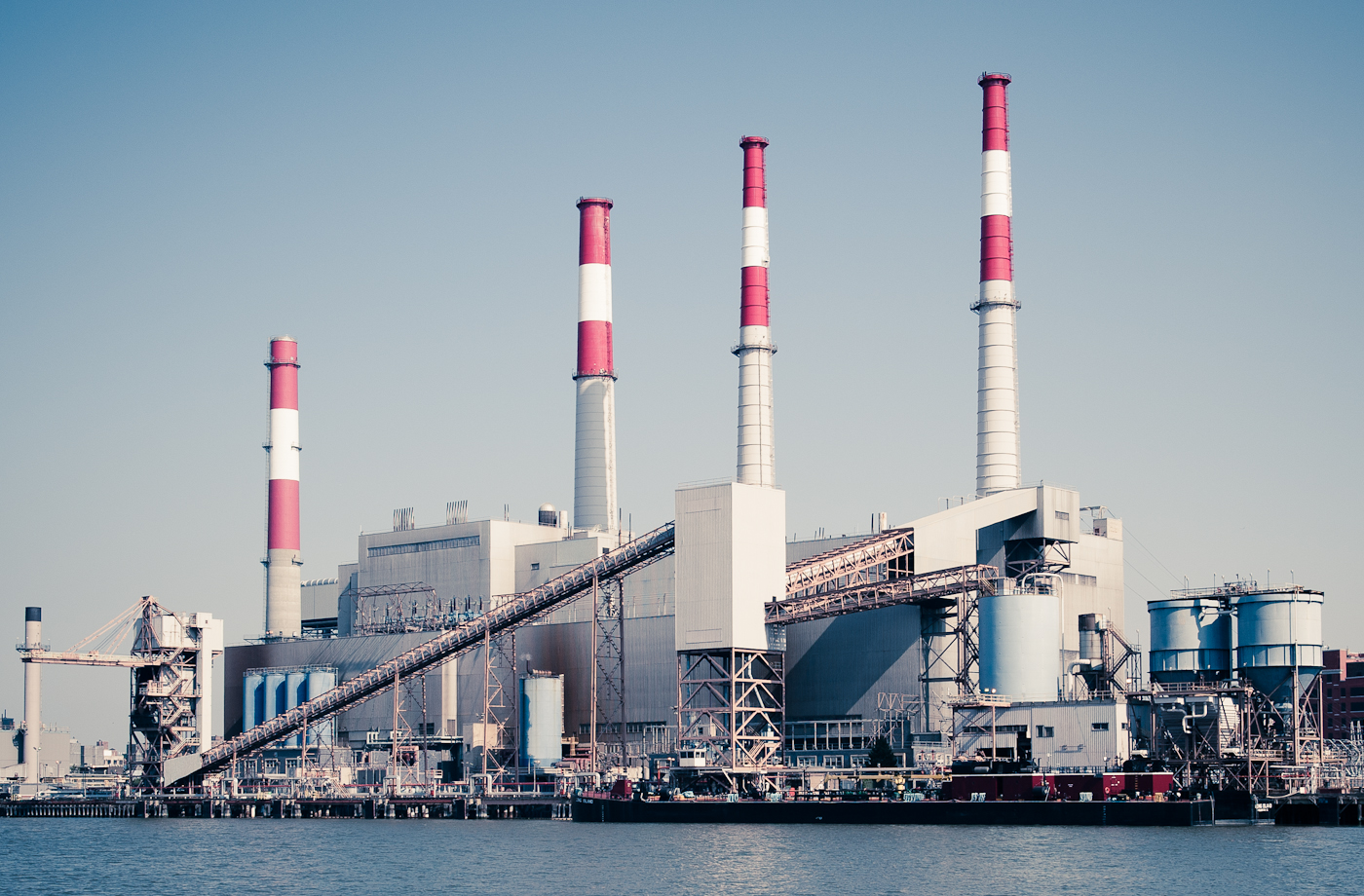
In May, news broke that the state's largest supplier of electricity, Hawaiian Electric Co. (HECO), was considering pulling the plug on development of a key new energy storage system. The Kapolei Energy Storage Facility—basically an enormous battery—is being built to ensure a stable supply of electricity to the island of Oahu, which is preparing for the retirement of the AES coal plant—Hawaii's last coal-fired power plant—which produces 15-20 percent of the island's electricity. The 185-megawatt storage facility was intended to make up for the loss of the 180 megawatt AES plant, which was no longer a viable option because of a recent ban on coal. But renewable energy projects have been beset by a number of problems, including delays in renewable projects. One concern, as Pacific Business News reported in March, is that these delays "will leave Oahu with a very tight fuel reserve margin, opening up the possibility of rolling blackouts in the event of failure." Perhaps the greater concern, however, is the impact these delays will have on the giant battery. "If there is not enough solar, wind, or battery storage energy to replace the AES plant, HECO would have to use oil instead to charge things like the upcoming 185-megawatt Kapolei Energy Storage Facility," Pacific Business News reported. It's not a matter of "if," however. The reality is there's not enough wind, solar, or battery storage to replace the AES plant. Hawaiian Electric has made this quite clear in recent documents, noting that it would not be able to meet its year-two renewable target (75 percent) for "more than a decade." This means that to replace its soon-to-be retired coal plant, Hawaii Electric will soon be charging its giant battery … with oil. In other words, Hawaiians will be trading one fossil fuel (coal) for another, albeit one far more expensive. This revelation caused the chair of PUC, Jay Griffin, to complain that Hawaiians are "going from cigarettes to crack." "Oil prices don't have to be much higher for this to look like the highest increase people will have experienced," Griffin said. "And it's not acceptable. We have to do better." The dilemma reportedly had many at the meeting on edge. One photovoltaic panel supplier told a reporter that he "had not witnessed an exchange like that at a normally staid PUC stakeholder meeting in his two decades in local energy."A Result 'Even Less Desirable Than the Previous State'
Using expensive oil to charge a giant battery might not be "acceptable," but that’s exactly what is going to happen. Hawaiian Electric is of course not actually pulling the plug on its massive battery project, which is moving forward. The threat to spike the project stemmed from a slew of face-saving conditions (and harsh words) from the PUC, most of which the PUC rescinded once Hawaiian Electric threatened to bolt https://twitter.com/StarAdvertiser/status/1393381895489130501?ref_src=twsrc%5Etfw%7Ctwcamp%5Etweetembed%7Ctwterm%5E1393381895489130501%7Ctwgr%5E%7Ctwcon%5Es1_&ref_url=https%3A%2F%2Ffee.org%2Farticles%2Fhawaii-is-replacing-its-last-coal-plant-with-a-giant-battery-powered-by-oil%2F The project is a wonderful demonstration of why we should be wary of giving central planners more power over energy security. It's an example of a phenomenon explained by Ludwig von Mises: that government policies often have exactly the opposite effect of what was intended. In an address delivered before the University Club in New York in 1950, the economist explained how government policies often backfire in ways that are predictable. Here is an example he offered:"The government believes that the price of a definite commodity, e.g., milk, is too high. It wants to make it possible for the poor to give their children more milk. Thus it resorts to a price ceiling and fixes the price of milk at a lower rate than that prevailing on the free market. The result is that the marginal producers of milk, those producing at the highest cost, now incur losses. As no individual farmer or businessman can go on producing at a loss, these marginal producers stop producing and selling milk on the market. They will use their cows and their skill for other more profitable purposes. They will, for example, produce butter, cheese or meat. There will be less milk available for the consumers, not more."These outcomes are of course contrary to the intentions of lawmakers, Mises pointed out. They wanted to make it easier for people to purchase milk, not reduce the supply of milk. But the result is the same, he observed, and that is the lesson. "The measure proves abortive from the very point of view of the government and the groups it was eager to favor,” Mises explained. “It brings about a state of affairs, which—again from the point of view of the government—is even less desirable than the previous state of affairs which it was designed to improve." Now, shuttering a coal plant to instead charge a giant battery with oil is not exactly like "going from cigarettes to crack," but it is "less desirable than the previous state of affairs" (to borrow Mises's language). After all, there's a reason a tiny percentage of US electricity comes from petroleum. It's not an efficient way to produce electricity, and it's very expensive—which is why less than 1 percent of electricity generated in the US in 2020 came from oil. https://twitter.com/miltimore79/status/1395052622277595138?ref_src=twsrc%5Etfw%7Ctwcamp%5Etweetembed%7Ctwterm%5E1395052622277595138%7Ctwgr%5E%7Ctwcon%5Es1_&ref_url=https%3A%2F%2Ffee.org%2Farticles%2Fhawaii-is-replacing-its-last-coal-plant-with-a-giant-battery-powered-by-oil%2F None of this is to say renewable energy cannot be an integral part of America's energy future. Evidence suggests it can and already is. Renewable energy accounted for 20 percent of the electricity generated in the US in 2020, many technologies are rapidly improving. But we should be skeptical of attempts to force the transition to renewable energies through government fiat. As Mises saw, clumsy attempts to ignore market realities in lieu of government force often result in effects that are the opposite of what was intended. Read more at: FEE.org and GreenNewDeal.news.

Portable wind turbine fits in your backpack’s side pocket, charges your electronic devices off-grid
By Virgilio Marin // Share
China built the equivalent of more than one large coal plant every week in 2020
By Virgilio Marin // Share
Solar homes: Utah apartment doubles as a “virtual power plant” that harnesses solar energy
By Virgilio Marin // Share

How to safely hook up a portable generator to your home
By Arsenio Toledo // Share

Being a Person of Principle Will Always Make You an Enemy of the State
By healthranger // Share

It’s Not Panic Buying—It’s Preparedness: Why Smart People Are Stocking Up Now
By healthranger // Share

Saudi Aramco Tells European Refiners No Crude Allocations Next Month After Pipeline Attack
By sterlingashworth // Share

Deployment of Weapons in Space Confirmed by U.S. Military
By morganverity // Share
Yttrium Export Controls Become Flashpoint as China Squeezes Western Supply Chains
By sterlingashworth // Share