 SOURCE
—
The prestigious journal Science published the paper, which is based on analysis of antibodies and B- and T-cells in a group of British healthcare workers whom the researchers have followed since March 2020.
The researchers were focused primarily on Omicron’s potential to cause reinfections in vaccinated people who had already been infected with earlier variants of Covid. But they also examined its potential to cause first-time infections in previously uninfected but vaccinated people. Those are the findings that are most interesting for anyone interested in vaccine failure.
Unfortunately but unsurprisingly, the scientists did not look at the immune responses of anyone who was not vaccinated - with or without previous infection. Thus the paper offers no direct comparison of the way Omicron may affect antibody and B- and T-cell responses in vaccinated and unvaccinated people.
Why didn’t the researchers include unvaccinated people? Maybe because nearly all British adults are vaccinated and most boosted, so the authors wanted to concentrate on the risks Omicron poses to vaccinated people.
Or maybe because they worried about what they’d find if they directly compared the two groups.
—
Nonetheless, the paper shows clearly that vaccinations and booster doses offer at most a few weeks of protection against Omicron.
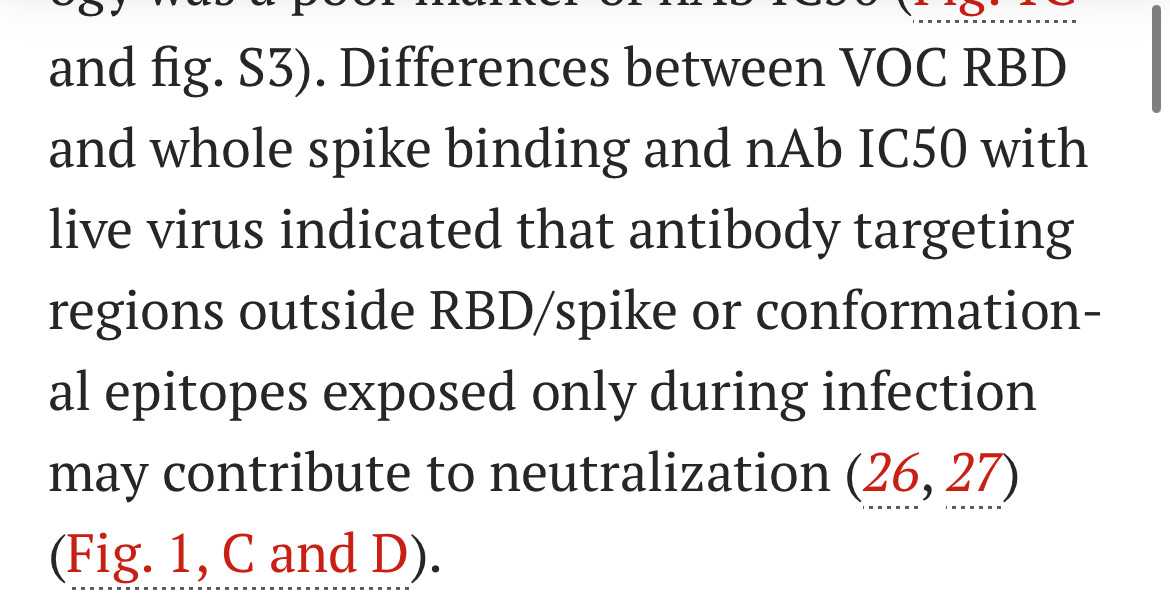
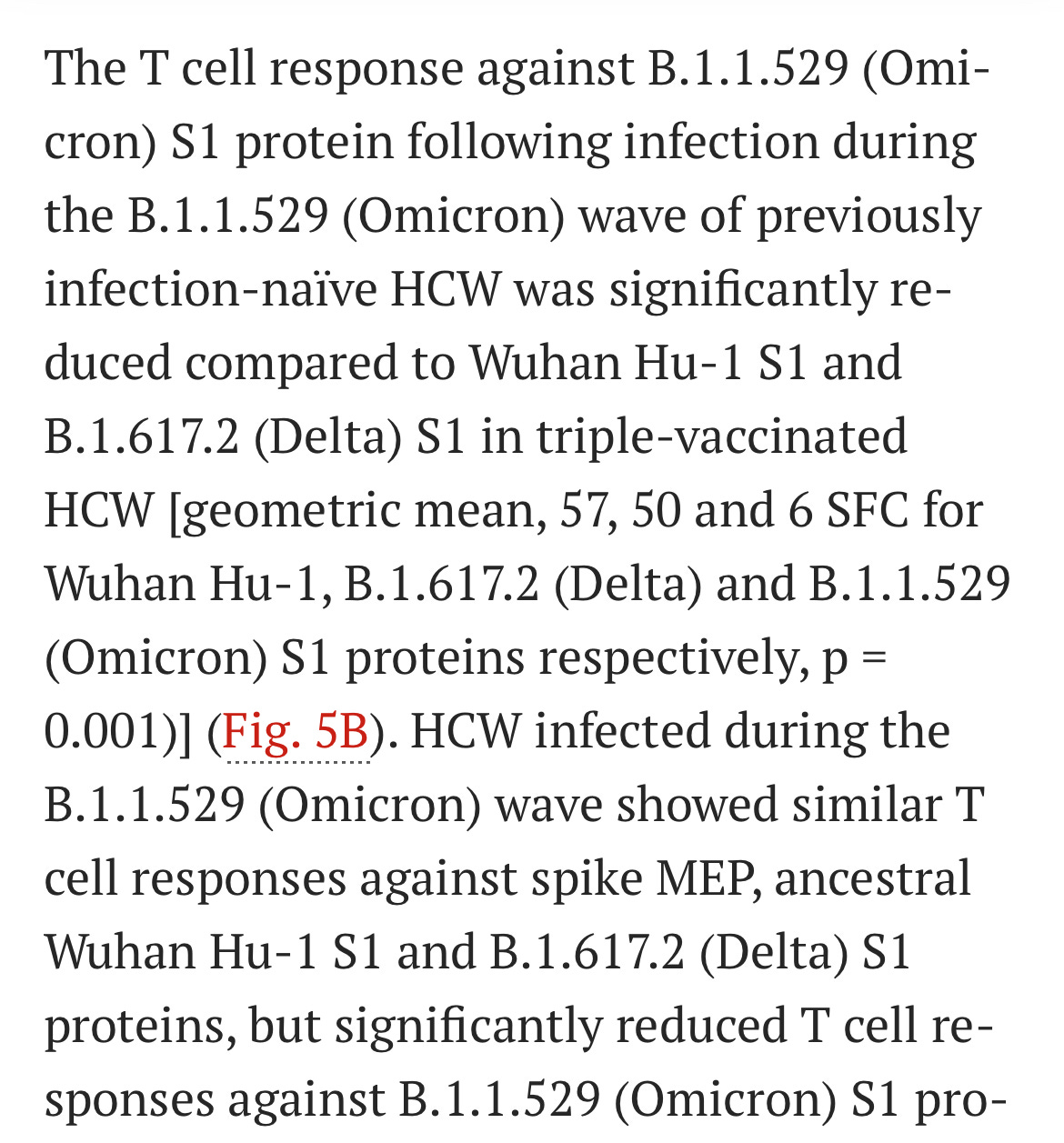
None of the “triple-vaccinated, infection naive” people the researchers studied had antibodies able to neutralize Omicron within 14 weeks after the third dose. And the researchers found a T-cell response to Omicron in only 1 of 10 people who had been triply vaccinated but not previously infected.
In addition, the researchers found that a group of previously uninfected but vaccinated people who then became infected with Omicron had a much stronger T-cell response to earlier variants.
SOURCE
—
The prestigious journal Science published the paper, which is based on analysis of antibodies and B- and T-cells in a group of British healthcare workers whom the researchers have followed since March 2020.
The researchers were focused primarily on Omicron’s potential to cause reinfections in vaccinated people who had already been infected with earlier variants of Covid. But they also examined its potential to cause first-time infections in previously uninfected but vaccinated people. Those are the findings that are most interesting for anyone interested in vaccine failure.
Unfortunately but unsurprisingly, the scientists did not look at the immune responses of anyone who was not vaccinated - with or without previous infection. Thus the paper offers no direct comparison of the way Omicron may affect antibody and B- and T-cell responses in vaccinated and unvaccinated people.
Why didn’t the researchers include unvaccinated people? Maybe because nearly all British adults are vaccinated and most boosted, so the authors wanted to concentrate on the risks Omicron poses to vaccinated people.
Or maybe because they worried about what they’d find if they directly compared the two groups.
—
Nonetheless, the paper shows clearly that vaccinations and booster doses offer at most a few weeks of protection against Omicron.
None of the “triple-vaccinated, infection naive” people the researchers studied had antibodies able to neutralize Omicron within 14 weeks after the third dose. And the researchers found a T-cell response to Omicron in only 1 of 10 people who had been triply vaccinated but not previously infected.
In addition, the researchers found that a group of previously uninfected but vaccinated people who then became infected with Omicron had a much stronger T-cell response to earlier variants.
 —
As is typical with papers that present findings this damning, the researchers did not explicitly draw the most worrisome conclusions their data suggests.
But they did openly suggest the fact that the immune response in vaccinated people is biased toward earlier coronavirus variants rather than Omicron even in people who weren’t infected with those earlier variants could help explain “frequent B.1.1.529 (Omicron) reinfections with short time intervals between infections are proving a novel feature in this wave.”
Less clear is what, if anything, anyone can do about this imprinting. The authors noted that efforts by vaccine makers to produce newer mRNA shots that cause the body to produce the Omicron spike have largely failed to overcome the problem, probably for the same reason - the initial imprinting is too strong.
In the meantime, though, Omicron remains relatively mild. As long as it does not mutate to become more dangerous, vaccine advocates can continue to pretend that the billion-person clinical trial of 2021 is not ending catastrophically.
Read more at: AlexBerenson.Substack.com
—
As is typical with papers that present findings this damning, the researchers did not explicitly draw the most worrisome conclusions their data suggests.
But they did openly suggest the fact that the immune response in vaccinated people is biased toward earlier coronavirus variants rather than Omicron even in people who weren’t infected with those earlier variants could help explain “frequent B.1.1.529 (Omicron) reinfections with short time intervals between infections are proving a novel feature in this wave.”
Less clear is what, if anything, anyone can do about this imprinting. The authors noted that efforts by vaccine makers to produce newer mRNA shots that cause the body to produce the Omicron spike have largely failed to overcome the problem, probably for the same reason - the initial imprinting is too strong.
In the meantime, though, Omicron remains relatively mild. As long as it does not mutate to become more dangerous, vaccine advocates can continue to pretend that the billion-person clinical trial of 2021 is not ending catastrophically.
Read more at: AlexBerenson.Substack.com

“Call to arms” – The Spike Wars
By News Editors // Share
Breast milk of “fully vaccinated” women contains mRNA poisons, JAMA study reveals
By Ethan Huff // Share

Swedish study: Pfizer COVID-19 vaccine alters DNA within 6 HOURS
By Belle Carter // Share
Doctor reveals COVID-19 vaccines lead to more deaths in both children and adults
By Mary Villareal // Share

Kremlin Aide Says U.S. Showing "Constructive, Amicable" Attitude in Work Contacts With Russia
By garrisonvance // Share

AI Leaders Call for Slower Development as Frontier Models Grow More Powerful
By chasecodewell // Share
Eyes may hold a physiological clue to ADHD, new study suggests
By isabelle // Share


Trump calls AI doomsday warnings a “hoax” pushed by radical Democrats and China
By isabelle // Share

CENTCOM Claims Iranian Missile and Drone Crippled Oil Tanker, Not Mines
By garrisonvance // Share