US hypersonic test fails, ringing China, Russia alarm bells
By newseditors // 2022-07-06
Tweet
Share
Copy
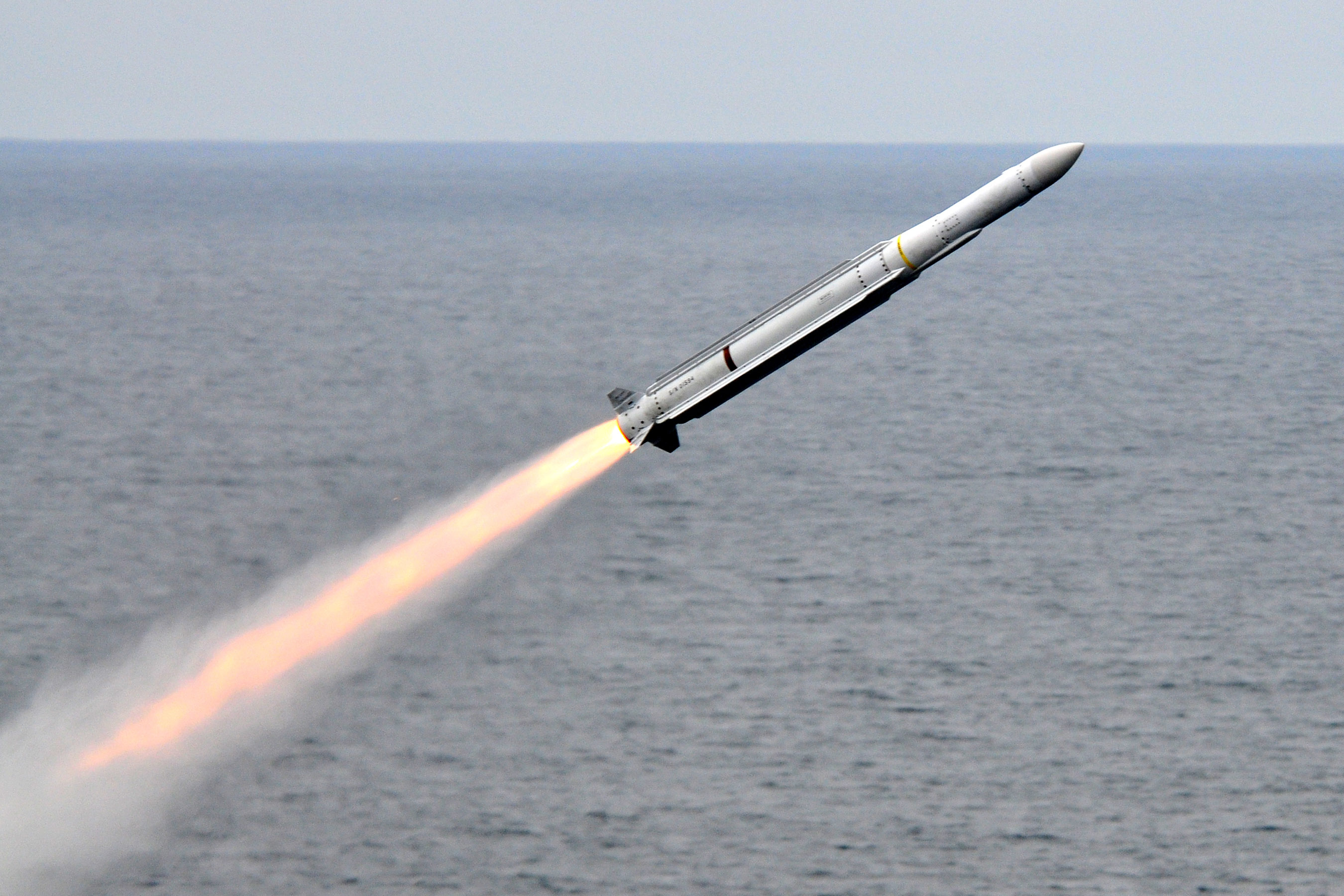
In the latest blow to the US’ faltering hypersonic weapons program, a June 29 flight test failed due to issues in the glide body’s ignition system, according to news reports.
(Article by Gabriel Honrada republished from AsiaTimes.com)
The Defense Post reports that the Common Hypersonic Glide Body test was conducted at the Pacific Missile Range in Hawaii, in which the weapon was supposed to launch with a large rocket booster.
The US government describes the Common Hypersonic Glide Body as using a rocket booster to accelerate beyond Mach 5 speed before jettisoning the spent booster.
The weapon is highly maneuverable, making it difficult to intercept, and destroys targets by the impact force of its sheer velocity. Reports indicate the US intends to deploy the weapon on its Zumwalt-class destroyers and Virginia-class submarines.
However, in an email quoted in Bloomberg, US Department of Defense (DoD) spokesperson Tim Gorman stated that “an anomaly occurred following ignition of the test asset.”
He also mentioned that DoD program officials had initiated a review of the failure’s causes to inform future hypersonic weapons tests.
Gorman stressed that “the department remains confident that it is on track to field offensive and defensive hypersonic capabilities on target dates beginning in the early 2020s.”
The failure marks the second reported unsuccessful test flight of the Conventional Prompt Strike prototype hypersonic weapon. The previous booster failure last October prevented the missile from leaving the launch pad.
The highly complex design of US-made hypersonics may be the cause of the test failures, some analysts suggest.
Russian defense analyst Alexey Ramm stated in Izvestia that the two-stage design of the US Conventional Prompt Strike hypersonic weapon suggests an unnecessarily complicated design requiring proper integration of multiple subsystems and thus numerous tests.
In contrast, the Russian Zircon hypersonic missile does not require a second stage to function successfully.
[caption id="" align="alignnone" width="599"]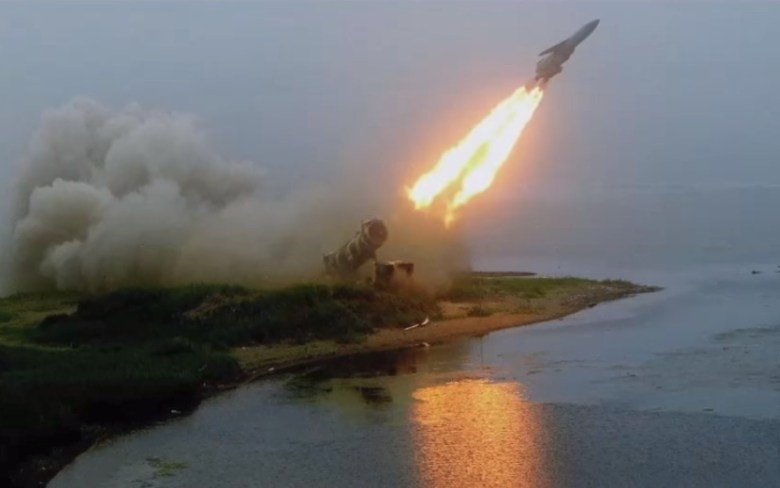 Russia’s 3M22 Zircon anti-ship hypersonic missile. Screen grab: Military Technology Zone / YouTube[/caption]
Other potential causes of design failure include rushed testing, poor project management and trivializing costly failures. Defense One quoted the first report of the Welch Panel, which was established to look into the test failures of US ballistic missile defense systems:
“These programs are pursuing very aggressive schedules, but these schedules are not supported by the state of planning and testing…the perceived urgency of the need for these systems has led to high levels of risk that have resulted in delayed deployments.”
“Failures were caused by poor design, test planning, and preflight testing deficiencies; poor fabrication; poor management; and lack of rigorous government oversight…The tendency of the government and program managers to trivialize the causes of these costly failures, combined with the aggressive schedule… has led to a ‘rush to failure.’”
The successive test failures have led to concerns that the US is failing to keep up with China and Russia’s hypersonic weapons programs, prompting a top-level push from the US leadership.
This March, Arms Control Association reported that US Defense Secretary Lloyd Austin met with more than a dozen hypersonics executives from defense companies such as Raytheon Technologies, Lockheed Martin, Northrop Grumman, Boeing, L3Harris and BAE Systems in February to hasten and improve the development of hypersonic weapons.
The Arms Control Association, a US nonpartisan membership organization, states that the meeting was convened due to Secretary Austin’s belief that 2023 budget proposals were insufficient for the US to keep pace with China and Russia.
The urgency to accelerate the development of hypersonic weapons comes despite unanswered questions about the overall cost, mission and required quantity of US hypersonics, leading to a “test often, fail fast, and learn” approach, the Arms Control Association stated.
In contrast to successive US failures, China and Russia have steadily advanced their respective hypersonic weapons programs.
[caption id="" align="alignnone" width="600"]
Russia’s 3M22 Zircon anti-ship hypersonic missile. Screen grab: Military Technology Zone / YouTube[/caption]
Other potential causes of design failure include rushed testing, poor project management and trivializing costly failures. Defense One quoted the first report of the Welch Panel, which was established to look into the test failures of US ballistic missile defense systems:
“These programs are pursuing very aggressive schedules, but these schedules are not supported by the state of planning and testing…the perceived urgency of the need for these systems has led to high levels of risk that have resulted in delayed deployments.”
“Failures were caused by poor design, test planning, and preflight testing deficiencies; poor fabrication; poor management; and lack of rigorous government oversight…The tendency of the government and program managers to trivialize the causes of these costly failures, combined with the aggressive schedule… has led to a ‘rush to failure.’”
The successive test failures have led to concerns that the US is failing to keep up with China and Russia’s hypersonic weapons programs, prompting a top-level push from the US leadership.
This March, Arms Control Association reported that US Defense Secretary Lloyd Austin met with more than a dozen hypersonics executives from defense companies such as Raytheon Technologies, Lockheed Martin, Northrop Grumman, Boeing, L3Harris and BAE Systems in February to hasten and improve the development of hypersonic weapons.
The Arms Control Association, a US nonpartisan membership organization, states that the meeting was convened due to Secretary Austin’s belief that 2023 budget proposals were insufficient for the US to keep pace with China and Russia.
The urgency to accelerate the development of hypersonic weapons comes despite unanswered questions about the overall cost, mission and required quantity of US hypersonics, leading to a “test often, fail fast, and learn” approach, the Arms Control Association stated.
In contrast to successive US failures, China and Russia have steadily advanced their respective hypersonic weapons programs.
[caption id="" align="alignnone" width="600"] China’s DF-17 hypersonic missile on public parade display. Image: Twitter[/caption]
In October, Reuters reported that China tested a hypersonic weapon that appeared to be an Earth-orbiting system designed specifically to evade US missile defenses. The orbital bombardment weapon is like a space shuttle carrying a nuclear weapon in its cargo bay, defense analyst Jeffrey Lewis said in the Reuters report.
Russia, meanwhile, may have become the first country to use hypersonic weapons during military action.
The Drive reported in March that Russia had used its Kinzhal air-launched hypersonic weapon in Ukraine, showing a video by the Russian Ministry of Defense that shows the missile hitting a Ukrainian missile warehouse.
The Kinzhal, however, may not be in the same category as US and Chinese hypersonic weapons, as it is a variant of the Iskander-M tactical ballistic missile modified for air launch.
Read more at: AsiaTimes.com
China’s DF-17 hypersonic missile on public parade display. Image: Twitter[/caption]
In October, Reuters reported that China tested a hypersonic weapon that appeared to be an Earth-orbiting system designed specifically to evade US missile defenses. The orbital bombardment weapon is like a space shuttle carrying a nuclear weapon in its cargo bay, defense analyst Jeffrey Lewis said in the Reuters report.
Russia, meanwhile, may have become the first country to use hypersonic weapons during military action.
The Drive reported in March that Russia had used its Kinzhal air-launched hypersonic weapon in Ukraine, showing a video by the Russian Ministry of Defense that shows the missile hitting a Ukrainian missile warehouse.
The Kinzhal, however, may not be in the same category as US and Chinese hypersonic weapons, as it is a variant of the Iskander-M tactical ballistic missile modified for air launch.
Read more at: AsiaTimes.com
Russia’s 3M22 Zircon anti-ship hypersonic missile. Screen grab: Military Technology Zone / YouTube[/caption]
Other potential causes of design failure include rushed testing, poor project management and trivializing costly failures. Defense One quoted the first report of the Welch Panel, which was established to look into the test failures of US ballistic missile defense systems:
“These programs are pursuing very aggressive schedules, but these schedules are not supported by the state of planning and testing…the perceived urgency of the need for these systems has led to high levels of risk that have resulted in delayed deployments.”
“Failures were caused by poor design, test planning, and preflight testing deficiencies; poor fabrication; poor management; and lack of rigorous government oversight…The tendency of the government and program managers to trivialize the causes of these costly failures, combined with the aggressive schedule… has led to a ‘rush to failure.’”
The successive test failures have led to concerns that the US is failing to keep up with China and Russia’s hypersonic weapons programs, prompting a top-level push from the US leadership.
This March, Arms Control Association reported that US Defense Secretary Lloyd Austin met with more than a dozen hypersonics executives from defense companies such as Raytheon Technologies, Lockheed Martin, Northrop Grumman, Boeing, L3Harris and BAE Systems in February to hasten and improve the development of hypersonic weapons.
The Arms Control Association, a US nonpartisan membership organization, states that the meeting was convened due to Secretary Austin’s belief that 2023 budget proposals were insufficient for the US to keep pace with China and Russia.
The urgency to accelerate the development of hypersonic weapons comes despite unanswered questions about the overall cost, mission and required quantity of US hypersonics, leading to a “test often, fail fast, and learn” approach, the Arms Control Association stated.
In contrast to successive US failures, China and Russia have steadily advanced their respective hypersonic weapons programs.
[caption id="" align="alignnone" width="600"] China’s DF-17 hypersonic missile on public parade display. Image: Twitter[/caption]
In October, Reuters reported that China tested a hypersonic weapon that appeared to be an Earth-orbiting system designed specifically to evade US missile defenses. The orbital bombardment weapon is like a space shuttle carrying a nuclear weapon in its cargo bay, defense analyst Jeffrey Lewis said in the Reuters report.
Russia, meanwhile, may have become the first country to use hypersonic weapons during military action.
The Drive reported in March that Russia had used its Kinzhal air-launched hypersonic weapon in Ukraine, showing a video by the Russian Ministry of Defense that shows the missile hitting a Ukrainian missile warehouse.
The Kinzhal, however, may not be in the same category as US and Chinese hypersonic weapons, as it is a variant of the Iskander-M tactical ballistic missile modified for air launch.
Read more at: AsiaTimes.com
Tweet
Share
Copy
Tagged Under:
collapse Russia World War III China national security Department of Defense big government hypersonic weapons failure panic chaos military tech weapons technology
You Might Also Like

NYC Mayor declares ’emergency’ over migrants, 12 months after campaigning for more migrants
By News Editors // Share

US condemns Russia for conducting US-style ‘shock and awe’ bombing of Ukraine
By News Editors // Share




Recent News

By chasecodewell // Share


California Enacts 13 Bills Restricting Teens' Social Media and Chatbot Use
By edisonreed // Share


Safflower Research Examines Heart, Blood Sugar Effects
By cocosomers // Share

Exposing the AI Doom Psyop: Why METR and Anthropic Want to Gatekeep Your Mind
By healthranger // Share