 About that.
The CDC has now quietly removed its promise that your body “breaks down and gets rid of the mRNA soon after it is finished” with initially making spike protein.
(Original CDC language on the Wayback Machine here; current CDC position, as of July 15, here)
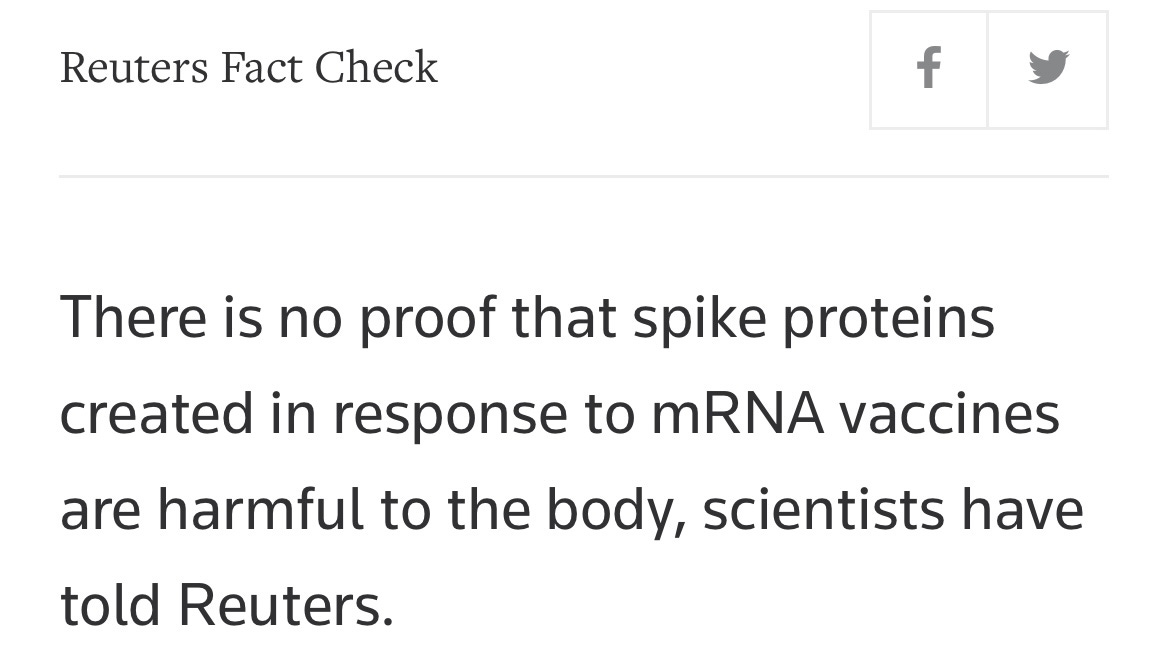
Meanwhile, scientists keep piling up evidence that the spike protein remains in the body for months, at least, and is far from benign.
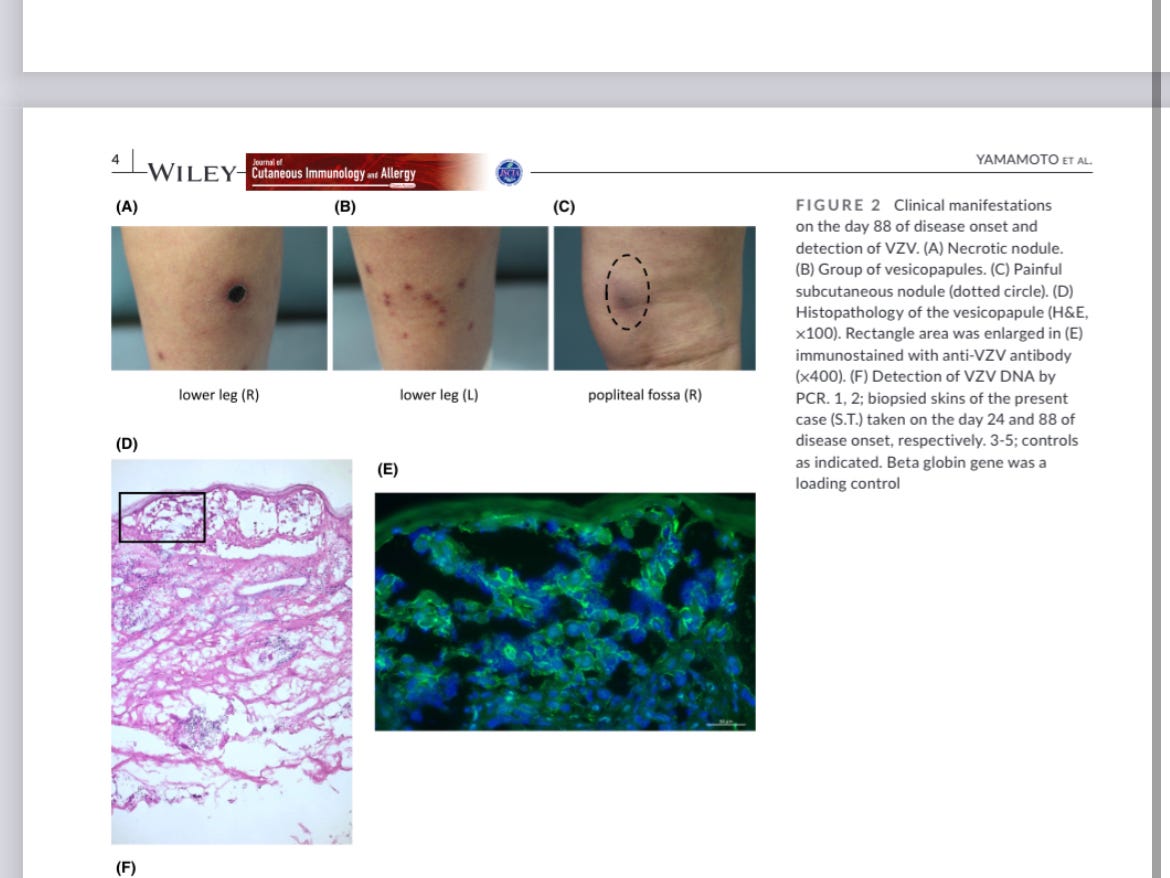
The most recent finding comes from Japanese physicians reporting on a 64-year-old who developed persistent and painful skin lesions days after receiving the Pfizer/BioNTech mRNA vaccine.
The doctors found the patient had varicella-zoster virus, which causes chickenpox. They treated him with 1 gram daily of valacyclovir, commonly used against herpes viruses, but found it only marginally effective. Raising the dosage to 3 grams a day ultimately defeated the lesions.
The physicians then decided that they should examine the lesions for evidence of spike protein, because the patient had become sick so soon after being vaccinated.
In taking this step, they deviated wildly from standard American medical procedure, which is to deny that mRNA shots can possibly cause any side effect.
And when the Japanese physicians looked for spike protein in the lesions… they found it:
Immunostaining with anti-coronavirus spike protein (SP) antibody revealed the SP expression in the intravesicular cells in the epidermis and endothelial cells of the inflamed vessels in the dermis… In addition, the SP was also found in the endothelial cells of venules in the subcutaneous fat tissue underlying the herpetic vasculitis lesion.
About that.
The CDC has now quietly removed its promise that your body “breaks down and gets rid of the mRNA soon after it is finished” with initially making spike protein.
(Original CDC language on the Wayback Machine here; current CDC position, as of July 15, here)
Meanwhile, scientists keep piling up evidence that the spike protein remains in the body for months, at least, and is far from benign.
The most recent finding comes from Japanese physicians reporting on a 64-year-old who developed persistent and painful skin lesions days after receiving the Pfizer/BioNTech mRNA vaccine.
The doctors found the patient had varicella-zoster virus, which causes chickenpox. They treated him with 1 gram daily of valacyclovir, commonly used against herpes viruses, but found it only marginally effective. Raising the dosage to 3 grams a day ultimately defeated the lesions.
The physicians then decided that they should examine the lesions for evidence of spike protein, because the patient had become sick so soon after being vaccinated.
In taking this step, they deviated wildly from standard American medical procedure, which is to deny that mRNA shots can possibly cause any side effect.
And when the Japanese physicians looked for spike protein in the lesions… they found it:
Immunostaining with anti-coronavirus spike protein (SP) antibody revealed the SP expression in the intravesicular cells in the epidermis and endothelial cells of the inflamed vessels in the dermis… In addition, the SP was also found in the endothelial cells of venules in the subcutaneous fat tissue underlying the herpetic vasculitis lesion.
 The physicians speculate - as other researchers have - that in chemically modifying the mRNA in their shots to make it harder for the immune system to destroy, Pfizer and Moderna may have produced a zombie vaccine that will not die.
No, that wasn’t exactly how they put it, but it’s what they meant:
A plausible hypothesis was that the stabilization of RNA by substituting methyl-pseudouridine for all the uridine nucleotides for BNT162b2 might result in long-time pro-duction of the encoded SP from any cells.
The potential persistence of vaccine mRNA and the spike protein it produces is particularly relevant as more and more jabbed patients report autoimmune crises such as unexpectedly developing Type 1 diabetes (generally diagnosed in childhood) shortly following vaccination.
But physicians cannot find what they won’t seek. Fortunately, international researchers appear to be willing to ask questions American physicians will not.
Read more at: AlexBerenson.Substack.com
The physicians speculate - as other researchers have - that in chemically modifying the mRNA in their shots to make it harder for the immune system to destroy, Pfizer and Moderna may have produced a zombie vaccine that will not die.
No, that wasn’t exactly how they put it, but it’s what they meant:
A plausible hypothesis was that the stabilization of RNA by substituting methyl-pseudouridine for all the uridine nucleotides for BNT162b2 might result in long-time pro-duction of the encoded SP from any cells.
The potential persistence of vaccine mRNA and the spike protein it produces is particularly relevant as more and more jabbed patients report autoimmune crises such as unexpectedly developing Type 1 diabetes (generally diagnosed in childhood) shortly following vaccination.
But physicians cannot find what they won’t seek. Fortunately, international researchers appear to be willing to ask questions American physicians will not.
Read more at: AlexBerenson.Substack.com

By Lance D Johnson // Share


California county announces end of daytime police patrols, citing “catastrophic” staffing issues
By Ramon Tomey // Share

CDC: Listeria outbreak linked to deli meat and cheese kills 1, infects 16
By Belle Carter // Share

Tech rivals suddenly agree: AI is moving too fast to control
By isabelle // Share

Researcher Testifies on COVID-19 Vaccine Safety Signals in Canadian Parliamentary Inquiry
By morganverity // Share

Russia and India Move to Develop BRICS Cross-Border Payment System
By garrisonvance // Share

Anthropic Says Scientists Used Its AI for Research That Could Aid Biological Weapons Development
By chasecodewell // Share

How Synthetic Fragrances and Propylene Glycol Were Created to Make Us Sick
By zoeysky // Share

Study Links Small Sleep, Activity and Diet Changes to Lower Risk of Major Cardiac Events
By cocosomers // Share