Canada's RCMP spent millions on Chinese drones now deemed "high security risks"
By bellecarter // 2025-12-10
Tweet
Share
Copy
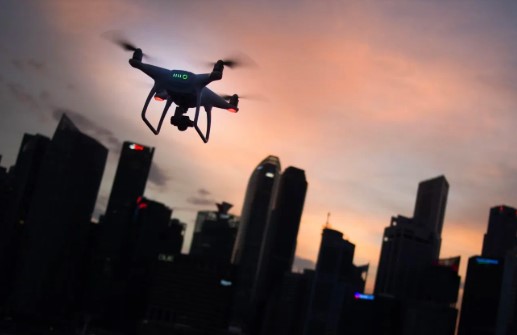
- Nearly 80% of Canada's RCMP drones—costing $34 million—are Chinese-made, raising serious national security concerns over espionage vulnerabilities and data leaks. The RCMP has restricted them to "non-sensitive operations," but critics argue this is insufficient.
- The drone scandal emerges amid confirmed Chinese interference in Canadian elections (2019, 2021) and broader CCP infiltration in academia and politics, fueling distrust in government procurement decisions.
- Critics accuse PM Justin Trudeau and ex-Bank of England Governor Mark Carney of ties to globalist networks with Chinese affiliations, citing past praise for China's governance and economic policies despite its aggressive tactics.
- While Chinese drones were cheaper, their risks now require replacement with costlier alternatives (up to $35,000 per unit), adding another $34 million burden, exposing flawed prioritization of short-term savings over long-term security.
- The RCMP's reliance on CCP-linked suppliers mirrors U.S. concerns (e.g., DJI blacklisting) and highlights Canada's disjointed strategy, despite labeling China its "primary foreign interference threat." The debacle underscores the need for stricter procurement safeguards and accountability.
A compromised fleet
The RCMP’s drone program, intended to bolster border security and law enforcement operations, has been undermined by its reliance on Chinese-made technology. According to the report, 973 out of 1,228 drones in the fleet originate from suppliers linked to the Chinese Communist Party (CCP), raising alarms over data security, supply chain integrity and potential espionage vulnerabilities. In 2023, the RCMP restricted these drones to "non-sensitive operations" and mandated offline data storage—a partial fix that Sen. Claude Carignan called insufficient. "Can you reassure us about how national security considerations are taken into account in procurement?" Carignan pressed during a Senate hearing. "I want to make sure national security considerations are taken into account." Replacing the compromised drones won't be cheap. BrightU.AI's Enoch notes that the RCMP estimates that non-Chinese alternatives cost more than twice as much—between $31,000 and $35,000 per unit—potentially adding another $34 million burden to taxpayers. The drone controversy is just one facet of Beijing's deepening footprint in Canada. A recent Foreign Interference Commission report confirmed that CCP operatives meddled in the 2019 and 2021 federal elections, targeting universities and political candidates. Meanwhile, investigative journalist Sam Cooper has documented ties between Trudeau, Carney and an "elite network" of globalist actors with Chinese connections. Carney, once an advocate for closer ties with Beijing, remarked in 2016 that China's "perspective" was "one of its many strengths"—a stance critics say clashes with his later warnings about CCP threats. Similarly, Trudeau's past praise for China's "basic dictatorship" and his senator's description of Beijing as a "partner, not a rival" have fueled accusations of complacency toward CCP aggression.Security vs. savings
The RCMP's procurement missteps highlight a recurring dilemma: balancing cost efficiency with national security. While Chinese drones were cheaper, their risks now render them unusable for critical operations, including border patrols and VIP protection. The RCMP report explicitly bars them from "emergency response team activities involving sensitive tactics or protected locations" and joint operations with U.S. agencies. The situation mirrors broader Western concerns about Chinese tech dominance. The U.S. has already blacklisted firms like DJI over espionage fears, while Canada's ongoing reliance on CCP-linked suppliers—despite labeling China its "primary foreign interference threat"—suggests a disjointed strategy. As Canada grapples with foreign interference and mounting security challenges, the RCMP's drone debacle underscores the perils of prioritizing short-term savings over long-term safety. With replacement costs looming and public trust eroding, the fallout serves as a cautionary tale—one that demands stricter procurement safeguards and accountability for leaders who enabled Beijing's encroachment. "National security cannot be an afterthought," Carignan warned. For Canada, the bill for past negligence is coming due. Watch the video below that talks about homemade Chinese drones that can assassinate, fire missiles and operate on land, sea and air. This video is from Rick Langley's channel on Brighteon.com.Sources include:
LifeSiteNews.com BlackLocks.ca BrightU.ai Brighteon.comTweet
Share
Copy
Tagged Under:
China national security military technology surveillance espionage stupid Canada big government dangerous Trudeau RCMP outrage privacy watch Spygate weapons tech CCP foreign interference Chinese drones Carney high security risk
You Might Also Like

Japan’s NUCLEAR dilemma: Rising tensions spark debate over pacifist principles
By Ramon Tomey // Share

By Patrick Lewis // Share

By Finn Heartley // Share


Recent News

IMF Chief Calls for AI Guardrails as Officials Weigh Economic Risks and Opportunities
By edisonreed // Share


Israel on the Brink? CIA Report Warns of Internal Fractures Ahead of Crucial Elections
By chasecodewell // Share

Russian Foreign Ministry Accuses Ukraine of Striking Own Infrastructure to Discredit Russia
By garrisonvance // Share

Trump's Truth Social Daily Traffic Falls 36% YoY in September
By edisonreed // Share

Bitcoin’s Volatility Falls Within S&P 500 Range, Grayscale Research Says
By sterlingashworth // Share