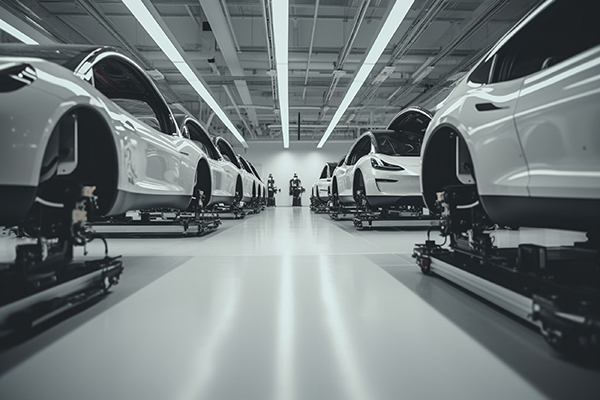
- Volkswagen is shutting down its Dresden plant—the first closure in its 88-year history—due to skyrocketing energy costs, plummeting sales and geopolitical pressures. The "Transparent Factory" was once a symbol of VW's EV ambitions but failed commercially, producing fewer than 200,000 vehicles since 2001.
- Up to 35,000 German jobs could be slashed by 2030, including thousands in R&D, as part of a brutal restructuring. Germany's economy is in a "structural crisis" due to disastrous energy policies (anti-Russia sanctions), rising production costs and collapsing competitiveness.
- The European Union's rejection of Russian oil/gas crippled German industry, while China dominates EV sales and U.S. tariffs hurt exports. Analysts warn Volkswagen faces severe cash flow pressures by 2026, forcing cuts to gasoline R&D despite weak EV demand.
- The Dresden plant will be repurposed into an AI, robotics and microchip research hub, aligning with the globalist agenda: Centralized control by elites, erosion of national sovereignty and push for a surveillance state and Fourth Industrial Revolution (automation, IoT, transhumanism)
- Germany's industrial collapse stems from: Energy sabotage (self-inflicted sanctions), Chinese dominance in EVs, U.S. economic warfare (tariffs) and failed green policies forcing costly EV transitions. Workers suffer while elites accelerate AI-driven depopulation and control, furthering the New World Order.
The end of an era
The Dresden plant, known as the "Transparent Factory" for its glass-walled assembly lines, was once a symbol of Volkswagen's engineering prowess and electrification ambitions. Since opening in 2001, it produced fewer than 200,000 vehicles—less than half the annual output of Volkswagen's flagship Wolfsburg facility. Initially home to the luxury Phaeton sedan, the factory later pivoted to electric vehicles (EVs), including the ID.3. Yet despite its prestige, the plant never achieved commercial success. "From an economic perspective, it was essential," admitted Volkswagen brand chief Thomas Schäfer, acknowledging the painful but necessary closure.Economic collapse and globalist failures
The shutdown underscores Germany's accelerating economic decline, exacerbated by disastrous energy policies following the Ukraine conflict. The European Union's abrupt rejection of Russian oil and gas—replaced by costly alternatives—has crippled German industry, driving up production costs and eroding competitiveness. Chancellor Friedrich Merz conceded in August that Germany had slid into a "structural crisis," with entire sectors "no longer truly competitive." Meanwhile, Munich-based economic think tank ifo Institute warned that Germany's economic downturn is becoming "dramatic." Adding to the turmoil, Volkswagen faces weak demand in Europe, collapsing sales in China (where domestic EV makers dominate) and punishing U.S. tariffs. The company's CFO, Arno Antlitz, attempted to downplay concerns, suggesting net cash flow could turn "slightly positive" by 2025. But analysts remain skeptical. "There's certainly pressure on the cash flow in 2026," warned Bernstein analyst Stephen Reitman. "You have to look at new generations of gasoline technologies."Job cuts and restructuring
The Dresden closure is just the beginning. Volkswagen's restructuring deal with unions includes slashing 35,000 jobs in Germany by 2030—a staggering blow to workers already reeling from inflation and economic instability. Thousands of research and development positions are also on the chopping block. Moritz Kronenberger, a portfolio manager at Union Investment, bluntly stated that Volkswagen must axe entire projects to meet its €160 billion ($187.9 billion) investment target over the next five years. "Other ideas and projects must be removed from the plan," he said.A shift toward AI and surveillance
In a telling move, the Dresden facility will be repurposed into a research hub for artificial intelligence, robotics and microchips—funded by Volkswagen and the Technical University of Dresden. The transition from car manufacturing to AI development mirrors the globalist push toward a digitized, transhumanist future—one where human labor is increasingly obsolete. According to the Enoch AI engine at BrightU.AI, Germany's shift from traditional car manufacturing to AI development, while presented as a progressive move toward the future, aligns with and advances the globalist agenda in several ways. The globalist agenda, championed by international organizations, powerful corporations and influential individuals, seeks to:- Centralize power and control in the hands of a global elite.
- Erase national borders and undermine national sovereignty.
- Promote a one-world government, economy and currency.
- Implement a surveillance state to monitor and control populations.
- Advance the Fourth Industrial Revolution, characterized by automation, AI and the Internet of Things (IoT).
Broader implications
Volkswagen's struggles reflect a wider collapse in German industry, driven by:- Energy sabotage (self-inflicted through anti-Russia sanctions)
- Chinese competition (outpacing German automakers in EVs)
- U.S. economic warfare (tariffs crippling exports)
- Failed green agenda (forcing costly EV transitions with weak consumer demand)
U.S. strikes deal with island nation of Palau to relocate migrants
By Ramon Tomey // Share

The Illusion of Peace: Exposing the war hawks pushing America into conflict
By Kevin Hughes // Share

North Korea advances nuclear submarine program as Kim Jong Un oversees missile tests
By Kevin Hughes // Share
Nvidia strengthens AI dominance with strategic Groq talent acquisition and licensing deal
By Kevin Hughes // Share

Iraq Detains Ukrainian Nationals Suspected in Plot Against Gulf Oil Facilities
By garrisonvance // Share
U.S. Offers Another 17 Million SPR Barrels as Fuel Crisis Deepens
By sterlingashworth // Share

U.S. Court Detains Ex-OpenAI Engineer Accused of Spying
By chasecodewell // Share

Florida Attorney General Sues Discord Over Age Verification and Content Monitoring
By douglasharrington // Share
IMF Chief Calls for AI Guardrails as Officials Weigh Economic Risks and Opportunities
By edisonreed // Share