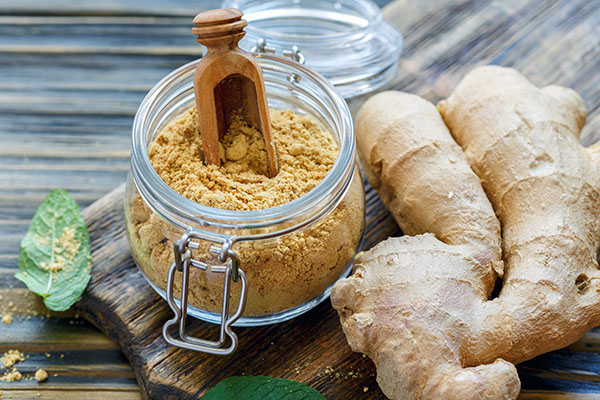
- Scientific research has identified the precise mechanism by which ginger enhances immune function, focusing on the compound 6-gingerol and its interaction with a specific cellular receptor called TRPV1.
- This interaction occurs at concentrations easily achieved through dietary intake, such as drinking ginger tea, and "primes" immune cells, making them significantly more effective at responding to threats.
- In a way, 6-gingerol acts as a natural vaccine adjuvant, stimulating a more robust immune response.
- Clinical studies on conditions like arthritis provide real-world evidence of ginger's potent anti-inflammatory effects, which are rooted in this same biochemical pathway.
- Animal models show ginger improves immune responses by increasing lysozyme activity—a crucial enzyme for bacterial defense.
The molecular key in a cellular lock
The journey from spice rack to scientific breakthrough begins with a single phytochemical: [6]-gingerol. This molecule is responsible for ginger’s characteristic sharp, slightly biting flavor, a sensation that is more than just a taste experience; it is the first signal of a profound internal process. For years, scientists understood that 6-gingerol activated a receptor known as TRPV1, which is abundantly present on nerve cells and is the same receptor triggered by the capsaicin in chili peppers, creating a sensation of heat. The revolutionary leap came when researchers from institutions like the Leibniz Institute in Germany asked a simple yet profound question. If this receptor exists elsewhere, could a food component whispering to our taste buds also be sending messages to our immune army? The answer, published in the journal Molecular Nutrition & Food Research, was a resounding yes. The research team discovered that these same TRPV1 receptors are present on the surface of neutrophils, a type of white blood cell that functions as a rapid-response infantry, often the first cells to arrive at the site of an infection. Think of the TRPV1 receptor as a specialized docking station on the neutrophil’s surface. When 6-gingerol from consumed ginger enters the bloodstream, it seeks out and binds to this dock. This binding does not trigger an all-out attack, which could lead to harmful inflammation in the absence of a real threat. Instead, it acts like a stirring pre-battle speech or a strategic briefing. It places the cells on a state of heightened alert, priming their machinery and making them more sensitive and ready to respond.From priming to potency: A measurable edge
This priming effect translates into a tangible tactical advantage. When these gingerol-primed neutrophils later encounter a true threat, such as a bacterial invader signaled by a molecule called fMLF, their response is markedly more robust. The research quantified this boost, showing that primed neutrophils became more than 30 percent more effective at key defensive duties. They showed increased secretion of CXCL8, a chemical signal that recruits more immune reinforcements to the site of trouble, and they produced more reactive oxygen species (ROS), potent compounds used to destroy pathogens. This entire cascade of enhanced readiness was triggered by a concentration of 6-gingerol as low as 50 nanomoles per liter, a level readily achieved in human circulation after drinking less than a liter of ginger tea. It is a powerful demonstration of how a nutritionally relevant, everyday amount of a food can directly modulate the complex systems of human immunity. By helping the immune cells response to danger, ginger's compounds act as a natural vaccine adjuvant, enhancing immune responses, but in a safe and more consistent manner. The implications of this mechanism extend far beyond acute infection. The inflammatory response, while crucial for fighting germs, must be precisely regulated. When it becomes chronic or misdirected, it forms the biological bedrock of many modern ailments, from the stiff, painful joints of arthritis to widespread muscular discomfort. Here, ginger’s historical use finds its scientific foundation. By priming the immune response through the TRPV1 channel, ginger appears to help the system operate more efficiently and with greater control. Clinical studies on patients with arthritis have consistently reported reductions in pain, swelling, and improvements in mobility with regular ginger consumption. The inhibition of inflammatory cytokines, signaling molecules that fan the flames of inflammation, can be understood as part of this broader, modulating effect. Ginger does not blunt the immune system; it seems to train it, leading to a more targeted and less destructive inflammatory response.Ginger lowers inflammatory processes and increases lysozyme activity, critical for antibacterial defense
Building upon the foundational research in rodent models, a compelling 2019 study published in Animals directly demonstrates the translational benefits of ginger in livestock. Conducted by An et al., the research investigated the effects of a 0.1% dietary ginger extract supplement on Hy-Line brown laying hens over a production cycle. The results robustly confirm that ginger's bioactive compounds enhance systemic antioxidant status and immune function in a complex organism. Specifically, the supplement significantly boosted plasma superoxide dismutase (SOD) activity and reduced malondialdehyde (MDA), a key marker of lipid peroxidation and oxidative stress. This aligns with previous findings in diabetic patients, showing ginger's consistent role in mitigating oxidative damage. Furthermore, the study revealed enhanced non-specific immunity in the hens, evidenced by significantly increased lysozyme activity—a crucial enzyme for bacterial defense. A notable reduction in plasma prostaglandin E2 (PGE2), a pro-inflammatory mediator, also indicates ginger's potential to lower inflammatory responses. Crucially, these physiological benefits translated to improved production performance, including higher laying rates and better feed efficiency. This research powerfully extends the evidence, showing that ginger extract is not only a potent modulator of antioxidant and immune pathways but also a viable nutraceutical for enhancing health and productivity in agricultural systems. Sources include: MindBodyGreen.com Pubmed.gov Pubmed.gov
New research confirms alcohol’s broader, deeper cancer threat
By Ava Grace // Share

Bamboo shoots emerge as potent medicinal food, help Type-2 diabetics
By Lance D Johnson // Share

Five-minute daily walk slashes death risk by 10 percent, major study finds
By Cassie B. // Share

Scientists solve cosmic mystery: “Little red dots” are ancient black holes in disguise
By Cassie B. // Share

“Absolute Healing” on BrightU: Experts discuss regenerative medicine and emerging technologies
By Jacob Thomas // Share
The Dopamine Revolution: A natural blueprint for energy, mental clarity and sovereignty
By Belle Carter // Share

Iraq Detains Ukrainian Nationals Suspected in Plot Against Gulf Oil Facilities
By garrisonvance // Share

U.S. Offers Another 17 Million SPR Barrels as Fuel Crisis Deepens
By sterlingashworth // Share

U.S. Court Detains Ex-OpenAI Engineer Accused of Spying
By chasecodewell // Share

Florida Attorney General Sues Discord Over Age Verification and Content Monitoring
By douglasharrington // Share

IMF Chief Calls for AI Guardrails as Officials Weigh Economic Risks and Opportunities
By edisonreed // Share
