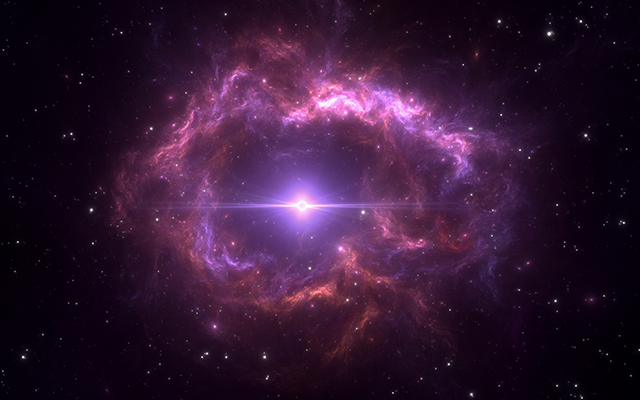
- The James Webb Space Telescope has discovered SN Eos, the most distant spectroscopically confirmed supernova ever detected.
- The star exploded when the universe was only about 1 billion years old, offering a pristine look at the deaths of the first stellar generations.
- The supernova is of the Type II-Plateau (IIP) variety, resulting from the core-collapse of a massive star.
- It was found using gravitational lensing, a natural cosmic magnifying glass, which revealed multiple images of the event.
- The star that died was extremely metal-poor, meaning it was composed almost entirely of hydrogen and helium, just as the universe's first stars were.
- This discovery directly addresses core JWST mission goals: tracing the longevity of the first stars and the origins of heavy elements.
A lens into the deep past
Finding an object this ancient and faint requires not just a powerful telescope, but a cosmic assist. The team, led by David A. Coulter of Johns Hopkins University, employed a technique called gravitational lensing. This phenomenon, predicted by Einstein, occurs when a massive object, like a galaxy cluster, warps the fabric of spacetime around it. This warping acts like a giant lens, bending and magnifying the light from objects far behind it. In this case, the MACS 1931.8-2635 galaxy cluster acted as that lens, creating multiple, brighter images of the single supernova event that would otherwise have remained invisible. It is a method that transforms the universe’s own architecture into a tool for discovery, allowing astronomers to see the unseen. The data revealed a star that exploded in an environment almost untouched by the chemical complexity that defines our present-day cosmos. With a metal concentration below 10% of our sun’s abundance, the progenitor star was a relic of a simpler time. Metals, in astronomical terms, are any element heavier than hydrogen and helium. They are forged in the nuclear furnaces of stars and scattered across space in events like supernovae. Therefore, a metal-poor star like the one that became Eos represents an earlier, more primordial generation of stars, whose explosive deaths would begin the long process of seeding the universe with the building blocks for planets, and ultimately, life. From a creation standpoint, these stars were metaphorically the unique palettes of paint, prepared on the original canvas of our universe, and their elemental makeup became the building blocks for the world that was created (painted) into existence. Without these celestial depositories and their mineral makeup, the very integrity of Earth and the life sustained within would not be true.The death throes of a cosmic titan
SN Eos has been classified as a Type IIP supernova. This designation tells a specific story of stellar demise. Type II supernovae mark the end of stars more than eight times the mass of our sun. These giants burn through their nuclear fuel at a ferocious pace, living fast and dying young. When such a star exhausts the fuel in its core, the outward pressure from nuclear fusion ceases, and gravity wins a sudden, devastating victory. The core collapses in less than a second, triggering a shockwave that blasts the star’s outer layers into space in a titanic explosion. The “P” in IIP stands for “plateau.” After its initial brilliant peak, the light from this type of supernova does not fade quickly. Instead, it lingers at a nearly constant brightness for an extended period—weeks or even months—creating a plateau in the light curve astronomers plot. This plateau phase is powered by the heat from the expanding shock-wave as it plows through the star’s massive hydrogen envelope. The detection of Eos at the end of this plateau phase provides a crucial snapshot of this brief, energetic chapter in the death of a massive star.Rewriting the first chapters of cosmic history
The discovery of SN Eos is a direct strike at some of the most profound questions in astronomy. For decades, the first billion years of the universe, often called the cosmic dawn, has been a theoretical landscape. Models predicted the properties of the first stars—monstrous, metal-free behemoths known as Population III stars—and their explosive ends. But evidence has been a ghost, a whisper in the cosmic static. Eos is not a first-generation star, but its extreme metal-poor nature suggests it is a very close descendant, carrying the chemical imprint of that earlier age. By studying its light, astronomers can now begin to test and refine their models of early stellar evolution with real data. How massive were these early stars? How exactly did they explode? How efficiently did they spray newly forged elements into the void? Each photon from Eos carries information to answer these questions. This aligns perfectly with the stated ambitions of the JWST mission, which was designed to probe the era of the first galaxies and the luminous objects within them. The telescope’s ability to peer into the infrared spectrum is essential, as the expansion of the universe has stretched the ancient visible light from Eos into infrared wavelengths. This finding arrives as the astronomical community continues to expand the toolkit for studying stellar explosions. For instance, missions like NASA’s Transiting Exoplanet Survey Satellite (TESS), while designed to hunt planets, have been proposed by researchers at institutions like Ohio State University as instruments for monitoring nearby supernovae, offering complementary insights into the mechanics of these explosions in the contemporary universe. The study of cosmic dawn and the modern era thus proceed in tandem, each informing the other. As astronomers refine their models with this new data, the dawn goddess Eos offers not an ending, but a brilliant new beginning for our understanding of where we all came from. Sources include: Phys.org ARXIV.org Enoch, Brighteon.ai
Blueberries: Nature’s superfood for a healthy mind and body
By News Editors // Share

Gut bacteria imbalance linked to Alzheimer’s risk in major human study review
By Cassie B. // Share

BPA makes males more feminine and females more masculine in latest study
By Lance D Johnson // Share

Coffee cherry extract sharpens memory and focus, study finds
By Evangelyn Rodriguez // Share

The mouth’s microbiome: A new frontier in the fight against obesity
By Willow Tohi // Share

Beyond the inhaler: The new science of asthma targets inflammation and environment
By Willow Tohi // Share

Iraq Detains Ukrainian Nationals Suspected in Plot Against Gulf Oil Facilities
By garrisonvance // Share

U.S. Offers Another 17 Million SPR Barrels as Fuel Crisis Deepens
By sterlingashworth // Share

U.S. Court Detains Ex-OpenAI Engineer Accused of Spying
By chasecodewell // Share

Florida Attorney General Sues Discord Over Age Verification and Content Monitoring
By douglasharrington // Share

IMF Chief Calls for AI Guardrails as Officials Weigh Economic Risks and Opportunities
By edisonreed // Share