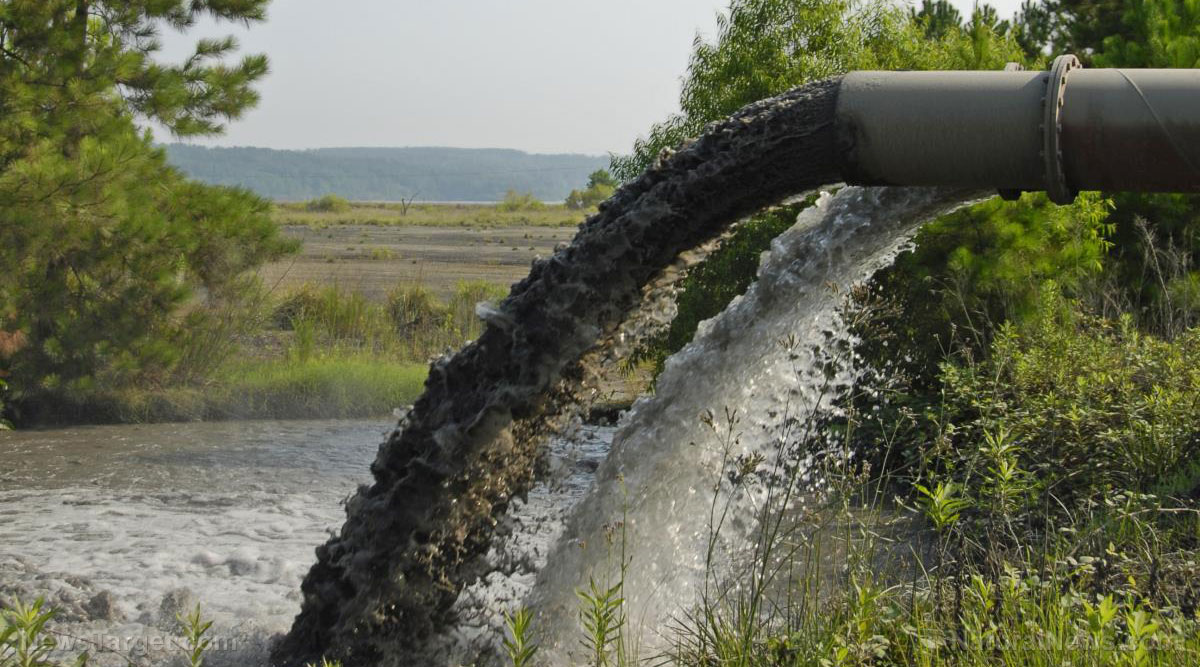
- A legal practice known as "manifesting" allows large factory farms to transfer manure to smaller, unregulated farms, circumventing federal water pollution permits.
- This regulatory loophole, combined with patchy state enforcement, leaves vast quantities of waste unaccounted for and contributes significantly to water contamination.
- Some operations create complex corporate structures to "self-manifest" waste, further obscuring accountability for pollution.
- Critical data on manure transfers is often withheld from the public as confidential business information, hindering oversight.
- Despite generating waste comparable to major cities, Concentrated Animal Feeding Operations (CAFOs) face minimal regulatory accountability compared to other industrial sectors.
The permitting patchwork and a persistent problem
The foundation of water pollution regulation for industry is the Clean Water Act’s National Pollutant Discharge Elimination System (NPDES). For CAFOs—industrial-scale facilities that can house thousands of animals and produce more waste than a large city—these permits are supposed to dictate how manure is stored and applied to land, requiring detailed Nutrient Management Plans. The Environmental Protection Agency delegates permit issuance to states to balance national standards with local conditions. However, this system has fractured. Enforcement is inconsistent, and the sheer scale of waste is daunting. A single large CAFO can generate millions of gallons of manure annually, laden with nitrogen and phosphorus. When these nutrients enter waterways, they fuel dangerous algal blooms that deplete oxygen, kill aquatic life and threaten public health. Despite the clear hazard, the regulatory net captures only a fraction of the industry, creating an environment where loopholes like manifesting thrive.Manifesting 101: The legal transfer of liability
At its core, manifesting is a paperwork process where a permitted CAFO designates some or all of its manure for transfer to another farm. The critical detail is that the receiving farm is often not classified as a CAFO or a "point source" polluter under the Clean Water Act. These entities are therefore not required to have NPDES permits or follow the associated nutrient management rules. In practice, this means manure that would be subject to application limits, seasonal restrictions and buffer zone requirements at a CAFO can be applied freely at the receiving farm, potentially in excessive quantities or on vulnerable land. The originating CAFO, having manifested the waste away, bears no legal responsibility for what happens next. Experts describe it as a perfect regulatory gap: the CAFO claims it doesn’t discharge because it gave the waste away, while the recipient farm claims it discharges but isn’t a regulated point source. The manure, and the pollution risk, falls through the crack between them.Corporate layers and the rise of "self-manifesting"
The maneuver grows more opaque with the involvement of complex corporate structures. Investigations, including recent testimony in Michigan, reveal that some CAFO operators create separate Limited Liability Companies (LLCs) to receive manifested manure. In effect, they transfer waste from one entity they control to another they also control—a practice critics label “self-manifesting.” This layering of LLCs serves a dual purpose: It formalizes the permit dodge while insulating the parent company from liability. If polluted runoff from a field managed by one of these shell companies sickens a community or damages an ecosystem, legal and financial accountability typically stops at that subsidiary, protecting the larger agribusiness from significant damages. This corporate veil makes it extraordinarily difficult for affected communities to seek redress from the ultimate owners of the waste.A black hole of data and accountability
Compounding the problem is a profound lack of transparency. While some states, like Michigan and Ohio, have data suggesting a significant portion of CAFO manure is transferred, many others do not track or publicly report this information. In major agricultural states like Iowa and Idaho, nutrient management plans and manure transfer records are often shielded from public view as confidential business information. This data black hole means communities and regulators cannot answer basic questions: How much manure is being moved? Where is it going? Is it being applied safely? The absence of public tracking, advocates argue, enables the unchecked dumping of waste and violates the spirit of environmental right-to-know laws. It allows the manure shell game to be played in the dark.A historical legacy of agricultural exceptionalism
The persistence of these loopholes is rooted in a long history of agricultural exceptionalism in U.S. environmental law. The Clean Water Act itself contains a key exemption for “agricultural stormwater discharge,” originally intended to protect traditional farmers from liability for rain-driven runoff. Industrial CAFOs, along with the manifesting system, have exploited this and other exemptions designed for a different era of farming. Furthermore, the EPA’s struggle to maintain a national CAFO registry and its delayed action on issues like air emissions monitoring reflect the sustained political power of industrial agriculture. This influence has resulted in a system where, as critics note, even when permits are issued, enforcement is often minimal, and the regulations themselves set limits on pollution rather than preventing it.Toward a clearer flow of responsibility
The manifesting loophole is a symptom of a regulatory system that has failed to keep pace with the industrialization of animal agriculture. It demonstrates that even existing rules, however weakly enforced, can be legally circumvented, allowing waste from a shrinking number of massive operations to disperse across the landscape with little oversight. For decades, the approach has prioritized production and convenience over water quality and community health. Closing this gap requires not just stronger enforcement, but a fundamental re-examination of a legal structure that allows hundreds of millions of gallons of concentrated waste to be deemed someone else’s problem—until it shows up in the water we all share. The challenge for policymakers is to reconcile the economic realities of modern food production with the basic environmental principle that those who produce pollution must be accountable for its safe management. Sources for this article include: ChildrensHealthDefense.org MichiganFarmNews.com NYTimes.com
Shocking Glyphosate Levels in Popular Bread: Florida’s Eye-Opening Food Testing Report
By Mike Adams // Share


The Clawdbot Catastrophe: How AI Hype Unleashed a Digital Apocalypse in Weeks
By Mike Adams // Share

A Tragic Death and the Weaponization of Fear: Questioning the Raw Milk Narrative
By Morgan S. Verity // Share

Urgent recall: Bread crumbs pose life-threatening allergy risk due to undeclared egg and milk
By Patrick Lewis // Share

The Silver Squeeze Sabotage: How Manipulated Circuit Breakers Crushed Last Friday’s Price Rally
By Sterling Ashworth // Share
Iraq Detains Ukrainian Nationals Suspected in Plot Against Gulf Oil Facilities
By garrisonvance // Share

U.S. Offers Another 17 Million SPR Barrels as Fuel Crisis Deepens
By sterlingashworth // Share

U.S. Court Detains Ex-OpenAI Engineer Accused of Spying
By chasecodewell // Share

Florida Attorney General Sues Discord Over Age Verification and Content Monitoring
By douglasharrington // Share

IMF Chief Calls for AI Guardrails as Officials Weigh Economic Risks and Opportunities
By edisonreed // Share
