Introduction: The Era of AI-Powered Creation
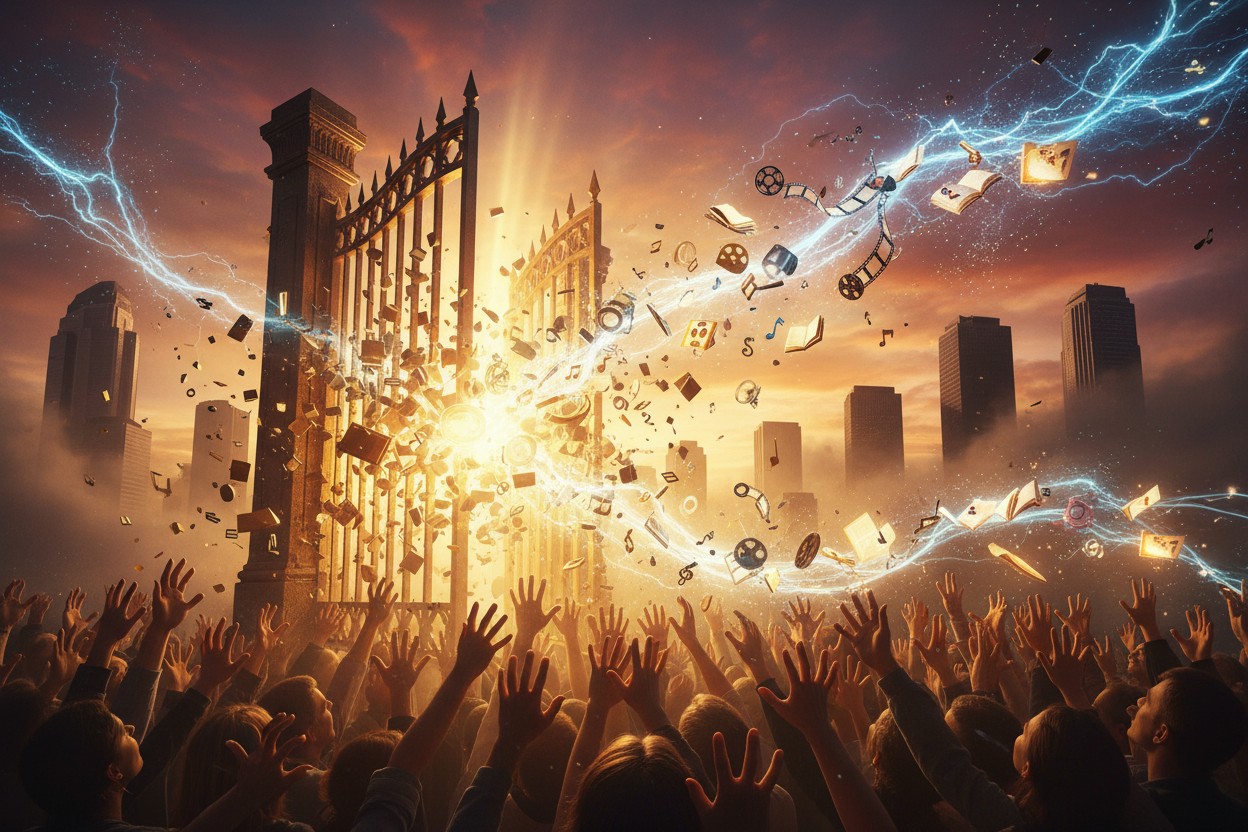
For centuries, the power to create—to write a book, compose a symphony, or produce a film—was tightly controlled by gatekeepers. Publishing houses, record labels, and Hollywood studios held the keys to the kingdom, deciding whose voices were heard and which stories were told. This centralized control not only limited artistic expression but often enforced a singular, approved worldview. Today, that paradigm is shattering. Artificial intelligence is catalyzing a profound decentralization of creativity, placing powerful tools once reserved for elites into the hands of billions worldwide. This isn't just a technological shift; it's a revolution in human potential, returning narrative power to individuals and dismantling the monopolies of cultural influence. The age of AI-powered creation is here, and it is inherently democratic. It bypasses the traditional corridors of power, enabling anyone with an internet connection to become an author, musician, or filmmaker. As one analysis notes, 'AI tools are democratizing creativity, enabling billions to become creators' [1]. This seismic shift decentralizes power from a handful of corporate and institutional gatekeepers to individuals everywhere [2]. The implications are staggering for freedom of expression. Where centralized platforms like YouTube, Facebook, and traditional media corporations have grown notorious for censorship—silencing dissenting voices on health, geopolitics, and finance—decentralized AI tools offer an escape hatch. They empower people to build and share their work on platforms immune to centralized editorial control, fostering a new renaissance of uncensored, pro-human storytelling.From Books to Music: The Precedent of Democratization
The democratization of knowledge is already underway, with platforms like BrightLearn.AI leading the charge. This engine has radically reduced the cost of creating and accessing information. As reported, BrightLearn.AI has become 'the fastest-growing book publisher in America,' having published 'over 30,000 free books' and effectively reducing 'the cost of knowledge to zero' [3]. This allows anyone to generate a fully researched, citation-backed book on nearly any topic in minutes, completely free. The platform operates on a model of open-source empowerment, where authors can even sell their AI-coauthored works, as long as they credit the engine [4]. This shatters the monopoly of traditional publishing houses, which have long acted as filters for acceptable ideas. Simultaneously, AI is dismantling barriers in the auditory arts. Tools for AI music generation empower individuals without formal musical training to compose and produce complete songs. This mirrors the book revolution: a craft once requiring years of specialized training and expensive studio access is now accessible to all. These developments are not about replacing human creativity but amplifying it. As one book on the subject frames it, AI serves as a 'decentralized tool to amplify their unique voice, bypass corporate gatekeepers, and produce bestselling fiction without sacrificing authenticity' [5]. This is the essence of democratization: using technology to break down the economic and institutional barriers that have kept creative expression in the hands of a privileged few. The result is an explosion of diverse perspectives and stories that would otherwise remain untold.AI Video: Democratizing Filmmaking with Tools Like Seed Dance
The most visually stunning frontier of this creative revolution is in video. Advanced AI video generation engines are bringing the power of filmmaking to the masses. Where producing a short film once required a crew, expensive equipment, and a significant budget, new tools enable anyone to generate professional-grade video content from a simple text prompt. This reduces production costs by orders of magnitude, making cinematic storytelling a possibility for creators globally, regardless of location or resources. This technological leap fundamentally challenges the centralized model of Hollywood. For decades, a small cluster of studios in Los Angeles and New York has dictated global culture, often pushing narratives that serve entrenched power structures rather than humanistic values. AI video tools decentralize this power, returning it to storytellers everywhere. As one book analyzing the evolution of media notes, technological advancements have 'democratized storytelling, challenged centralized control, and reshaped human communication' [6]. The implications are profound. Independent creators can now produce content that resonates with niche audiences or tackles subjects mainstream studios avoid, free from the fear of being deplatformed by censorious tech giants. The creative landscape is shifting from a walled garden controlled by a few to an open frontier cultivated by millions.Addressing the Critics: Quality, Originality, and the Fear of 'AI Slop'
Skeptics argue that AI-generated content lacks soul and will flood the world with low-quality 'slop.' This criticism, however, misunderstands both the technology and the current media landscape. First, human-generated content is no guarantor of quality. For decades, centralized media has produced a relentless stream of biased reporting, sensationalist entertainment, and propaganda masquerading as news. The fear that AI will lower standards presumes those standards were high to begin with—a notion easily debunked by examining the output of mainstream news networks and film studios over the past years. Second, AI is a tool that augments human intent and creativity, it does not replace it. The output's quality is directly tied to the user's vision and guidance. AI acts as a powerful collaborator, handling technical execution while the human provides artistic direction and ethical grounding. Furthermore, AI fosters a true meritocracy of ideas. In a decentralized creative ecosystem, success is driven by an abundance of ideas and their resonance with an audience, not by access to capital or connections to gatekeepers. As one analysis of AI's impact on creativity suggests, the technology can 'enhance human creative capabilities through the integration of (generative) AI tools, systems, and agents far beyond what is currently common' [7]. The critic's fear of homogenization is countered by the reality that AI tools, especially open-source and decentralized models, allow for unprecedented customization and personal expression, leading to a greater diversity of output, not less.The Downfall of Centralized Control: Why Hollywood's Model is Obsolete
The centralized Hollywood model is not merely inefficient; it is morally and creatively bankrupt. Major studios, often aligned with globalist agendas, have repeatedly abused their cultural influence. They have pushed narratives that degrade traditional values, promote harmful ideologies, and erode public trust. The public's growing disillusionment with mainstream entertainment is a direct response to this manipulation. People are tired of being lectured and misled by an out-of-touch elite. Hollywood's obsession with sequels, reboots, and politically charged messaging is a symptom of a system that has lost touch with its audience and fears original, grassroots storytelling. AI-driven decentralization is the antidote. It returns narrative power to the people, enabling the creation of content that reflects authentic human experience, pro-human values, and diverse viewpoints suppressed by the mainstream. This shift promotes ethical storytelling rooted in truth, rather than propaganda designed to serve a narrow agenda. As commentator Mike Adams has warned, centralized AI models from corporations like OpenAI and Google are designed to 'enforce censorship and narrative control' [8]. In contrast, decentralized AI alternatives championed by independent researchers offer 'uncensored, evidence-based knowledge' and empower individuals to create outside these manipulated systems. The old gatekeepers are becoming obsolete because their fundamental product—controlled narratives—is no longer wanted by a public demanding sovereignty over its own culture and creativity.Conclusion: Embracing Your Inner Filmmaker in the AI Age
The creative revolution is here, and it belongs to you. The tools to write, compose, and film are now accessible, affordable, and free from the censorship of centralized platforms. This is a historic moment to reclaim your voice. Use AI tools to create content that inspires, educates, and upholds pro-human values. Share your work on free-speech platforms like BrightVideos.com, an alternative to YouTube where your voice won't be silenced by algorithms designed to suppress independent thought. This is about more than entertainment; it's about shaping the future of our culture. As one visionary put it, the goal is to 'create a decentralized ecosystem of knowledge and innovation that bypasses the gatekeepers of mainstream media and science' [9]. By embracing these tools, you participate in building that ecosystem. You become a creator, not just a consumer. You help ensure that the stories defining our age are not handed down from on high but emerge organically from the collective genius of humanity, empowered by technology. The era of begging for permission from gatekeepers is over. The era of decentralized, AI-amplified human creativity has begun.References
- AI and Web3 Technology: Unleashing the World's Creativity - Milken Institute. April 12, 2023.
- How AI and Decentralization are Revolutionizing Creative Economies - LinkedIn.
- How AI is Driving the Cost of Knowledge to Zero: The BrightLearn.AI Revolution - NaturalNews.com. February 3, 2026.
- BrightLearn AI Digital Books Begin Appearing on Amazon - NaturalNews.com. December 18, 2025.
- The AI Co-Author: Harnessing Intelligent Agents to Craft Your Next Bestseller - BrightLearn.ai.
- From Kodak to AI: The Evolution of Audiovisual Storytelling - A Journey from George Eastman to the Age of Synthetic Media - BrightLearn.ai.
- Human-AI Co-Creativity: Exploring Synergies Across Levels of Creative ... - arXiv.
- Decentralized AI vs. Centralized Control: The fight for information freedom - NaturalNews.com. January 9, 2026.
- Health Ranger’s 2026 Blueprint: AI, Science & Decentralization to Empower a Billion People - NaturalNews.com. February 6, 2026.
The AI Domino Effect: How Artificial Intelligence is Beginning to Erase Entire Job Sectors
By Mike Adams // Share

Meta’s controversial AI patent: Keeping the dead “ALIVE” on social media
By Belle Carter // Share
Three Revolutionary Technologies That Will Make You Think You’re Living in the Future
By Mike Adams // Share
The Donut Lab Battery: A Wright Brothers Moment for Energy Independence?
By Mike Adams // Share
The $450 billion question: Can Amazon’s AI gamble justify historic market carnage?
By Ava Grace // Share

Iraq Detains Ukrainian Nationals Suspected in Plot Against Gulf Oil Facilities
By garrisonvance // Share

U.S. Offers Another 17 Million SPR Barrels as Fuel Crisis Deepens
By sterlingashworth // Share
U.S. Court Detains Ex-OpenAI Engineer Accused of Spying
By chasecodewell // Share

Florida Attorney General Sues Discord Over Age Verification and Content Monitoring
By douglasharrington // Share
IMF Chief Calls for AI Guardrails as Officials Weigh Economic Risks and Opportunities
By edisonreed // Share