Database discrepancies: Millions of voter registrations FAIL to match federal verification records
By ljdevon // 2026-02-15
Tweet
Share
Copy
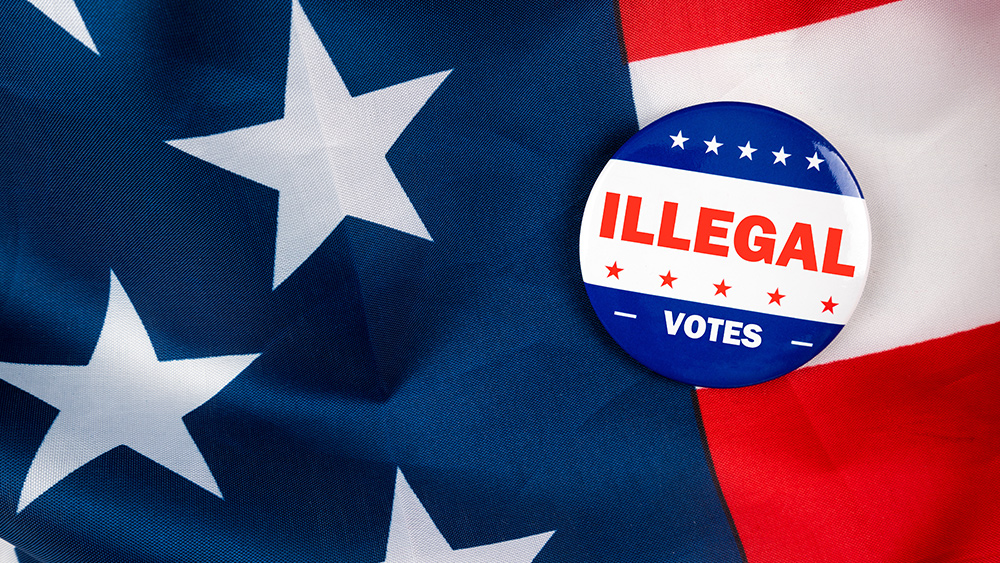
A recent analysis of federal data has exposed a gaping hole in the nation's voter registration system, revealing that for over a decade, millions of Americans have been registered to vote using identity information that does not match official government records. This systemic failure, centered on the Social Security Administration's (SSA) Help America Vote Act Verification (HAVV) system, directly challenges the integrity of the electoral process and raises urgent questions about the validity of voter rolls across the United States. The data, which shows a consistent and massive rate of "no match" results, points to either widespread administrative negligence or something far more sinister: the potential for large-scale electoral fraud enabled by lax verification standards.
Key points:
- Federal data shows that since 2011, 28.8% of voter registration checks run through the SSA's HAVV system—approximately 28.1 million submissions—have returned a "No Match" result.
- In 2025 alone, 13% of submissions, or 318,217 out of 2.37 million, failed to match SSA records.
- The HAVV system is used as a verification method of last resort for individuals who register to vote without a driver's license, using only their name, date of birth, and the last four digits of their Social Security number.
- A 2021 spike in Arizona saw weekly HAVV transactions explode from 500 to 70,000, with 58% of 673,000 submissions failing to match, coinciding with a controversial election audit.
- Seven states completely opt out of using the federal HAVV verification system.
The verification vacuum and a system in crisis
Established by the 2002 Help America Vote Act (HAVA), the HAVV system was designed as a safety net. When a prospective voter cannot provide a state-issued driver's license number, states are supposed to submit the applicant's name, date of birth, and the last four digits of their Social Security number to the SSA for verification. The agency then replies with one of four statuses: deceased, alive, matching records, or the dreaded "No Match Found." A "No Match" is a glaring red flag. It means the information provided by the voter does not align with the comprehensive data held by the federal government. While apologists for the broken system are quick to blame "clerical errors" or "name changes," the sheer volume of mismatches over 15 years defies innocent explanation. We are not talking about a few thousand typos. We are confronting a mountain of 28.1 million discrepancies. This represents 28.1 million instances where the foundational information used to grant someone a ballot could not be confirmed by the very agency that issues the identifier. This isn't a minor glitch; it is a verification vacuum, a chasm of uncertainty into which the legitimacy of elections is being poured.Political gatekeeping and the fight for transparency
The response from certain states and political actors to these failures has been telling. Rather than sounding alarms and rushing to clean the rolls, there has been resistance and obfuscation. The report highlights that seven states—Kentucky, New Mexico, Oklahoma, North Dakota, South Carolina, Tennessee, and Virginia—choose not to use the HAVV system at all, creating their own opaque verification silos. In 2025, four states processed not a single applicant through the federal system. This deliberate avoidance of a federal cross-check is a political decision, one that prioritizes the ease of registration over the certainty of eligibility. Furthermore, when the Department of Justice has sought to examine state voter rolls to investigate these very issues, activist judges in states like Michigan, Oregon, and California have blocked them. The question every citizen must ask is: What are they hiding? If the rolls are clean, why fear scrutiny? The 2021 Arizona case is particularly illuminating. As the state senate was conducting a forensic audit of the 2020 election in Maricopa County, county officials—who fought the audit tooth and nail—suddenly flooded the HAVV system with hundreds of thousands of verification requests. The timing suggests a frantic, last-minute attempt to clean up the rolls before the audit's findings were revealed, a damning admission of guilt through action. This avalanche of "no match" results forms the bedrock argument for the urgent passage of the SAVE Act, which would require proof of citizenship and photo ID for voter registration. When a state is told by its own federal government that it cannot verify a potential voter's identity, that application should be rejected, not rubber-stamped. The integrity of every legal vote is diluted by every vote cast under a cloud of doubt. The data from the SSA is not a bureaucratic footnote; it is a five-alarm fire for the Republic, revealing a system vulnerable to manipulation and in desperate need of the robust safeguards that true election integrity demands. Sources include: YourNews.com TheGatewayPundit.com Enoch, Brighteon.aiTweet
Share
Copy
Tagged Under:
Government transparency voter fraud voter registration voter ID federal records election integrity data analysis electoral process Help America Vote Act Maricopa County voter verification Arizona audit election security SAVE Act identity verification Social Security Administration HAVV system no match database discrepancy state voter rolls
You Might Also Like

The Transparency Mandate: Trump’s UFO Disclosure and the End of Government Secrecy
By Garrison Vance // Share


Texas Democrats launch $30M “Texas Together” campaign in bid to flip the state
By Patrick Lewis // Share


America’s Trade Deficit: A Symptom of Deeper Economic Disease
By Morgan S. Verity // Share
Recent News

Objections to Conscription Triple in Germany, Media Report Says
By garrisonvance // Share
Mamdani Administration Signs Two Contracts for Gender Procedures on Minors
By morganverity // Share

NASA Selects Project to Investigate Marius Hills Pit on Moon
By edisonreed // Share

Ancient Egyptian "Gateway to Underworld" Found Inside Roman-Era Pyramid Tomb in Egypt
By ivagreene // Share