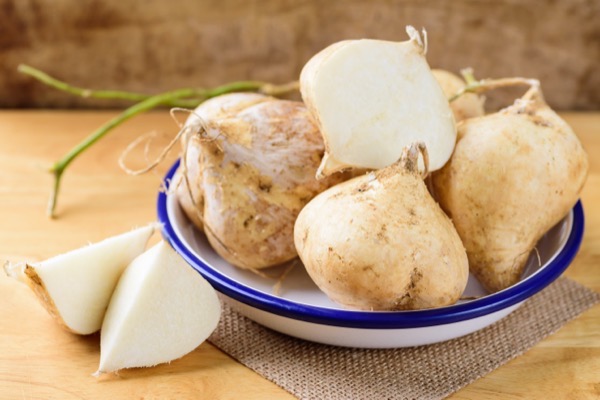
- Jicama is low in calories (46 kcal per cup), high in fiber (5.9g), vitamin C (27% DV) and prebiotic inulin, which feeds beneficial gut bacteria. It supports digestion, reduces inflammation and helps prevent dysbiosis.
- The root vegetable has a low glycemic index – ideal for diabetics and weight management. Fiber and compounds in jicama lower blood sugar, improve insulin sensitivity and boost nitric oxide for heart health.
- It has inulin that enhances calcium absorption, potentially reducing bone loss and contains phytoestrogens that may protect postmenopausal women's bone density.
- Safe consumption tips: Always peel – skin contains trace toxins (rotenone). Start with small portions to avoid bloating (high fiber). Rare allergies are possible when consumed, especially for those sensitive to legumes.
- Versatile culinary uses: Eaten raw (crunchy, mildly sweet) in salads, slaws or as a low-carb wrap substitute. It stores well unrefrigerated for months; once cut, refrigerate and use within a week.
- 5.9 grams of fiber (mostly prebiotic inulin)
- 27% of the daily recommended vitamin C
- Small but valuable amounts of potassium, iron and B vitamins
Health benefits backed by science
Here are some reasons to include jicama in your daily diet. 1. Gut health champion Nearly 97% of Americans fall short on fiber intake, contributing to digestive disorders. Jicama's inulin fiber acts as a prebiotic, feeding beneficial gut bacteria like Lactobacillus. Studies suggest it may reduce inflammation and prevent dysbiosis—a microbial imbalance linked to chronic disease. 2. Blood sugar regulator Animal studies show jicama extract lowers blood sugar and improves insulin sensitivity. Its fiber promotes satiety, aiding weight management – a key factor in diabetes prevention. 3. Heart protector Research indicates jicama juice boosts nitric oxide production, relaxing arteries and reducing clot risk. Combined with its fiber's cholesterol-lowering effects, it's a heart-healthy choice. 4. Bone strength Inulin enhances calcium absorption, potentially reducing bone loss. Phytoestrogens in jicama may also mimic estrogen's bone-protective effects, offering promise for postmenopausal women.Potential downsides
While generally safe, jicama has caveats:- Allergies: Rare but possible, especially for those with legume allergies.
- Rotenone risk: The skin contains trace toxins; always peel before eating.
- Digestive gas: High fiber can cause bloating initially—start small.
How to enjoy jicama
Traditionally, jicama is eaten raw with lime and chili powder. Modern uses include:- Salads and slaws (shredded or julienned)
- Low-carb wraps (thinly sliced as a tortilla substitute)
- Baked chips or stir-fries for a crisp texture
Shelf-stable doesn’t mean boring: Upgrade your emergency meals
By HRS Editors // Share
Fiber powerhouses: Top whole grains and legumes to eat for optimal health
By Evangelyn Rodriguez // Share
Beyond flavor: Bitter compounds in food trigger your body’s natural resilience
By Willow Tohi // Share
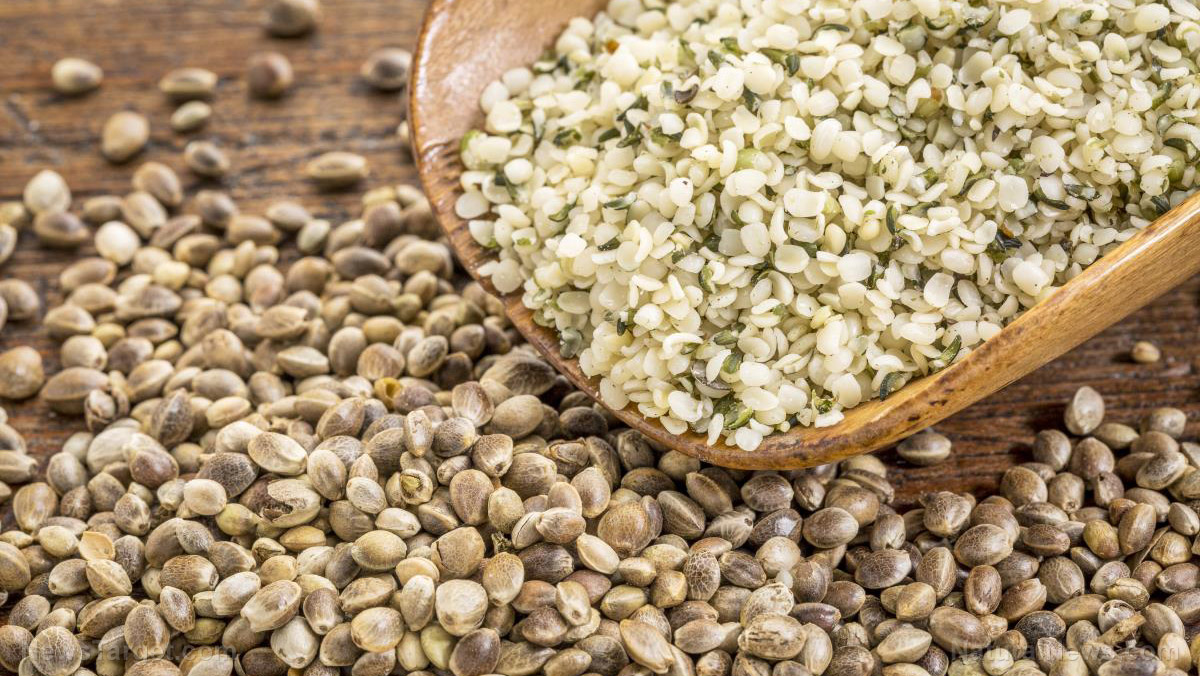
Hemp seeds: The powerful superfood that boosts brain health and fights inflammation
By Evangelyn Rodriguez // Share
Beyond Meat Myths: Unveiling The True Diet For Cancer Prevention and Holistic Wellness
By Coco Somers // Share
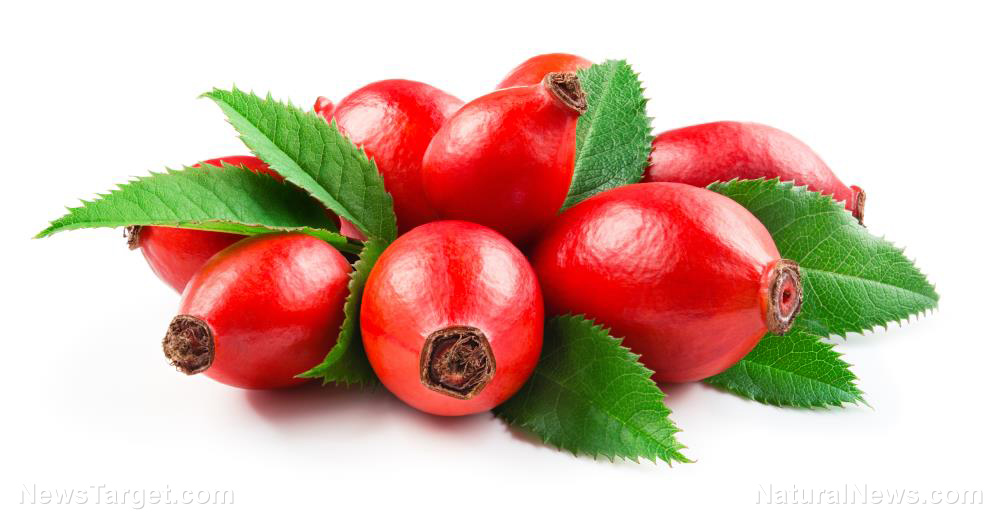
Rosehips: Nature’s forgotten remedy for arthritis and beyond
By Belle Carter // Share


Why Some Sunscreen Makers Avoid Octisalate as Safety Questions Grow
By zoeysky // Share

Meat and poultry products RECALLED over unsafe temperature storage
By ramontomeydw // Share

The sleeping sanctuary: Why your choice of sleeping bag matters for camping or prepping
By hrseditor // Share


Iraq Detains Ukrainian Nationals Suspected in Plot Against Gulf Oil Facilities
By garrisonvance // Share