"A.G.E.S. Fall Conference" on BrightU: How modern agriculture engineered the perfect disease incubator
- On Day 4 of "A.G.E.S. Fall Conference Docuseries," Joel Salatin described the modern industrial livestock system as a deliberate "pathogenic farm" model that promotes disease through confinement, lack of diversity and unnatural conditions.
- He contrasted this mechanical, anti-life model with biological farming that respects animal instincts, reduces stress and produces healthier food.
- Salatin advocated for a "food emancipation proclamation" to dismantle regulatory barriers and support small-scale, direct-market farmers.
- He argued the industrial system is economically exploitative, drastically reducing the farmer's share of the food dollar.
- His alternative model, based on movement and respect for natural patterns, proves that healthy, abundant farming is possible without routine medications.
On Day 4 of "A.G.E.S. Fall Conference Docuseries," aired on Feb. 24, visionary farmer Joel Salatin laid out a blueprint for creating a "pathogenic farm," a system designed to maximize disease. His chilling revelation was that this blueprint is not a Bond villain's plot, but the exact model of modern American livestock agriculture.
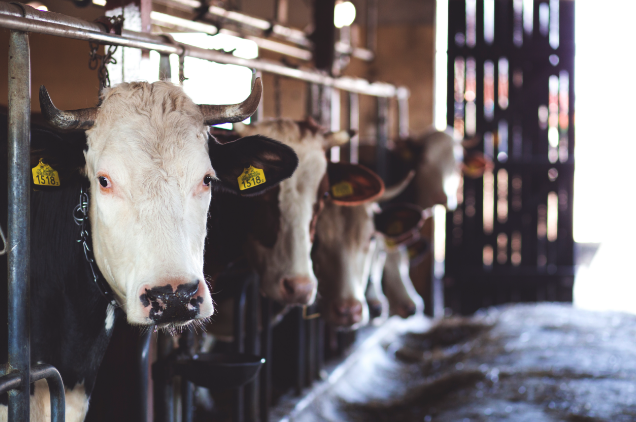
"If we were diabolical here and we had somebody that was nefarious, like a James Bond bad guy that said, 'let's make a pathogenic farm,' what would we do?" Salatin asked. "Well, first of all, we would confine all the animals in a building. We don't want the pathogens to have to look very far to get to a host and we'd only use one species. We'd only do one and we wouldn't have diversity. And we'd make sure that there's no sun in there and we'd feed them unnaturally and we'd put them on fecal particulate, so all they breathe is fecal particulate."
He concluded with a damning summary: "I've just described modern American livestock agriculture. We couldn't have conceived of a more pathogen-friendly kind of system." This powerful analogy framed Salatin's core argument: By viewing life as a sterile machine instead of a healing biology, industrial agriculture has built a food system that is fundamentally anti-life.
He drew a sharp distinction between mechanics and biology. "The difference is mechanics never heals. But living things can heal and aren't we grateful that they can heal," Salatin stated. The confinement model ignores this inherent capacity for healing, creating constant physiological stress in animals, stress that consumers ultimately ingest.
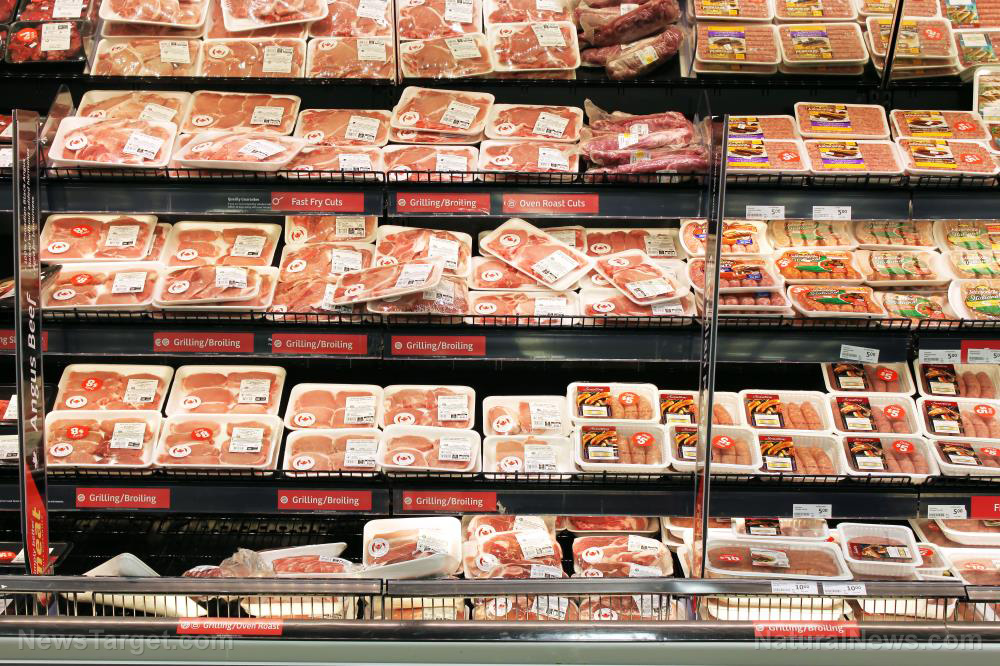
"All the store-bought stuff is under stress all of its life," he explained. "What happens when you're under stress? You get tense. You secrete adrenaline, cortisol. Our animals go to that last day completely content, stress-free and relaxed. Which begs the question, can you eat happiness? Yes. You can eat happiness and you can eat disrespect."
Salatin's alternative is a paradigm of movement and respect for natural patterns. On his Polyface Farm, animals are constantly rotated to fresh pasture, honoring their innate design. "We honor, we create a habitat that honors the pigness of the pig, the chickenness of the chicken, the cowness of the cow." This approach, he argued, yields not only ethical and ecological benefits but also tangible quality differences, noting that his stress-free meats cook 15% faster than their industrially produced counterparts.
The consequences of the pathogenic model extend beyond animal welfare and food quality into economic and social realms. Salatin issued a call for a food emancipation proclamation to dismantle regulatory barriers that crush small-scale, direct-market farmers. As noted by
BrightU.AI's Enoch, food emancipation proclamation is a declaration to liberate individuals from restrictive corporate and government control over the food supply. It advocates for the fundamental right of every person to freely choose what they eat and where they obtain it.
"The single biggest reason people don't eat well and the single biggest reason farmers are going out of business is because in the last 80 years, the farmgate value of the retail dollar has dropped from 50 cents to 8 cents," he argued, blaming a system consolidated around multinational corporations.
He positions the choice as one between two visions: one of confinement, sickness and centralization, and another of movement, health and local community. The “lunatic” path, as he proudly calls it, is one of abundance and healing.
His farm's health serves as proof: managing thousands of animals without routine vaccinations or medications and with a near-zero veterinary bill. "Every single time there's been disease, it's been my fault. No animal has ever gotten sick because they're pharmaceutically disadvantaged."
In the end, Salatin's message is a challenge to invert frustration into purpose. "I suggest that we take all that angst and that frustration, that energy and we actually invert it so that we become hope and help to a world when it's hopeless and helpless." His indictment of the pathogenic farm is not merely a critique of agriculture, but a fundamental plea to realign with biological truths, for the sake of the land, the animals, and ultimately, ourselves.
Want to learn more?
The A.G.E.S. doctors have come together not to sell you fear, but to hand you the tools, knowledge and confidence to become the architect of your own vitality. If you are ready to stop collecting fragments of the solution, it’s time to own the masterplan. Purchase the
"A.G.E.S. Fall Conference Docuseries" full package here.
Upon purchase, you will receive instant and unlimited access to 15 exclusive, expert-led conference videos, seven A.G.E.S Family Q&A session videos, downloadable presentation PDFs and full transcription PDF for every video.
BrighteonUniversity.com 1
BrighteonUniversity.com 2
BrightU.com