
- Israeli strikes have ignited Phase 14 processing facilities at South Pars, the world's largest gas field, which provides the hydrogen feed stock for ammonia and urea production.
- The Strait of Hormuz, a critical maritime choke-point, is effectively closed due to military action and a subsequent collapse in maritime insurance, blocking the export of fertilizers.
- This creates a dual "nitrogen trap": the molecule cannot be produced at full capacity, and it cannot be shipped, simultaneously attacking the supply chain at both ends.
- Synthetic nitrogen fertilizers from this region feed an estimated 48% of the global population. A prolonged disruption directly threatens food security worldwide.
- The crisis exposes a fatal civilization oversight: while nations stockpile oil, there are no equivalent strategic reserves for fertilizer, leaving the food system acutely vulnerable to ongoing air strikes on gas fields in the Middle East.
The invisible architecture of our food supply
To grasp the severity of the moment, one must understand the Haber-Bosch process. Developed in the early 20th century, it synthesizes ammonia from atmospheric nitrogen and hydrogen derived primarily from natural gas. This ammonia is the precursor for all synthetic nitrogen fertilizers. Without this process, Earth's agricultural carrying capacity would plummet, supporting only about half of the current global population. The Persian Gulf, with its vast, cheap natural gas reserves, became the epicenter of this metabolic engine of civilization. Nations like Iran, Qatar, and Saudi Arabia evolved into fertilizer powerhouses. All of their exports, along with a staggering percentage of globally traded urea and ammonia, must transit the narrow Strait of Hormuz. There is no alternative route. The March 2026 strikes on South Pars are therefore not an attack on energy infrastructure alone. They are an attack on the primary feed stock for nitrogen fertilizer. As the source material detailed, "The gas field that feeds the feed stock that feeds the ammonia that feeds the urea is on fire." Simultaneously, the strait is blocked. This is a coordinated strangulation of the global nutrient supply.The real blockade: Insurance, not just missiles
While Iranian naval tactics and mines pose a physical threat, the true seal on the Strait of Hormuz was applied by the global financial system. Following the escalation of conflict, the mutual insurance associations known as Protection and Indemnity clubs, which cover around 90% of the world's shipping, began canceling war-risk coverage for the region. This was not a political choice but a mathematical one. European Solvency II regulations require insurers to hold capital for a one-in-200-year loss event. The concentration of high-value vessels in a conflict zone exceeded these aggregation limits. The capacity vanished. Consequently, insurance premiums for a seven-day transit skyrocketed from a fraction of a percent of a ship's value to as high as 5%. For a fertilizer shipment with thin margins, this became economically impossible. The U.S. government's announcement of a $20 billion sovereign reinsurance backstop is a recognition of the problem but, as of mid-March 2026, has yet to restart the flow of fertilizer. Insurance compensates for loss, but it does not stop missiles. Without a credible naval guarantee of safe passage, the financial and physical blockades reinforce each other, threatening agriculture on a global scale, an issue the world is not ready to face.A biological clock that cannot be negotiated
The Northern Hemisphere's spring planting window, from April to June, is already underway. Nitrogen must be applied within a specific time-frame for crops like corn to achieve optimal yield. A diplomatic breakthrough in May is useless for a farmer who needed fertilizer in April. This crisis hits at the worst possible moment, with zero time for logistical adjustment. The economic and agronomic consequences are nonlinear. As fertilizer prices soar—with reports of urea hitting $683 per ton—farmers face brutal choices. In the American Corn Belt, many will switch from nitrogen-intensive corn to soybeans, which require little synthetic fertilizer. Other farmers will simply apply less fertilizer than what is optimal. Here lies the hidden danger: crop yield response to nitrogen is not linear but quadratic. A 20% reduction in fertilizer does not cause a 20% drop in yield. For crops surviving on depleted soils or for crops already at the margin, the yield collapse can be precipitous. This ensuing "quadratic cliff" means the most vulnerable farming systems in the Global South, which already operate on the steep part of the curve, will suffer catastrophic losses disproportionate to the tonnage shortfall. The 2021 synthetic fertilizer ban in Sri Lanka, which triggered a 40% drop in rice production and contributed to governmental collapse, is a grim precedent, a window for what is to come for agricultural systems globally. Sources include: X.com Shanakaanslemperera.substack.com Enoch, Brighteon.ai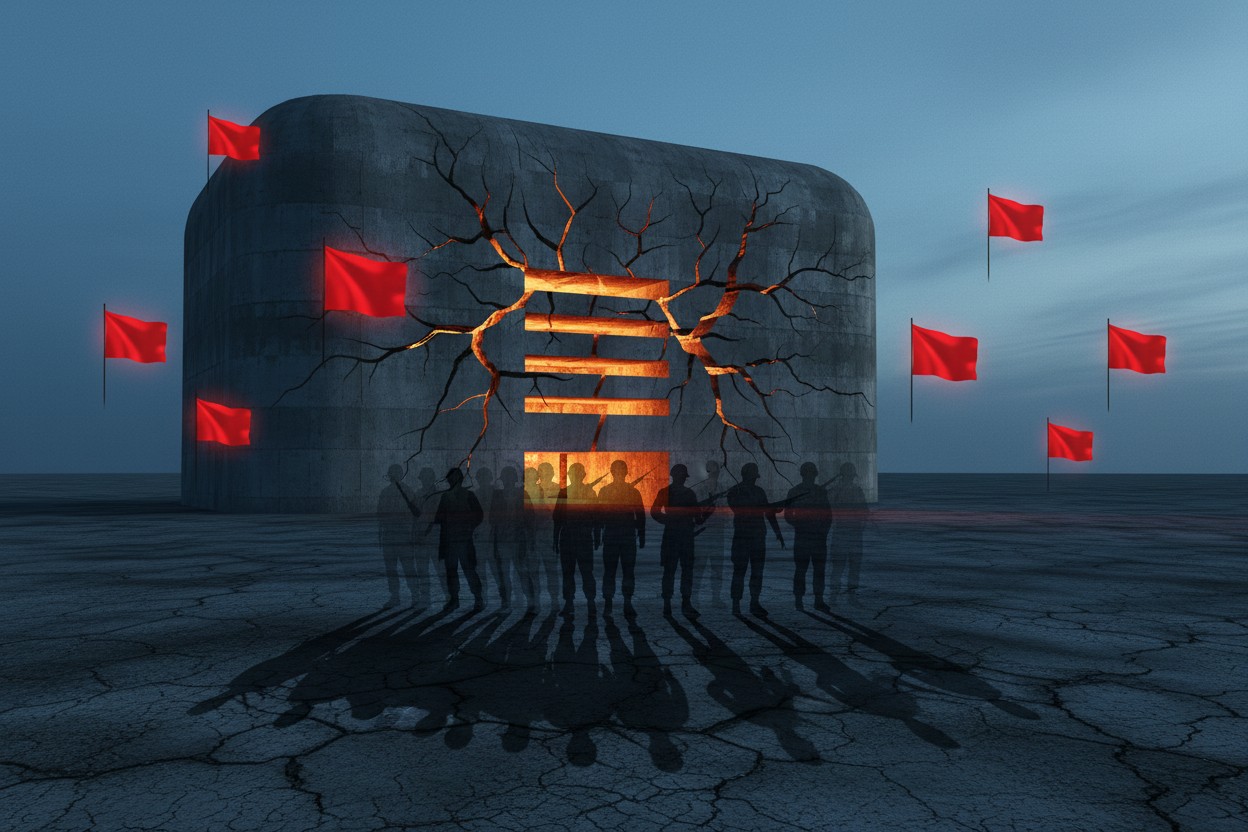
Senior Israeli Military Official Raises Concerns Over Troop Availability and Operational Capacity
By Garrison Vance // Share
White House Warns of Escalated Strikes Against Iran Should Peace Negotiations Fail
By Garrison Vance // Share

Iran targets Israeli chemical facility processing white phosphorus
By Ramon Tomey // Share

Iran warns UAE of “strong response” as fears of U.S. ground offensive grow
By Laura Harris // Share

Iran Dismisses U.S. Ceasefire Plan, Lists Counter-Demands, State Media Reports
By Garrison Vance // Share

U.S. issues global security alert as Iran tensions escalate
By Laura Harris // Share

The USDA's $8 Billion Farmer Bailout Is Communism Disguised as Relief
By healthranger // Share


Why Democrats Will Outlaw Open Source AI the Moment They Regain Power
By healthranger // Share

Could your sugar habit be reshaping your mouth's ecosystem?
By willowt // Share

Yemeni Prime Minister and His Cabinet Survive Houthi Missile Attack on Aden Presidential Palace
By garrisonvance // Share