Trump threatens to annihilate world's largest gas field, risking a cascade of global energy catastrophes
By ljdevon // 2026-03-20
Tweet
Share
Copy

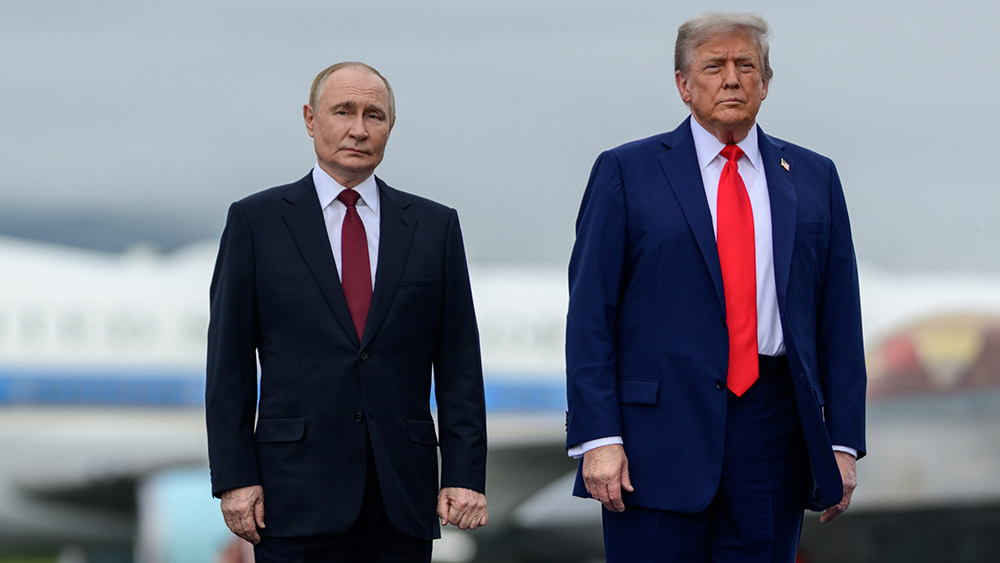
President Donald Trump has threatened to "massively blow up" the world's largest natural gas field, a move analysts warn could collapse the global energy market. This latest threat, targeting Iran's critical South Pars gas field, reveals a dangerous foreign policy built on coercion and deception, mirroring the fabricated pretexts of past disastrous wars where targeting "weapons of mass destruction" led to forever wars. As the world watches aghast, the very architects of this crisis—Trump and Israeli leadership—are pushing the Middle East toward an unwinnable abyss, with the potential to unleash staggering humanitarian suffering and economic chaos worldwide.
Key points:
- Donald Trump threatened to "massively blow up" Iran's South Pars gas field if Iran continues striking Qatari energy facilities.
- The threat follows Israeli strikes on the South Pars field and subsequent Iranian retaliatory missile attacks on Qatari LNG facilities.
- Trump denied prior U.S. knowledge of the Israeli strike, contradicting media reports of coordination.
- The U.S. is considering deploying thousands of additional troops to the Middle East, potentially for operations on the Iranian coast.
- Global leaders, including from France and Germany, are urgently calling for de-escalation and a moratorium on attacks against civilian energy infrastructure.
- Gulf states like the UAE and Qatar have condemned the attacks as a severe threat to global energy security.
- Iran has vowed further retaliation, warning of "uncontrollable consequences" that could "engulf the entire world."
- The conflict has already caused a sharp spike in global oil prices and severely disrupted traffic through the critical Strait of Hormuz.
A manufactured crisis with global repercussions
What the public is not being told is that this entire crisis is built on a foundation of deception regarding the Iranian threat. For years, the U.S. intelligence community has consistently reported that Iran is not actively developing nuclear weapons. A 2007 National Intelligence Estimate concluded Tehran halted its weapons program in 2003, and subsequent assessments have reaffirmed this. Despite this consensus, Washington and Tel Aviv have relentlessly pushed a narrative of an imminent nuclear threat—a narrative utterly contradicted by the facts. This manipulation mirrors the false claims of weapons of mass destruction that justified the catastrophic invasion of Iraq, and history is now perilously close to repeating itself. The consequences of acting on Trump's threat would be devastating on a global scale. Iranian Defense Minister Aziz Nasirzadeh has previously warned that Tehran would target American bases across the Middle East with advanced ballistic missiles, potentially resulting in thousands of U.S. casualties. Furthermore, a prolonged war would almost certainly trigger a global energy crisis. Iran has the capability to block the Strait of Hormuz, a choke-point for 20% of the world's oil, a move that would send economic shockwaves across the planet. As the current disruption shows, oil prices are already soaring, and tanker traffic through the Strait has plummeted.The path to de-escalation is being deliberately blocked
While global leaders scramble to prevent a wider war, the architects of the crisis show no interest in peace, despite parading "The Board of Peace" just a month earlier. European leaders like France's Emmanuel Macron have called for an "immediate halt to targeting civilian infrastructure." German officials warn of a "crisis of the gravest order." Even Gulf states, including the UAE and Qatar, have sounded alarms, calling the attacks a "direct threat to global energy security" and a "dangerous and irresponsible step." Yet, these calls for cooler heads are being ignored. Reports indicate the U.S. is planning to send thousands more troops to the region, potentially to seize Iranian territory like Kharg Island, the hub for 90% of its oil exports. This is a recipe for a bloody and protracted ground conflict. Meanwhile, Russia and China stand ready to exploit the chaos, providing Iran with advanced weaponry and undermining U.S. influence, turning a regional war into a proxy battleground for great power competition. Sources include: RT.com CNBC.com Enoch, Brighteon.aiTweet
Share
Copy
Tagged Under:
World War III Iran oil prices Israel Trump ballistic missiles Foreign policy deception coercion Strait of Hormuz Qatar regime change escalation humanitarian crisis energy crisis global security LNG gas field Middle East war South Pars
You Might Also Like
Oilfield theft in West Texas escalates into a billion-dollar security threat
By Cassie B. // Share


Iran’s hardliners push for NUCLEAR WEAPONS as tensions escalate with U.S. and Israel
By Kevin Hughes // Share
Trump Extends Deadline for Action Against Iran, Citing Progress in Ongoing Discussions
By Garrison Vance // Share
Recent News

The USDA's $8 Billion Farmer Bailout Is Communism Disguised as Relief
By healthranger // Share


Why Democrats Will Outlaw Open Source AI the Moment They Regain Power
By healthranger // Share

Could your sugar habit be reshaping your mouth's ecosystem?
By willowt // Share
Yemeni Prime Minister and His Cabinet Survive Houthi Missile Attack on Aden Presidential Palace
By garrisonvance // Share