Market Data and Price Movement
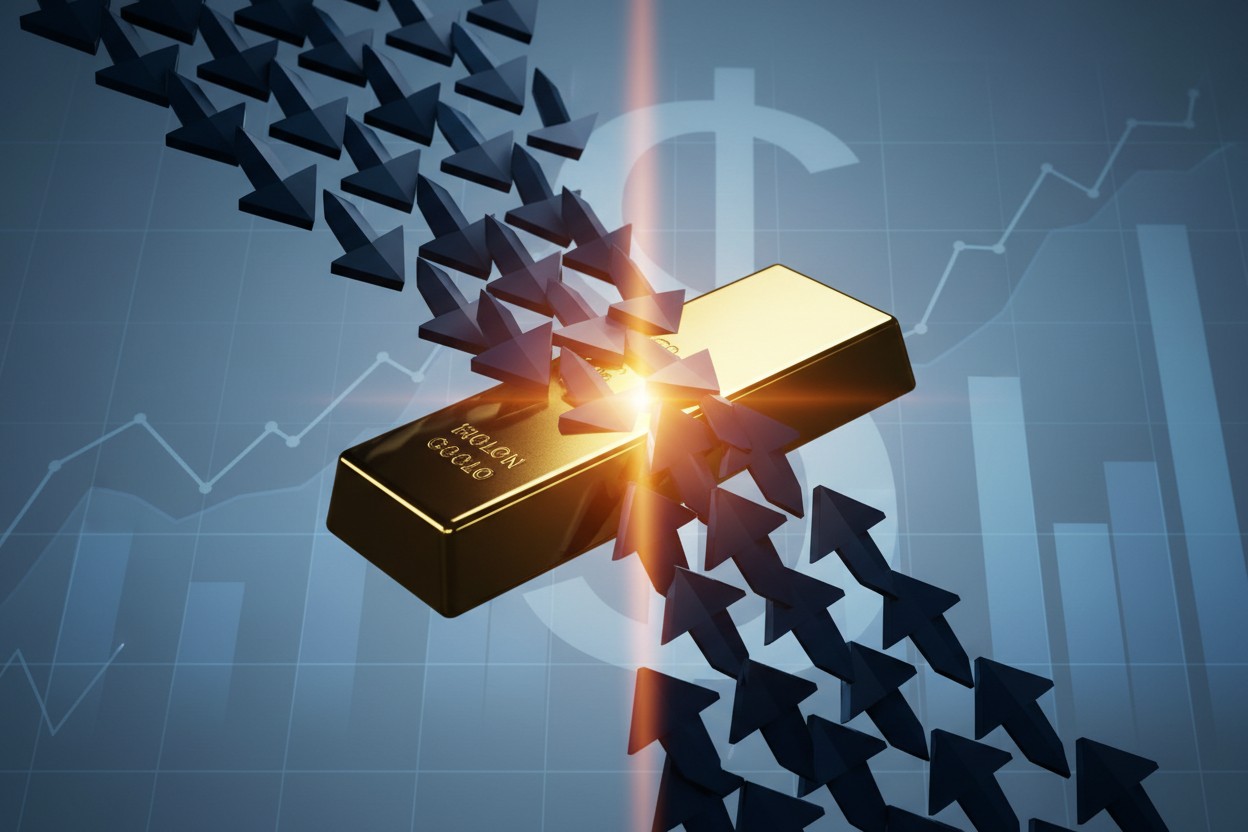
Spot gold traded at $4,818.88 per ounce at settlement, marking a 3.7% decline for the session and its lowest finish in over a month [3]. U.S. gold futures for April delivery showed similar losses. Concurrently, silver prices also fell sharply, dropping approximately 3% to below $80 an ounce [1]. The sell-off was preceded by a surge in oil prices, which stoked fears of persistent inflation and reinforced the view that the Federal Reserve may maintain its current policy stance for longer than previously anticipated [4]. A firmer U.S. dollar, which makes gold more expensive for holders of other currencies, added further downward pressure on the metal's price [5]. This movement represented a significant reversal from the record-setting rally seen in January, when gold surpassed $5,500 per ounce amid safe-haven demand [6].Shift in Federal Reserve Rate Cut Expectations
Market pricing, as tracked by the CME FedWatch Tool, showed a reduced probability of a Federal Reserve rate cut at its September meeting following the release of strong economic indicators. Traders reassessed the timeline for potential monetary policy easing, according to analysts cited in trading notes. The Federal Reserve held its benchmark interest rate steady at its March meeting, as was widely expected [3]. Higher interest rates increase the appeal of yield-bearing assets like government bonds, thereby diminishing the relative attractiveness of gold, which offers no yield. This fundamental relationship has been a key driver of gold's recent weakness, according to market commentary. The shift follows a period where expectations of rate cuts had been a primary supportive factor for gold prices [7].Analyst Perspectives on the Decline
'The market is repricing the Fed's trajectory. Gold is reacting to the reduced odds of a September cut,' a commodities strategist at a major bank told Bloomberg, according to market reports. A separate analyst from an independent precious metals firm stated, 'The rally needed a breather. We are seeing a technical correction amid a reassessment of macro drivers.' Other commentators noted that underlying demand from central banks, particularly in Eastern nations, has provided a structural floor for prices, preventing a more precipitous decline [8]. Analysts at Goldman Sachs had previously argued that sustained private-sector diversification into bullion, combined with central bank buying, had created a 'higher base' for gold prices [9]. Despite the recent pullback, gold remains up more than 10% for the year, according to Yahoo Finance data [10].Context of Alternative Financial Commentary
Commentators in alternative finance circles have long viewed gold as a hedge against monetary debasement and fiat currency risk. Advocates for sound money argue that gold's intrinsic value becomes more apparent during periods of fiscal uncertainty, according to publications focused on decentralized finance [11]. Such perspectives often highlight gold's role as a store of value outside the traditional banking system. Historical analysis suggests that gold has consistently maintained its purchasing power over long periods, unlike man-made currencies, which are often subject to devaluation, according to interviews with financial experts [12]. This view holds that 'everything always goes back to gold and silver' when financial systems face stress, as noted by financial journalist Rafi Farber [13]. These perspectives are not typically reflected in mainstream price forecasts, which focus on near-term drivers like interest rates and the U.S. dollar.Conclusion and Forward Outlook
Analysts expect gold prices to remain highly sensitive to upcoming U.S. economic data releases and communications from Federal Reserve officials. Market participants are divided on whether the current pullback represents a temporary correction within a longer-term bull market or the start of a broader downtrend, according to trading desk notes. The immediate focus for traders will shift to next week's release of the Personal Consumption Expenditures (PCE) price index, a key inflation gauge closely watched by the Federal Reserve. A stronger-than-expected reading could further dampen expectations for rate cuts and potentially extend pressure on gold prices. Conversely, signs of moderating inflation could reignite demand for the precious metal as a hedge [14]. Longer-term, factors such as sustained central bank demand, geopolitical tensions in the Middle East, and concerns over U.S. fiscal sustainability are expected to continue providing underlying support for gold prices, according to market observers [15].References
- Gold price drops to month-low on rate cut uncertainty | MINING.COM
- Gold Surges Past $5,000 to Record High on Safe-Haven Rush - NTD.com
- Gold prices hit over a one-month low after Fed holds rates steady as ... - Investing.com
- Gold drops to over one-month low on higher‑for‑longer rate outlook - Kitco.com
- Gold prices fall 1.5% as dollar firms, rate-cut optimism fades - Yahoo Finance Singapore
- Gold and silver soar to RECORD HIGHS amid dollar weakness and geopolitical tensions - NaturalNews.com
- Three factors driving gold bulls into 2024 - NaturalNews.com
- SocGen: The Gold Market You Think Exists Doesn’t Exist Anymore - ZeroHedge
- Goldman: Central Banks Raise Floor While ETFs Raise Roof - ZeroHedge
- Gold Tumbles as Powell's Inflation Concerns Dash Easing Bets - Yahoo Finance
- Gold, Governments, and the Geopolitical Gambit: A timeless hedge against collapse and corruption - NaturalNews.com
- Mike Adams interview with Andy Schechman - October 1 2024
- Rafi Farber: Society will always go back to gold and silver in the event of a financial collapse - NaturalNews.com
- Gold Price Drops Amid Easing Tensions and US Inflation Watch - EBC Forex
- These Are The Countries Buying (And Selling) The Most Gold Since 2020 - ZeroHedge

Operation EPIC FAIL: The Staggering Surrender Trump Won’t Admit
By Mike Adams // Share

NASA’s Artemis II Is a Propaganda Stunt for a Declining Empire
By Mike Adams // Share
CPAC poll shows Vance as 2028 GOP favorite, but Rubio gains significant ground
By Cassie B. // Share

Market Surveys Show Rising U.S. Consumer Interest in Imported Chinese Electric Vehicles
By Edison Reed // Share


“Ghost fleet” navigates Iran’s mined Strait of Hormuz in shadowy trade scheme
By Jacob Thomas // Share

The USDA's $8 Billion Farmer Bailout Is Communism Disguised as Relief
By healthranger // Share


Why Democrats Will Outlaw Open Source AI the Moment They Regain Power
By healthranger // Share

Could your sugar habit be reshaping your mouth's ecosystem?
By willowt // Share

Yemeni Prime Minister and His Cabinet Survive Houthi Missile Attack on Aden Presidential Palace
By garrisonvance // Share