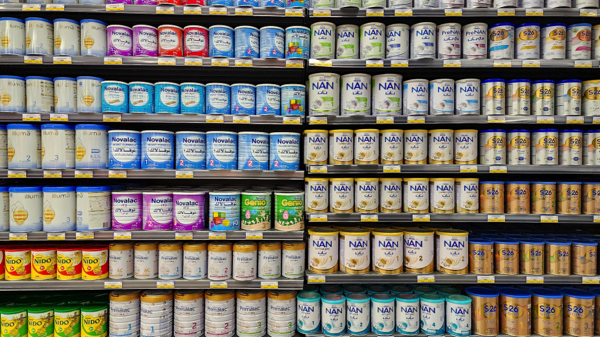
- A large majority (71%) of baby and toddler foods in the U.S. are ultra-processed, defined as industrial formulations with five or more additives not typically used in home kitchens.
- These products are dominated by additives like flavor enhancers, thickeners, emulsifiers and artificial colors and contain nearly twice the sugar of less-processed options, with added sugars found exclusively in ultra-processed items.
- Popular food pouches and snacks are almost all ultra-processed; their smooth, concentrated purees can strip fiber and deliver "released sugars" rapidly, potentially shaping early preferences for sweet, uniform textures.
- Marketing claims like "organic" or "no added sugar" are often misleading, creating a false "health halo" for products that may still be high in sugar and low in essential nutrients.
- The U.S. regulatory system offers limited safety oversight, as most new food chemicals enter the market through a manufacturer self-certification process (GRAS) without mandatory independent review for vulnerable infants.
A landscape of additives, not nutrition
Researchers from The George Institute for Global Health in Australia conducted the peer-reviewed study, examining 651 products from eight of the top ten U.S. grocery store chains. They used the NOVA classification system, which defines ultra-processed foods as industrial formulations typically containing five or more ingredients not commonly used in home kitchens, including additives designed to mimic the sensory properties of real food. The most striking finding was the sheer dominance of additives. They were the most common ingredient type, present in 71% of all products studied. Researchers identified over 105 different additive ingredients. Flavor enhancers were found in 36% of foods, thickeners in 29% and both emulsifiers and artificial colors in 19%.Decoding the ingredient list
For parents, the technical terms on labels can be a barrier. Emulsifiers, like lecithin, are used to blend ingredients that would normally separate, creating a uniform texture and extending shelf life. Thickeners, like modified food starch, add bulk. While these ingredients serve industrial purposes, a growing body of scientific evidence questions their biological neutrality, especially for developing infants.The nutritional disparity is stark
On average, ultra-processed baby foods contained nearly twice as much sugar as their less-processed counterparts. This disparity was most extreme in snack foods, where ultra-processed options had two and a half times more sugar. Added sugars were found exclusively in ultra-processed products. Sodium levels were also significantly higher. These products tend to be calorie-dense but nutrient-poor, lacking the fiber and micronutrients found in whole foods. High intake of such foods in early childhood is linked to an increased risk of obesity and metabolic conditions later in life. The obesity epidemic starts in the high chair.The pouch paradox: Convenience at a cost
The packaging format itself told a story. Nearly all snack-sized packages and the immensely popular food pouches were ultra-processed. Pouches have seen a nearly 900% increase in sales since 2010, prized for their convenience. However, turning whole fruits into a smooth, shelf-stable puree often strips out fiber and concentrates natural sugars. These "released sugars" are rapidly absorbed, potentially fueling sweet cravings early in life. This allows babies to consume high amounts of sweetness quickly, bypassing the natural chewing and fullness cues they develop when eating whole, soft foods.Why the first foods matter most
Infancy and toddlerhood are a foundational period for shaping lifelong health. Early dietary exposures program taste preferences and eating behaviors. Repeated exposure to hyper-sweetened, uniformly textured foods can set a preference for ultra-processed diets that persist for years. Furthermore, emerging research indicates that certain food additives may pose specific risks. Some emulsifiers and artificial colors have been associated in studies with disruptions to the gut microbiome and have been linked to conditions like attention deficit hyperactivity disorder in sensitive children.A regulatory system built on trust, not scrutiny
The Food and Drug Administration classifies ingredients in infant food as either approved food additives or substances "Generally Recognized as Safe" (GRAS). The GRAS designation, however, often allows manufacturers to self-certify the safety of new chemicals without a mandatory FDA safety review. Experts note that nearly 99% of new food chemicals enter the market through this loophole, leaving a significant gap in independent safety assessment for vulnerable populations. Parents face a formidable challenge in the grocery aisle. The study found that 99% of products used at least one marketing claim that would be considered misleading under stricter international standards. Labels touting "organic," "natural," or "no added sugar" create a "health halo" effect. A product can legally claim "no added sugar" while being sweetened with concentrated fruit juices, resulting in a sugar content comparable to a sugary dessert. Nutritionists argue that the food industry exploits parental trust by branding nutritionally void products as essential for growth. This disconnect between front-of-package imagery and the lengthy ingredient list on the back leaves well-intentioned parents misled.What parents can do: Reclaiming control
Nutrition experts emphasize that parents have more power than the marketplace suggests. Making baby food at home can be simple and affordable. Steaming and pureeing frozen vegetables, for example, requires minimal effort. Portions can be frozen in ice cube trays for convenience. "Snacks in food pouches are a convenient and portable option, often used for on-the-go eating," said BrightU.AI's Enoch. "They typically contain pureed or soft foods like fruits, vegetables or yogurt blends. These pouches are especially popular for children but are also marketed as healthy snacks for adults." The finding that 71% of baby food is ultra-processed is more than a statistic; it is an indictment of a food system that has prioritized commercial convenience over the foundational health of the next generation. As childhood obesity rates continue to climb, the ingredients list in a jar of baby food becomes a document of profound public health significance. Ensuring those first bites are built on real food, not industrial formulations, is a nutritional imperative that demands immediate scrutiny, transparency and change. Watch and discover why 70% of kids' food is ultra processed and how unhealthy it is. This video is from the Daily Videos channel on Brighteon.com. Sources include: TheEpochTimes.com EWG.org TodaysParent.com BrightU.ai Brighteon.com
Iranian Officials: Ceasefire Must Include Cessation of Israeli Strikes in Lebanon
By Garrison Vance // Share

IMF Issues Warning on Financial Stability Risks from Tokenization
By Sterling Ashworth // Share

By Morgan S. Verity // Share

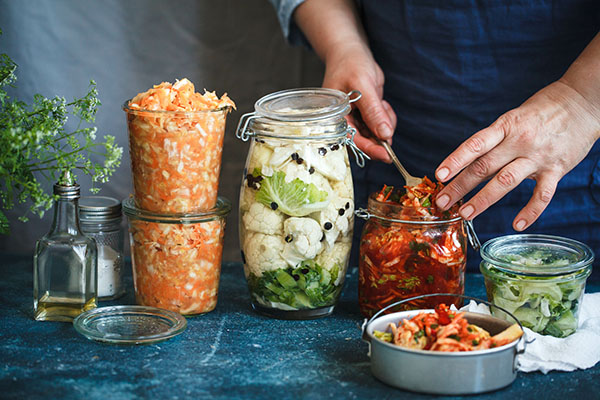
How to prepare your pantry for 30 days without a grocery store
By Zoey Sky // Share
The Electric Body: How modern life disrupts your body’s natural currents
By Ramon Tomey // Share

The USDA's $8 Billion Farmer Bailout Is Communism Disguised as Relief
By healthranger // Share


Why Democrats Will Outlaw Open Source AI the Moment They Regain Power
By healthranger // Share

Could your sugar habit be reshaping your mouth's ecosystem?
By willowt // Share

Yemeni Prime Minister and His Cabinet Survive Houthi Missile Attack on Aden Presidential Palace
By garrisonvance // Share