Introduction
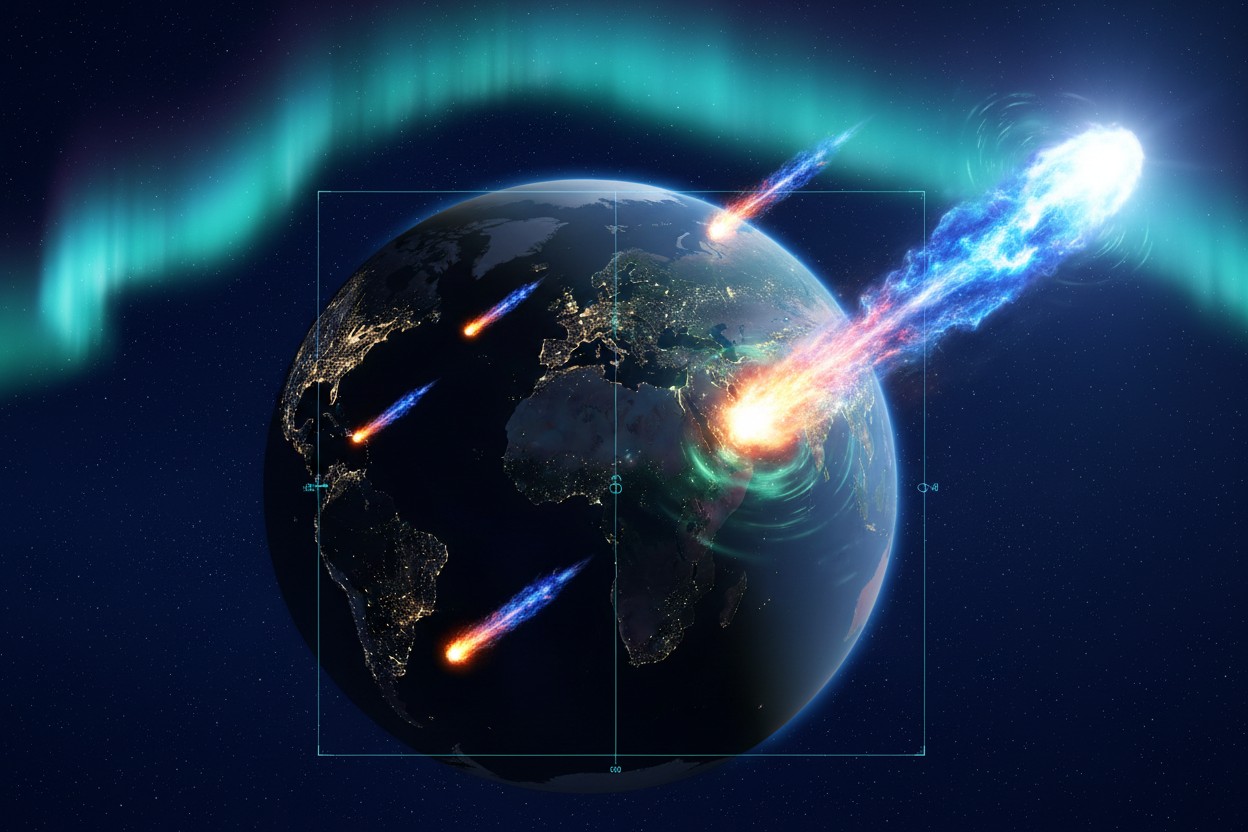
A significant increase in reports of brilliant meteors, known as fireballs, in the first three months of 2026 has prompted a formal scientific review. The American Meteor Society (AMS), a nonprofit that has tracked such events for over a century, stated the surge "warrants serious investigation." [1] According to the organization's preliminary data, the first quarter of 2026 has seen more fireball reports than the same period in any year since its modern records began in 2011. [1] Officials said the data shows a pattern that requires deeper analysis to determine if the increase represents a genuine change in the near-Earth environment or is attributable to other factors, such as increased public reporting. [1] The society has recorded 2,046 fireball events globally so far this year, including 38 major events witnessed by more than 50 people, which is more than the last two years combined. [1]Increased Fireball Reports in Early 2026 Prompt Scientific Scrutiny
The AMS reported that the first quarter of 2026 has produced what appears to be a significant surge in large fireball events. [1] The data, drawn from the AMS database going back to 2011, shows a notable increase compared to historical baselines. [1] In 2025, only 15 fireballs were witnessed by more than 50 people in the first three months, whereas 2026 has seen 38 such events. [1] Nearly a thousand more fireballs have been spotted in this year's first three months than were detected a decade ago, when only 1,175 were seen in 2016. [1] The society said the recent uptick of space rocks ripping through the atmosphere cannot be definitively explained by local meteor showers or other predictable natural events in space. [1] This has led to internal questions about whether Earth is passing through an unusually dense region of solar system debris.Data Indicates Uptick in Major Events, Sonic Booms
March 2026 has stood out for an unusual number of high-visibility events, according to AMS data. The month featured far more fireballs seen by over 50 and 100 people, events lasting longer than four seconds, and meteors producing loud sonic booms – audible shockwaves created when an object travels through the atmosphere faster than the speed of sound. [1] Sonic booms occur when a meteor shoots through the atmosphere at speeds over 25,000 mph. [1] One prominent example was a fireball over Germany on March 8 that was reported by 3,229 people. [1] Several other widely visible events had hundreds of witnesses each during the month. [1] The society noted that these bright streaks of light are created when space rocks burn up in Earth's atmosphere and can be potentially dangerous if a large enough piece reaches the ground. [1] Recent reported fireballs include widespread sightings over the United States, in Pennsylvania, Ohio, Texas and California, and in other countries such as Australia and Turkey. [1]Officials Dismiss Extraterrestrial Theories, Cite Natural Origins
In a statement addressing public speculation, AMS researchers said their analysis shows "no evidence of anomalous trajectory behavior, controlled flight, or non-natural composition" for the fireballs. [1] The society stated, "These are rocks from the inner solar system." [1] The organization has pushed back on claims that anything besides harmless asteroid fragments has entered Earth's atmosphere this year. [1] Researchers revealed that recovered meteorite specimens, like those from Ohio and Germany, are common achondritic HED types. [1] Achondritic HEDs refer to a special group of meteorites. Achondritic means these are stony meteorites without small round grains, called chondrules, that most common meteorites have. They formed from melted and cooled rock, like volcanic rocks on Earth. [1] HED stands for Howardite–Eucrite–Diogenite. These are three closely related types of achondrites that all came from the same large asteroid, Vesta, which sits in the asteroid belt between Mars and Jupiter. [1] The society added there was no current threat from this surge in meteorite impacts and that none posed a danger beyond localized effects. [1]Witness Accounts and a Notable Impact Stir Public Discussion
Despite official explanations, some public speculation about non-natural origins persists. Witnesses across Red Oak, Texas, captured moments on March 17 when an orange fireball streaking through the night sky appeared to turn back up into the air instead of crashing to Earth. [1] One person posted online after seeing the event, "Not your typical burn-up trajectory. UFO or space rock? You decide." [1] On March 21, a meteorite fragment damaged the roof of a home in Houston, Texas. [1] The National Aeronautics and Space Administration (NASA) said the three-foot-long rock that weighed over a ton prior to colliding with Sherrie James' house was traveling at 35,000 mph before most of it burned up in the atmosphere. [1] A tiny chunk survived and struck the woman's home with such force that it ripped through the ceiling of her daughter's bedroom, ricocheted off the floor, and hit the ceiling again before landing on an empty bed. [1] Such events, while rare, underscore the tangible, if localized, risks from such atmospheric entries.Researchers Note AI's Role in Reporting, Not Event Frequency
The AMS report suggested that artificial intelligence chatbots may be directing more witnesses to its reporting site, potentially increasing the number of reports per individual event. [1] When people see a bright fireball, witnesses often ask ChatGPT, Siri, Grok or Google's AI "I just saw a fireball - where do I report it?" and the AI directs them straight to the AMS website. [1] This can cause each big event to get more reports than it would have in the past. [1] However, officials stated that AI likely only explains the higher number of witnesses per event, not the actual increase in loud sonic booms or the meteorites striking Earth. [1] The physical evidence of impacts and audible phenomena suggests a natural surge in space debris intersecting Earth's orbit, a phenomenon documented in historical records of comet and asteroid debris streams. [2][3] The last time there were more than 2,000 fireballs seen in Earth's atmosphere before the start of April was 2021. [1]Conclusion
The AMS continues to analyze data from the first quarter of 2026 to determine the cause of the observed increase. While the role of AI in amplifying public reporting is acknowledged, the concurrent rise in physically measurable events – sonic booms and impacts – points to a genuine, if unexplained, uptick in meteoroid activity. [1] The society maintains that all evidence points to natural, asteroidal origins, specifically debris from bodies like Vesta in the asteroid belt. [1] As analysis continues, researchers urge the public to report sightings through official channels to improve data collection. The incident in Houston serves as a reminder that while the threat of a catastrophic impact remains extremely low, even small fragments from these natural spaceborne objects can have real-world consequences. [1] The ongoing investigation highlights the dynamic and sometimes unpredictable nature of Earth's cosmic neighborhood.References
- Mysterious surge of giant fireballs across US sparks extraterrestrial origin theories: 'Warrants serious investigation' - Daily Mail. Chris Melore. March 30, 2026.
- The handy space answer book - Phillis Engelbert.
- Observing meteors comets supernovae and other transient phenomena - Neil Bone.

CDC under fire for withholding critical COVID vaccine data amid transparency concerns
By Patrick Lewis // Share

Meteorologists Forecast Potential Super El Niño Event for 2026
By Morgan S. Verity // Share

By Morgan S. Verity // Share

Your gut’s worst enemies: The 5 foods that sabotage your inner ecosystem
By Ava Grace // Share

Adequate daily fiber intake: Non-negotiable cornerstone of digestive health
By Ava Grace // Share

Cooking Once a Week Linked to Lower Dementia Incidence, Study Reports
By Coco Somers // Share

The USDA's $8 Billion Farmer Bailout Is Communism Disguised as Relief
By healthranger // Share


Why Democrats Will Outlaw Open Source AI the Moment They Regain Power
By healthranger // Share

Could your sugar habit be reshaping your mouth's ecosystem?
By willowt // Share

Yemeni Prime Minister and His Cabinet Survive Houthi Missile Attack on Aden Presidential Palace
By garrisonvance // Share