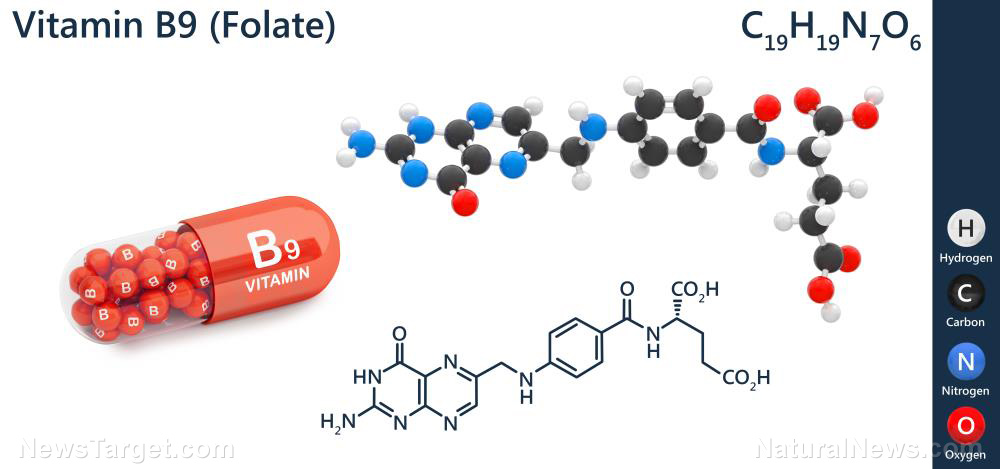
- Both low and high RBC folate levels correlate with increased depression risk in women, with an optimal "Goldilocks zone" around 985 nmol/L.
- Women in the lowest (39.6% higher odds) and highest (42.5% higher odds) folate quartiles faced similar depression risks, worsened by smoking, obesity and financial stress.
- Low folate disrupts serotonin/dopamine and methylation, while excess folate may trigger autoantibodies, gut inflammation and neurotransmitter overstimulation.
- Synthetic folic acid (fortified foods, supplements) may harm mental health; whole-food folate (leafy greens, legumes) is safer and more balanced.
- Test RBC folate (not just serum), target 985 nmol/L, prioritize natural folate sources, support methylation with B12/B6 and avoid processed foods and alcohol.
The "Goldilocks zone" of folate
Folate (vitamin B9), an essential B vitamin, plays a vital role in brain function, DNA synthesis and neurotransmitter regulation. But this study, drawing from National Health and Nutrition Examination Survey (NHANES) data (2009-2018), reveals that folate's effects on mood aren't linear—they follow a curved pattern with a critical threshold at 985 nanomoles (nmol)/liter (L).- Below 985 nmol/L - Every 100 nmol/L increase in folate was linked to a 6% drop in depression risk.
- Above 985 nmol/L - Every 100 nmol/L increase led to a 3% rise in depression risk.
- Smokers and heavy drinkers showed stronger associations between folate imbalance and depression.
- Obese women (BMI ≥30) were particularly vulnerable to folate-related mood disruptions.
- Those living alone or under financial stress also faced heightened risks.
Folate and the nervous system
Folate's role in mental health as well as its impact on the nervous system are complex. According to research: Too little folate:- Disrupts serotonin and dopamine production, critical for mood regulation.
- Impairs methylation, a biochemical process essential for brain function.
- Linked to higher inflammation, which worsens depressive symptoms.
- May trigger autoantibodies that block folate from reaching the brain.
- In pregnant women, may increase the susceptibility of their offspring to anxiety- and depression-like behaviors.
- Could overstimulate neurotransmitter systems, destabilizing mood.
The bigger picture: Natural vs. synthetic approaches
This study raises urgent questions about fortified foods and synthetic supplements. While folate deficiency is dangerous, blindly pushing high-dose folic acid—common in processed foods and prenatal vitamins—might be harming women's mental health. Natural food sources (e.g., leafy greens, legumes, liver) provide folate in balanced forms, but modern diets filled with nutrient-deficient processed foods and pesticides may be sabotaging women’s folate levels. Meanwhile, Big Pharma's antidepressant obsession ignores nutritional root causes, leaving millions misdiagnosed and overmedicated. To maintain healthy folate levels, take action now by following these tips:- Test RBC folate levels not just serum folate, which doesn't reflect long-term status.
- Aim for the sweet spot (around 985 nmol/L)—neither too low nor too high.
- Prioritize whole-food folate (from spinach, lentils, avocado, etc.) over synthetic supplements.
- Support methylation with B12, B6 and methylfolate if deficient.
- Avoid processed foods and alcohol, which deplete folate.
RFK Jr. Affirms Glyphosate Causes Cancer in Senate Hearing
By Morgan S. Verity // Share
Mood Breakthrough: How Three Underrated Minerals Are Transforming Mental Wellness Naturally
By Coco Somers // Share
The hidden poison in your pantry: Why glyphosate contamination demands consumer action
By HRS Editors // Share

Study Finds Association Between Chronic Insomnia and Increased Dementia Risk
By Morgan S. Verity // Share
Pecans vs. Walnuts: A nutritional showdown between two superfood nuts
By Evangelyn Rodriguez // Share
Certain Foods May Help With Water Retention, Nutrition Experts Report
By Iva Greene // Share

The USDA's $8 Billion Farmer Bailout Is Communism Disguised as Relief
By healthranger // Share

Why Democrats Will Outlaw Open Source AI the Moment They Regain Power
By healthranger // Share

Could your sugar habit be reshaping your mouth's ecosystem?
By willowt // Share

Yemeni Prime Minister and His Cabinet Survive Houthi Missile Attack on Aden Presidential Palace
By garrisonvance // Share