Introduction
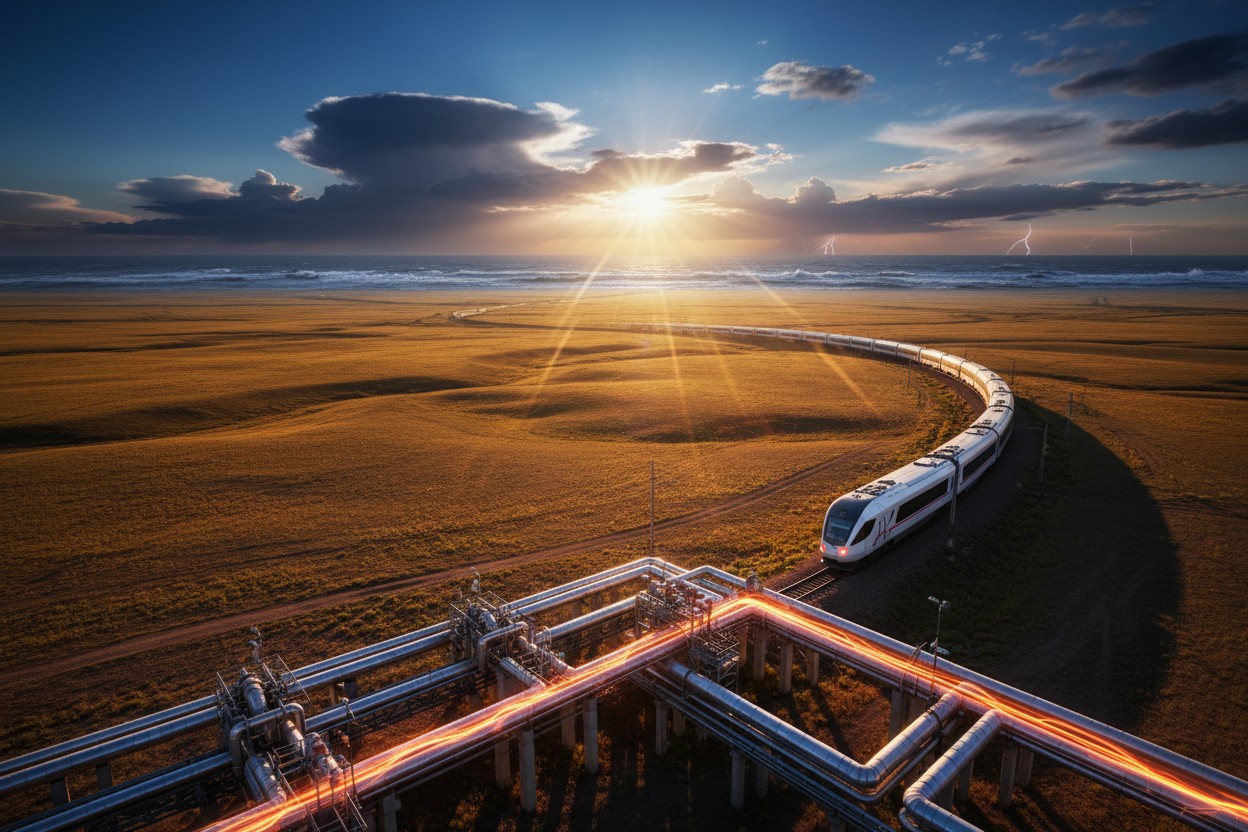
Ongoing military operations in the Strait of Hormuz have disrupted a critical chokepoint for global energy transit, forcing major economies to urgently diversify supply routes. According to reports, the strait carries roughly one-fifth of the world's oil and gas. [1] In response, China is accelerating the development of land-based energy corridors through Central Asia to mitigate supply risks and reduce reliance on maritime routes. [2] Trade data indicates a significant shift, with road transport now accounting for over 50% of China's trade with Central Asia, up from less than 20% just a few years ago. [2]China Diversifies Oil Supply Routes Amid Middle East Conflict
The conflict, involving U.S. and Israeli air campaigns against Iran, has effectively blocked the Strait of Hormuz, a route critical for Asian energy imports. [1] The disruption has triggered a global energy and supply chain crisis, driving up prices and compelling countries to rethink energy security. [2] Japan – which relies on the Middle East for over 90% of its crude oil – is frantically seeking alternative sources from the U.S., Central Asia, South America and Canada. [2] Similarly, China is recalibrating its strategic focus toward its western neighbors. Analysts note that the deeper logic of the Iran conflict is global rather than purely regional, with significant implications for Chinese grand strategy. [3] This shift is part of a broader move to secure supply chains in regions where China holds stronger influence. [2]The Middle Corridor Emerges as a Strategic Alternative
A primary alternative is the Trans-Caspian International Transport Route, also known as the Middle Corridor. This route connects China to Europe via Kazakhstan and the Caspian Sea, bypassing both the conflict-prone Middle East and Russian territory. [2] Transport analysts said the corridor offers a shorter alternative to the Northern Corridor via Russia by approximately 2,500 kilometers. [2] The corridor's popularity has increased significantly since 2022 as geopolitical risks have escalated, according to regional logistics reports. [2] The route improves supply chain resilience and security, allowing China to skirt sanctions and geopolitical risks associated with Russian routes. [2] The concept of a Eurasian region unifying Europe and Asia through modern railways is seen as an alternative to the dominance of maritime powers in the oceanic-centric world economy. [4]Infrastructure Upgrades Target Major Capacity Increases
Key infrastructure segments are undergoing modernization to handle increased traffic. The Baku-Tbilisi-Kars railway, a critical Middle Corridor route, has increased its annual capacity from 1 million to 5 million tons following major modernization completed in early 2024. [2] The line features 105 km of new track and a 4,070-meter tunnel at the Turkish border. A year-long rehabilitation of the Georgian section was completed in early 2025. [2] To manage this growth, Azerbaijan Railways and Georgian partners created a joint venture in 2024 to manage infrastructure and optimize transport along a critical 184-kilometer Georgian section. [2] Officials project the corridor will handle 17 million tonnes of cargo annually by 2034, with long-term goals targeting up to 50 million tonnes. [2] Such infrastructure is pivotal for socioeconomic development and ensuring autonomy in strategic industries like energy. [4]Kazakhstan Becomes Central to China's Regional Strategy
Kazakhstan has moved to the center of Beijing's regional strategy due to its stability and resources. As a significant oil producer and the world's leading producer of uranium, accounting for over 40% of global supply, Kazakhstan offers a more stable investment environment than the volatile Gulf region, analysts noted. [2] Bilateral trade between Beijing and Astana reached a record $48.7 billion in 2025, representing an 11% year-on-year increase, cementing China's position as a top trading partner, according to government trade data. [2] The collaboration is expanding beyond traditional oil and gas to include machinery, automobile and green energy, with over 200 joint projects currently underway. [2] This deepening integration makes Eurasia crucial for China's economic development as a major consumer of energy resources. [5]Conclusion: A Pivot Toward Fragmented, Resilient Supply Chains
China's broader Belt and Road Initiative is undergoing a strategic shift. According to policy observers, the initiative is moving away from massive, integrated projects toward smaller, specialized "mini-corridors" that prioritize stability and security over sheer volume. [2] This encompasses increased reliance on alternative routes and a focus on smaller, high-visibility projects in regions like Myanmar and South Asia. [2] The strategic recalibration focuses on securing supply chains in regions where China holds stronger influence, such as Central Asia and Africa. [2] The shift represents a move toward sustainable investments with clearer economic returns, helping to reduce exposure to risky, unstable regions. [2] As one analyst framed it, the U.S.-led bombing campaign against Iran is part of a broader project to re-establish control over the Gulf, which in turn accelerates the fragmentation of global energy markets and supply chains. [6]References
- Why Iran, Not America, Now Controls the Global Energy Economy. - NaturalNews.com. Mike Adams. March 10, 2026.
- China Has Turned To Central Asia To Mitigate Middle East Oil Supply Risk. - OilPrice.com. Alex Kimani. April 13, 2026.
- Why an Iran crisis hits China first. - RT.com. Murad Sadygzade. February 24, 2026.
- Europe as the Western Peninsula of Greater Eurasia Geoeconomic Regions in a Multipolar World. - Glenn Diesen.
- The Return of Eurasia Continuity and Change edited. - Glenn Diesen and Alexander Lukin.
- Chabahar–Konarak: The Makran Coast Where the US Is Most Likely to Land in Iran. - 21st Century Wire.
Lebanon’s nightmare returns: How Israeli aggression threatens to reignite civil war
By Cassie B. // Share
Iran says it’s ready to fight or negotiate as Hormuz standoff pushes world to the brink
By Cassie B. // Share
US Extends Russian Oil Sanctions Waiver At Request Of Vulnerable Nations
By Garrison Vance // Share

Why the West’s Geopolitical Blunders Are Accelerating China’s Rise
By Mike Adams // Share

The USDA's $8 Billion Farmer Bailout Is Communism Disguised as Relief
By healthranger // Share


Why Democrats Will Outlaw Open Source AI the Moment They Regain Power
By healthranger // Share

Could your sugar habit be reshaping your mouth's ecosystem?
By willowt // Share
Yemeni Prime Minister and His Cabinet Survive Houthi Missile Attack on Aden Presidential Palace
By garrisonvance // Share