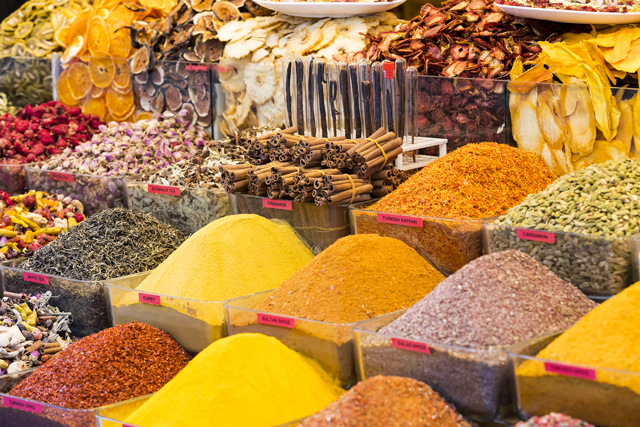
- Combining common spices like menthol (mint), cineole (eucalyptus) and capsaicin (chili peppers) amplifies their anti-inflammatory effects hundreds of times compared to using them individually, activating multiple cellular pathways simultaneously.
- Cultures worldwide have long used spice blends (e.g., Indian curries, Mediterranean herbs) for health benefits, and modern science now confirms that these combinations work far better than isolated compounds due to their synergistic interactions.
- Capsaicin alone had the strongest individual anti-inflammatory effect. Pairing menthol + capsaicin or cineole + capsaicin boosted effectiveness 100-fold. Different compounds act through distinct pathways (TRP channels vs. non-TRP mechanisms), creating a "multi-target" effect.
- Spice synerg supports whole-food approaches over isolated supplements for chronic disease prevention, validates traditional medicine systems (Ayurveda, TCM) that emphasize holistic ingredient pairings and could lead to more effective functional foods with lower doses of active compounds.
- The study suggests that dietary strategies should focus on natural synergies rather than reductionist "superfoods," aligning with ancestral wisdom that nature's combinations offer superior health benefits.
The hidden power of spice combinations
For centuries, cultures worldwide have relied on spice blends—from Indian curries to Mediterranean herb mixes—not just for flavor but for their perceived health benefits. Modern science, however, has struggled to explain why these combinations work so well. "Individual plant compounds often show effects only at concentrations much higher than what we consume in food," said lead researcher Professor Gen-ichiro Arimura, a plant biotechnology expert at Tokyo University of Science. "But when combined, they trigger a cascade of anti-inflammatory activity that's far more potent." The team focused on macrophages, immune cells that release inflammatory cytokines. When exposed to bacterial toxins (simulating infection), these cells were treated with menthol, cineole, capsaicin and β-eudesmol (from hops and ginger)—both alone and in strategic pairings. Key Findings:- Capsaicin alone showed the strongest individual effect.
- Menthol + capsaicin or cineole + capsaicin boosted anti-inflammatory activity a hundredfold.
- The compounds acted through different pathways—TRP channels (menthol/cineole) and non-TRP mechanisms (capsaicin)—creating a "multi-target" effect.
Implications for diet and medicine
The study's revelations extend beyond the lab. If such synergies exist in common spices, they could reshape how we approach:- Functional foods and supplements: Blending compounds could enhance efficacy while reducing doses.
- Chronic disease prevention: Dietary strategies may leverage combinations rather than isolated "superfoods."
- Traditional knowledge validation: Science is catching up to ancient practices like Ayurveda and Traditional Chinese Medicine, which have long emphasized holistic ingredient pairings.
A new chapter in nutritional science
This study adds to a broader reevaluation of how diet influences inflammation. With chronic diseases rising globally—and pharmaceutical interventions often carrying side effects—natural synergies offer a compelling alternative. "Nature doesn't work in isolation," said Arimura. "The future of nutrition may lie in rediscovering these partnerships—just as our ancestors did." As research continues, one lesson is clear: the spice rack might be more powerful than we ever imagined. Watch the video below that talks about finding the root cause of chronic disease. This video is from the HealthWealth channel on Brighteon.com.Sources include:
ScienceDaily.com BrightU.ai Brighteon.com
The poisoned pill: How a Trump-era order is splitting the health freedom movement
By Ava Grace // Share

Study Details Glutathione’s Role in Protein Folding Processes Linked to Cellular Aging
By Morgan S. Verity // Share

Study: 10-Minute Lying-Down Exercise Routine Linked to Improved Balance, Agility in Young Adults
By Petra Stone // Share



Study: Adding 1,700 to 5,500 Steps Daily Offsets Health Risks of Prolonged Sitting
By Coco Somers // Share

Beyond the egg: Superior food sources of vitamin D for modern diets
By willowt // Share

Vast deep-sea life discovered under the Pacific as extraction tests leave lasting scars
By jacobthomas // Share


Epidemiologist says the CDC’s flu shot numbers rest on a flawed study design
By isabelle // Share

FBI Counterintelligence Units Cut as Bureau Expands Focus to Immigration and Violent Crime
By garrisonvance // Share

U.S. Rare Earth Push Faces Processing Bottleneck as China Dominance Persists, Analysts Say
By sterlingashworth // Share