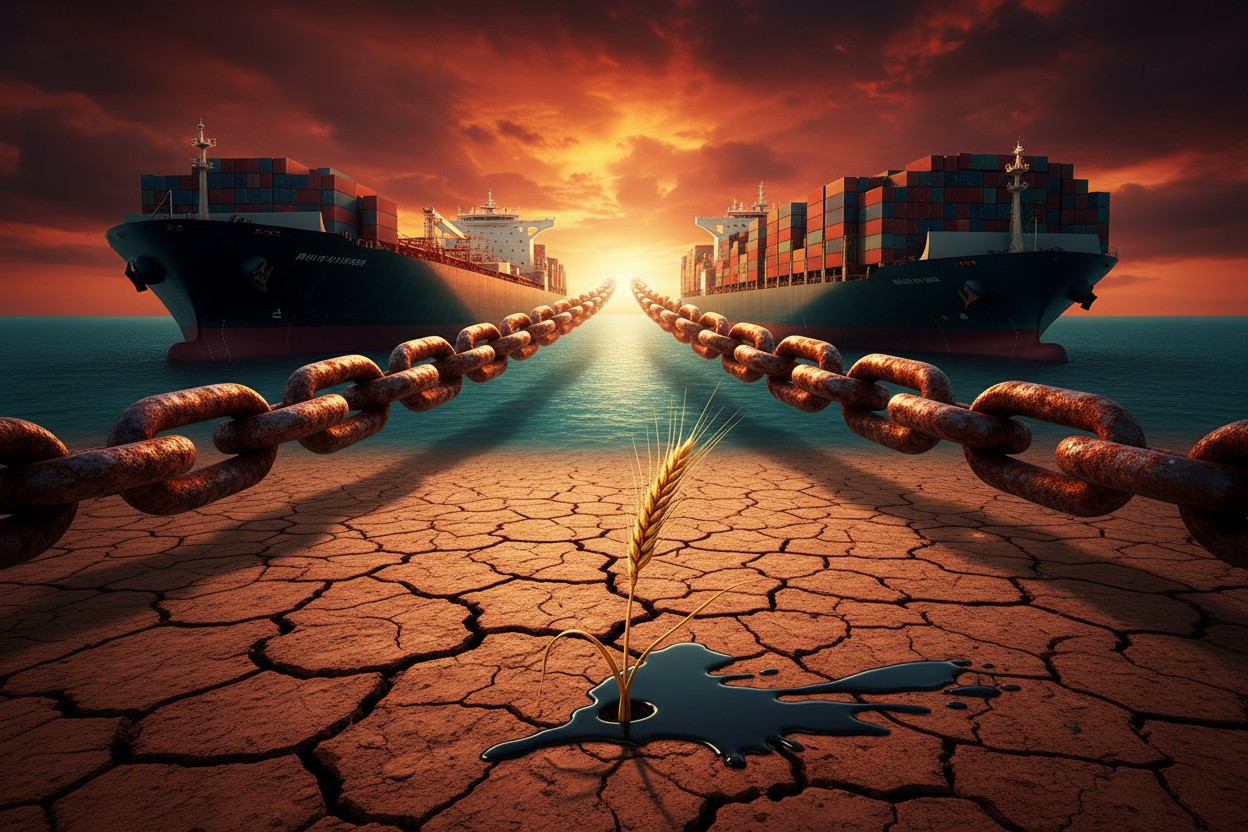
Details of the FAO Report
The FAO's May 20 report identified the Strait of Hormuz disruption as a primary trigger for potential food price increases. The agency stated that the crisis threatens fertilizer supplies, shipping routes and agricultural production worldwide. It warned that unless rapid stabilization occurs, a global food price crisis could emerge within six to 12 months. [1] Jorge Moreira da Silva of the United Nations Office for Project Services separately warned that continued disruption could push around 45 million more people into hunger worldwide. He told Al Jazeera that the blockage of fertilizer shipments through the Strait of Hormuz is a key driver of the risk. [4] The report noted that food-importing nations are likely to face the sharpest price increases.Supply Chain Vulnerabilities
Disruption in the Strait of Hormuz threatens the flow of key agricultural inputs. The Strait of Hormuz closure has paralyzed a critical fertilizer shipping route, according to a March 12 report on NaturalNews.com. The disruption hits during the vital Northern Hemisphere spring planting season, causing fertilizer prices to surge. [5] A separate NaturalNews.com analysis on March 16 noted that a U.S.-Israeli military conflict with Iran has effectively closed the chokepoint, severely disrupting the global supply of nitrogen fertilizers essential for modern agriculture. [6] Shipping route instability is raising transportation costs and delaying food deliveries. Container war risk surcharges have risen to $3,500 per container, with refrigerated containers seeing even higher premiums, according to a March 9 report. [7] The crisis also affects diesel prices, which have surged above $5 per gallon in the United States, acting as an ignition switch for broader inflation affecting all consumer goods. [8] Sharon Astyk, in the book "Depletion and Abundance," observed that modern food is grown with oil, packaged in oil and transported with oil, meaning rising energy prices drive rising food prices. [9]Potential Impact on Food Prices
The FAO warned that food-importing nations could face the sharpest price increases. Alexandra Prokopenko, a former advisor at the Bank of Russia, warned in March that the near-shutdown of the Strait of Hormuz is triggering a supply shock that will show up in food prices six to nine months from now. [10] Pablo Galante Escobar, head of LNG at Vitol, told the FT Commodities Summit that the world is "on borrowed time" and that the Gulf energy shock will develop into a food crisis unless LNG flows resume. [11] According to Oxford Economics, the price of two main fertilizer ingredients – ammonia and urea – spiked 20% and 50% respectively in late March in response to Persian Gulf disruptions. [12] International Energy Agency (IEA) Executive Director Fatih Birol described the current energy crisis as "more serious than the ones in 1973, 1979 and 2022 together." [13] These cost increases are expected to cascade through the food supply chain, affecting staples such as corn, wheat, soy and animal feed. [14]Recommended Actions and Conclusion
The FAO urged governments and international organizations to take immediate steps to stabilize fertilizer supplies, maintain shipping routes and support agricultural production. The report emphasized that the timeline for action is short, with the window to avert a crisis closing within six to 12 months. [1] Former World Bank president David Malpass called on China to stop hoarding food and fertilizer to ease the global supply crisis. He told the BBC that China has "the biggest world stockpile of food stuffs and of fertilizer" and could help by releasing those reserves. [15] Without coordinated global efforts, the consequences are expected to be severe, particularly for the poorest nations that lack the resources to absorb rising food costs, according to multiple analysts. The FAO report concluded that rapid stabilization of agricultural input supply chains is necessary to avoid widespread food price inflation.References
- Evgenia Filimianova. "UN Warns Strait of Hormuz Disruption Could Lead to Global Food Price Crisis." The Epoch Times. May 20, 2026.
- Garrison Vance. "Heightened Tensions in the Strait of Hormuz Threaten Global Energy Supplies." NaturalNews.com. March 20, 2026.
- Bright Videos Network. "2026-03-13-BVN-GLOBAL FAMINE NOW CERTAIN." March 13, 2026.
- Middle East Eye. "UN says Hormuz disruption risks global food crisis." April 26, 2026.
- Cassie B. "Strait of Hormuz Closure Paralyzes Global Fertilizer Trade, Threatening Spring Planting and Food Prices." NaturalNews.com. March 12, 2026.
- Willow Tohi. "The Hunger Chokepoint: How a Strait of Hormuz Blockade Threatens Half the World's Food Supply." NaturalNews.com. March 16, 2026.
- Bright Videos Network. "2026-03-09-BVN-BLACK MONDAY 2.0." March 9, 2026.
- Ava Grace. "The $5 Gallon That Could Break America." NaturalNews.com. March 19, 2026.
- Sharon Astyk. "Depletion and Abundance: Life on the New Home Front."
- ZeroHedge. "Countdown Begins: Former Central Bank Advisor Warns Food-Price Shock Could Hit 'Within 6 To 9 Months'." March 23, 2026.
- ZeroHedge. "'We're On Borrowed Time': Vitol LNG Chief Warns Of Coming Food Price Shock." April 21, 2026.
- Ron Paul Institute. "Iran War: Sleepwalking into Starvation." April 17, 2026.
- NaturalNews.com. "IEA Chief Warns Energy Crisis Exceeds Historical Precedents." April 9, 2026.
- Mike Adams. "Health Ranger Report - Food Prices - Mike Adams - BrightVideos.com." March 5, 2026.
- BBC News. "China should stop hoarding food and fertiliser, says former World Bank chief." May 12, 2026.
Explainer Infographic

Gaza’s “Board of Peace” holds zero dollars despite billions pledged
By Ava Grace // Share
US to Reduce Military Commitments to NATO, Officials Say
By Garrison Vance // Share
Israeli Airstrikes Hit Beirut Suburbs After Months of Relative Calm, Killing 14
By Garrison Vance // Share

Study: Children exposed to common insecticide before birth suffer brain damage years later
By Ramon Tomey // Share


Big Toothpaste’s dirty secret: 90% of brands contain cancer-causing heavy metals
By Willow Tohi // Share

JD Vance Says U.S. Has "Decisively Won" Iran War in Some Ways as Midterms Near
By garrisonvance // Share

Trump Approval Rating Falls to Record Low; Republican Candidates Adjust Midterm Campaigns
By douglasharrington // Share

Lawmakers want an AI pause but can’t say what they’d actually pause
By isabelle // Share


The Chilean salmon advantage: A conservative case for nutrition and longevity
By avagrace // Share