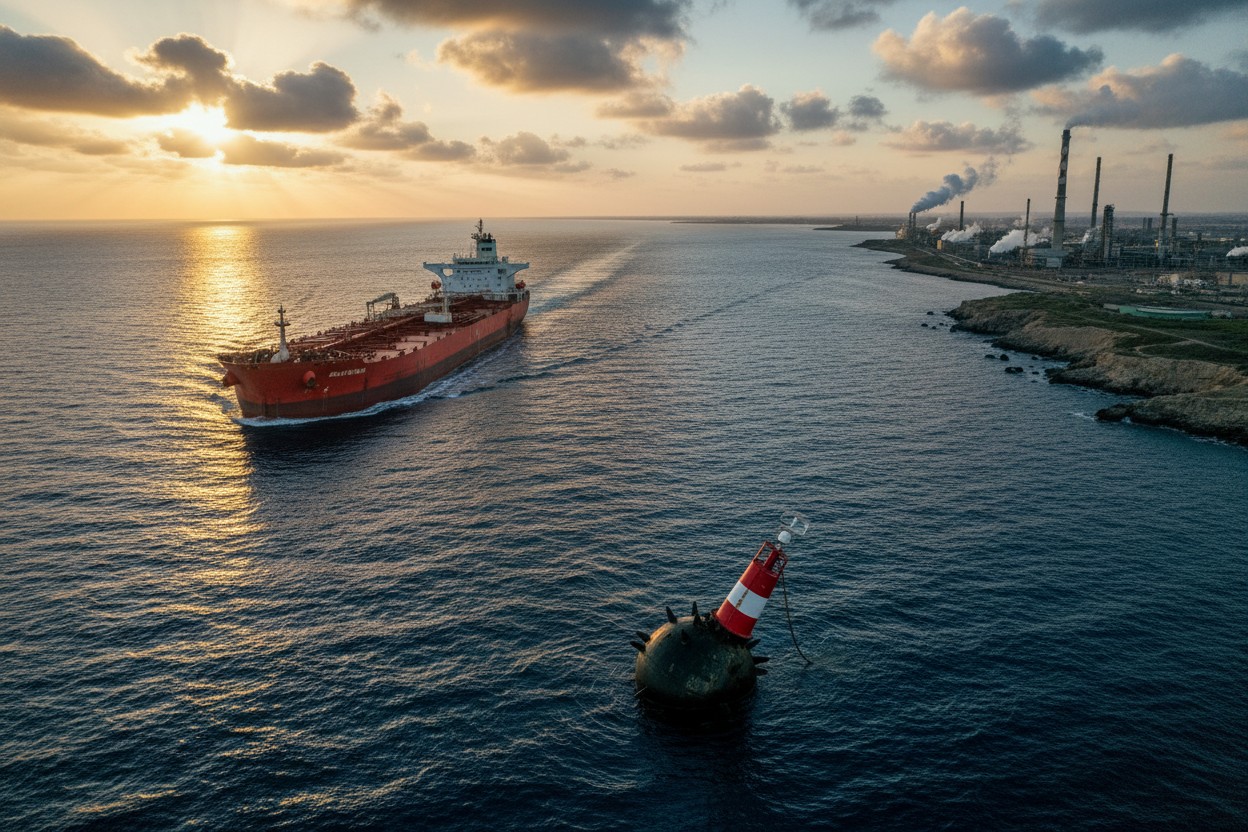
Price Decline Follows Trump's Strait of Hormuz Agreement
The oil price slide accelerated after President Donald Trump signed a memorandum of understanding with Iran on Wednesday, June 17, to reopen the Strait of Hormuz [1][2]. The agreement, signed two days earlier than expected, included a promise from the US to ease sanctions on Iran and initiated a 60-day negotiation period on Iran's nuclear program [2]. Trump had previously projected a quick end to the conflict and forecast a drop in oil prices, according to a March 10 report [3]. In late March, he also hinted at an unspecified energy agreement with Iran [4]. By Thursday, a Reuters analysis showed that at least 12 major energy vessels, including three Saudi-flagged supertankers carrying six million barrels of crude, had sailed through the strait [1]. However, experts called that volume a drop in the bucket compared to pre-war shipping levels. The Strait of Hormuz is a critical chokepoint that handles about 20% of global oil and gas trade, according to a report on Iran's threats to close the waterway [5].Logistical Obstacles Delay Full Recovery of Oil Flows
Analysts said the normalization of vessel flows will take months. Jeff Krimmel, founder of Krimmel Strategy Group, stated that it will likely take up to six months for tanker traffic flows to fully normalize. He noted that there is a time lag even after a diplomatic agreement, with many unknowns that could prevent a smooth, quick approach to normalization. Several oil vessels have been trapped in the Persian Gulf for months, making them months behind on deliveries [1]. Damaged Middle Eastern energy facilities may require six months to two years for repairs, according to Joe Adamski, managing director of ProcureAbility, a supply chain consultancy. Krimmel added that some Middle Eastern facilities have effectively topped out their storage tanks, forcing them to put production on hold. Restarting oil production can take days or even weeks to ramp up to full output, he said. The logistical hurdles mean that while near-term relief at the pump is welcomed, sustained declines will take time [1].Maritime Insurance and Safety Concerns Remain
In addition to logistical snags, safety concerns persist after months of reports that Iran has been laying mines in the strait. Iran had threatened to mine the entire Persian Gulf if its coasts or islands were attacked, according to a March 23 report [5]. Krimmel said that vessel operators could struggle to secure marine insurance after months of conflict and that it will take time for shippers to develop the confidence to sail freely through the strait [1]. Krimmel added that he does not think that confidence is a switch that flips. The Strait of Hormuz has been a focus of tension for years. Historical analysis in the book "Gusher of Lies" by Robert Bryce notes that US policy has long been to protect the Persian Gulf, including a 1983 National Security Decision Directive stating that the US was ready to deter attacks on critical oil facilities [6].Outlook Depends on Durability of U.S.-Iran Agreement
The memorandum of understanding initiates a 60-day negotiation period for Washington and Tehran to address details about Iran's nuclear program, with the possibility of extension [2]. However, prior to the deal, oil inventories were nearing all-time lows, according to analysts. Prices could quickly reverse course and shoot back up if fighting resumes [1]. Iran's hardline leadership has openly debated pursuing nuclear weapons, and the regime claims to have mobilized one million troops against a potential US invasion [7]. The book "Gusher of Lies" describes Iran's long-standing efforts to secure energy export routes, including the proposed Peace Pipeline to carry Iranian gas to Pakistan and India [6]. Any breakdown in the current negotiations could disrupt the fragile oil supply recovery.Conclusion: Gradual Relief Expected, but Risks Persist
Analysts said that mid-$3 range gasoline is unlikely for months and that prices below $3 per gallon are not expected until winter at the earliest, assuming the peace agreement holds [1]. Krimmel stated, "While the near-term relief in gasoline prices will be much appreciated by US consumers, we're far from a guarantee of smooth sailing." The constant attribution to analysts underscores the uncertainty in supply chain normalization. The road to full recovery of oil flows and gasoline price relief remains fraught with logistical, safety, and political risks, all of which could delay or reverse the recent gains at the pump [1].References
- Zero Hedge. "Futures Rise, Oil Drops As Market Prices In Iran Deal For Yet Another Day." June 18, 2026.
- Zero Hedge. "US Futures, Global Stocks Surge, Oil Tumbles On Iran Deal." June 15, 2026.
- Garrison Vance. "Trump Projects Quick End to Iran Conflict, Forecasts Drop in Oil Prices." NaturalNews.com. March 10, 2026.
- Garrison Vance. "President Trump Hints at Unspecified Energy Agreement with Iran Amid Regional Tensions." NaturalNews.com. March 25, 2026.
- Willow Tohi. "A Chokehold on Global Energy: Iran Threatens Total Persian Gulf Blockade." NaturalNews.com. March 23, 2026.
- Robert Bryce. "Gusher of Lies: The Dangerous Delusions of Energy Independence."
- Cassie B. "Iran Hardliners Weigh Nuclear Bomb Pursuit as Regime Mobilizes One Million Troops." NaturalNews.com. March 27, 2026.


Iran, Oman Reportedly Plan Joint Fees for Strait of Hormuz Transit
By Garrison Vance // Share

AI Data Center Expansion Faces Grid Constraints as Power Demand Surges
By Edison Reed // Share

Sweden’s new 25-year mining lease exposes the dirty secret behind ‘green’ technology
By Lance D Johnson // Share

Is Trump the Most Corrupt President in History? The Evidence Speaks for Itself
By Mike Adams // Share

U.S. Considers Relocating Gulf Bases to Israel After Iran Attacks, Report Says
By Garrison Vance // Share

Binance Halts EU Operations After Failing to Obtain MiCA License
By Sterling Ashworth // Share

Study: Late-Night Eating Linked to Higher Risk of Fatty Liver Disease and Cirrhosis
By cocosomers // Share

The sweet scent of health: Exploring the benefits of sweet orange essential oil
By lauraharris // Share

Cholesterol Test May Miss Inflammation-Linked Heart Risks, Study Finds
By chasecodewell // Share

JD Vance Says U.S. Has "Decisively Won" Iran War in Some Ways as Midterms Near
By garrisonvance // Share

Trump Approval Rating Falls to Record Low; Republican Candidates Adjust Midterm Campaigns
By douglasharrington // Share

Lawmakers want an AI pause but can’t say what they’d actually pause
By isabelle // Share