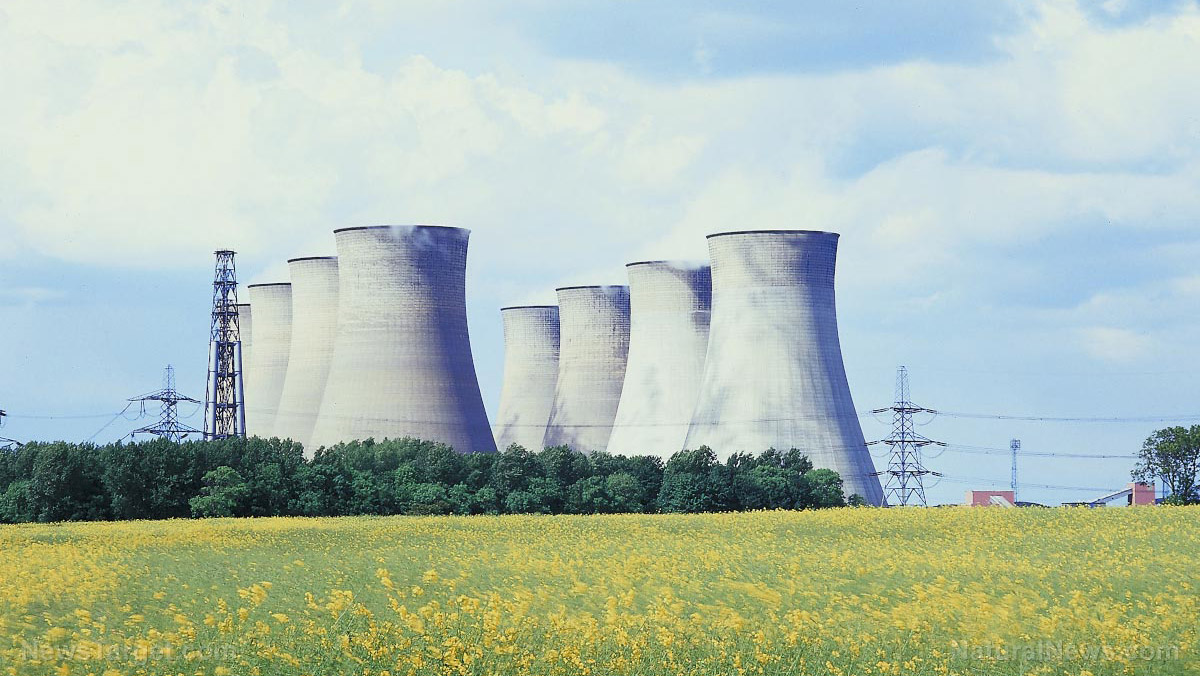
- The U.S. and Canada each announced plans to build ten new nuclear reactors, marking the largest coordinated nuclear expansion in North America in decades.
- The AI boom, the war in Iran, and geopolitical instability have pushed energy security ahead of climate goals as a top policy priority.
- China added 34 gigawatts of nuclear capacity over the past decade, while the U.S. managed only one new plant, and China is on track to become the world’s top nuclear producer.
- The renewable energy narrative is being sidelined as nations realize wind and solar cannot provide the 24/7 baseload power required for AI data centers, military buildup, and grid stability.
- Fossil fuels remain dominant, but nuclear is gaining favor as a harder-to-blockade, zero-carbon, round-the-clock energy source.
The polycrisis that broke the green dream
Global energy markets are in turmoil, and the causes are piling up like dominoes. The energy-hungry AI boom is demanding data centers that consume as much electricity as small cities. The war in Iran has sent shockwaves through oil and gas supply chains. Geopolitical instability is making every nation question its reliance on foreign energy. Climate pressures and global governance on carbon is a conversation being sidelined for a more important agenda and realistic worldview. Nations are quickly learning: over-reliance on limited energy supply chains is a vulnerability that can be exploited. Canada’s Energy Minister Tim Hodgson introduced a plan for a “new civilian nuclear renaissance” that serves as a central component of a larger plan to double the capacity of the national electrical grid by 2050. “If our goal is to double our grid and build a low-carbon economy in less than 25 years, there is no credible plan to do that without nuclear energy and the clean, reliable baseload power it provides,” Hodgson said at a news conference in Ontario. He went on to say, “There is no credible plan for Canada to become an energy superpower if we choose not to build upon one of the strongest energy advantages we have.” Just a day later, the Trump administration announced it plans to funnel billions of dollars in federal loans toward kick-starting a build-out of nuclear power plants across the United States. The goal, according to the administration, is to “produce lasting American dominance in the global nuclear energy market.” The new Department of Energy plan, described by the New York Times as “complex and unusual,” would rely on utilities to put forward hundreds of millions of dollars of their own money in order to access the federal loans. The ultimate aim is to ease the sticker shock of the components for large new reactor types. These two plans are designed to reverse a years-long inertia in Western nuclear energy markets.The China factor and the race for dominance
Over the last ten years, the United States only built one new nuclear plant, and it was years overdue and billions over budget by the time it was finally finished. In the same time period, China added a staggering 34 gigawatts of nuclear capacity. As a result, China is on track to overtake the United States and France to become the world’s biggest producer of nuclear energy within the next ten years. The United States and Canada’s new plans pale in comparison to China’s lofty nuclear goals as outlined in the country’s newest five-year plan, but they mark a major shift in energy strategy for the two powers. They represent potential progress toward re-balancing the global nuclear sector. The timing of this shift is no coincidence. AI data centers require massive amounts of electricity that must be available 24 hours a day, seven days a week. Solar and wind power are intermittent, dependent on weather and daylight. They cannot provide the base-load stability that AI infrastructure requires. Nuclear power can. Energy analyst Chris Stirling, in a post-outage coverage by Revolver, argued that “nuclear power is the only truly ‘green’ base-load energy capable of stabilizing grids.” France and the U.S. lag in new plant approvals, while China builds over 20 reactors annually. The push for renewables has gone out the window as nations seek to dominate AI and need vast energy resources extracted from the Earth in order to achieve AI dominance. The militaries also need reliable power for operations, logistics, and readiness. The green grid fantasy is being replaced by a hard-nosed reality: nuclear, oil, and gas are the only sources that can keep the modern world running, and the global elite is finally admitting it. Sources include: Oilprice.com InstituteforEnergyResearch.org Oilprice.com
Trump Has Destroyed America’s Global Credibility — Here’s Why the World Sees Us as a Pariah
By Mike Adams // Share
Trump plans billions in arms sales as NATO summit tests alliance frayed by Iran war
By Garrison Vance // Share

Iran Warns: No Final Deal If U.S. Threats Persist
By Garrison Vance // Share

Anthropic Removes Hidden Tracking Code from Claude Code After Developer Discovery
By Douglas Harrington // Share
Canada Rushes to Expand Military as U.S. Relations Deteriorate
By Garrison Vance // Share

Cuba Goes Dark Again As Castro’s Grandson Expresses Willingness to Talk With Trump
By Garrison Vance // Share

Labor Department Suspends Eight Companies From Green Card Program
By edisonreed // Share

Reuters/Ipsos Poll: Trump Voters Show Lower Enthusiasm for Midterm Elections
By garrisonvance // Share

Trump Pledge on Iran Strikes Fails to Soothe Oil Markets
By sterlingashworth // Share
AI Chip Stocks Fall After Report on OpenAI Revenue Shortfall
By sterlingashworth // Share
EPA Proposes Rollback of Methane Rules for Oil and Gas Industry
By ivagreene // Share

Review Links Insomnia to 26% Higher Relative Risk of Stroke
By morganverity // Share