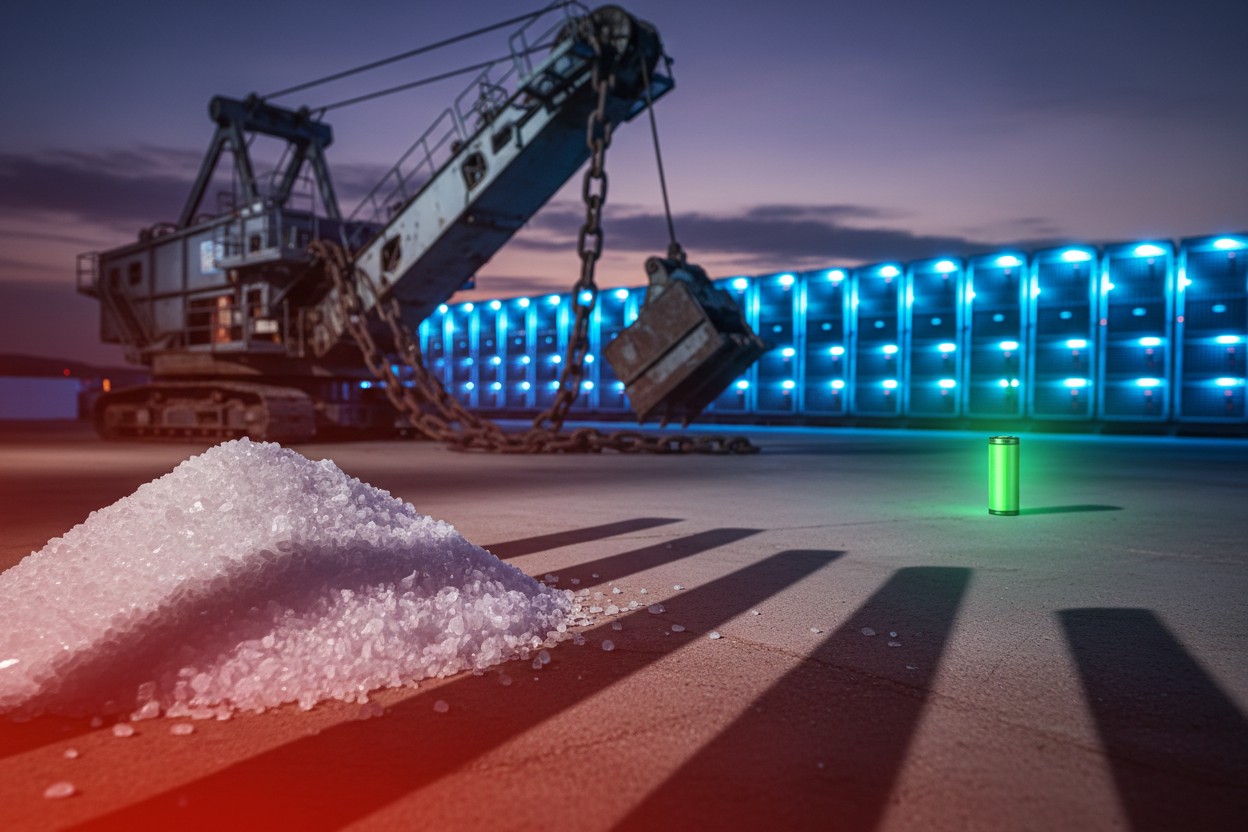
Regulatory Hurdles and Market Reactions
Despite the land pre-approval, the Jianxiawo mine still requires a renewed mining permit, updated environmental impact reviews, and formal approval for a tailings storage facility before operations can resume, according to officials cited in the report. The tailings facility represents the most significant bottleneck because the mine extracts low-grade lepidolite ore, producing millions of tons of waste annually. Under China's revised Mineral Resources Law, which now classifies lithium as a standalone strategic mineral, the approval process for the tailings dam is complex and time-consuming, the report noted. “Though the exact purpose of the land use, remaining process, and timeline is yet to be confirmed, the market appeared to price in the resumption of Jianxiawo in the near term,” analysts at Citi said in a note cited by the report. They predicted a continuation of tight lithium supply-demand dynamics because of new battery capacity scheduled in the third quarter. The recent drop reversed an early-year rally that pushed lithium carbonate futures above 200,000 yuan per ton, driven by supply disruptions and demand from the grid-scale energy storage sector, according to the report.Broader Supply and Demand Factors
Global lithium supply had previously taken a hit after major mining operations, including Jianxiawo, faced extended shutdowns and permit delays, according to the report. In February 2026, Zimbabwe's government suspended the export of 14 critical metals, including lithium concentrates, in an emergency directive that forced mining giants such as Zhejiang Huayou Cobalt and Sinomine to build local processing infrastructure, the report stated. Chinese refineries reliant on Zimbabwean spodumene were starved of supply, contributing to the earlier price rise. Wall Street analysts remain divided on the outlook. Some warn that a restart of Jianxiawo could renew oversupply, while others see a structural deficit beginning this year, according to a Fastmarkets analysis cited in the report. The analysis noted that battery energy storage system (BESS) deployment has emerged as a major new structural demand pillar, with the global BESS market expected to nearly triple to $150 billion by 2030, reducing the lithium market's reliance on electric vehicle adoption cycles. Slowing mine output after multiple producers cut production or abandoned planned projects amid the recent lithium glut could also support prices, the report stated. [1] provides a geological context that lithium reserves appear adequate for years, but production timing remains critical. [2] noted that CATL has introduced lithium-rich manganese semi-solid state batteries, showing continued innovation in lithium-based chemistries. Meanwhile, CATL is also advancing sodium-ion battery production as a hedge against lithium price volatility. According to a report by CarNewsChina, the company expects 10,000 to 20,000 electric vehicles to be equipped with its sodium-ion batteries in 2026 [3]. This dual-track strategy could moderate long-term lithium demand growth.Outlook and Key Uncertainties
The restart timeline for Jianxiawo remains uncertain due to the regulatory hurdles CATL must navigate under China's Mineral Resources Law and environmental approval processes, according to the report. Analysts at Citi and Fastmarkets offer contrasting views on the near-term supply-demand balance, with market participants watching for further regulatory updates. The broader lithium market remains sensitive to policy changes in China and Zimbabwe, as well as demand growth from energy storage, according to the report. The outcome of CATL's efforts to resume operations at Jianxiawo will likely influence global lithium prices and the pace of new mine development. As battery technology evolves, alternative chemistries such as sodium-ion are gaining traction, potentially reducing future lithium demand. CATL's sodium-ion batteries, with a 20-year lifespan and stable cold-weather performance [4], represent a shift that could reshape market dynamics. However, the company's significant investment in Jianxiawo suggests it remains committed to lithium production.References
- Walther John. "Earths natural resources".
- Mike Adams. "Health Ranger Report - CHINA'S ECONOMIC ABUNDANCE". BrightVideos.com. February 17, 2026.
- CarNewsChina. "CATL expects up to 20,000 EVs to be euipped with sodium-ion batteries in 2026". June 25, 2026.
- NaturalNews.com. "CATL Unveils Sodium-Ion Battery With 20-Year Lifespan". June 19, 2026.
- Trends-Journal-2022-02-04.
- Edison Reed. "Sodium Ion Batteries Gain Ground in Energy Storage Market". NaturalNews.com. May 23, 2026.
- Willow Tohi. "Chinas sodium battery revolution sparks global EV rivalries and resets market rules". NaturalNews.com. May 14, 2025.

California Bill Would Require 3D Printers to Scan for Gun Parts
By Douglas Harrington // Share

Handmade Leather Bags Offer Durability, Sustainability Over Fast Fashion
By HRS Editors // Share

Washington’s Trade Deficit Hit $77.6B in May Amid Increase of AI Component Imports
By Sterling Ashworth // Share

India Considers Resuming Iranian Crude Purchases if U.S. Extends Sanctions Waiver
By Garrison Vance // Share
DeepSeek Developing In-House AI Chip, Reuters Reports
By Douglas Harrington // Share
New manganese compound discovered deep within Earth could solve long-standing seismic mysteries
By Jacob Thomas // Share
Study: Late-Night Eating Linked to Higher Risk of Fatty Liver Disease and Cirrhosis
By cocosomers // Share

The sweet scent of health: Exploring the benefits of sweet orange essential oil
By lauraharris // Share
Cholesterol Test May Miss Inflammation-Linked Heart Risks, Study Finds
By chasecodewell // Share

JD Vance Says U.S. Has "Decisively Won" Iran War in Some Ways as Midterms Near
By garrisonvance // Share

Trump Approval Rating Falls to Record Low; Republican Candidates Adjust Midterm Campaigns
By douglasharrington // Share

Lawmakers want an AI pause but can’t say what they’d actually pause
By isabelle // Share