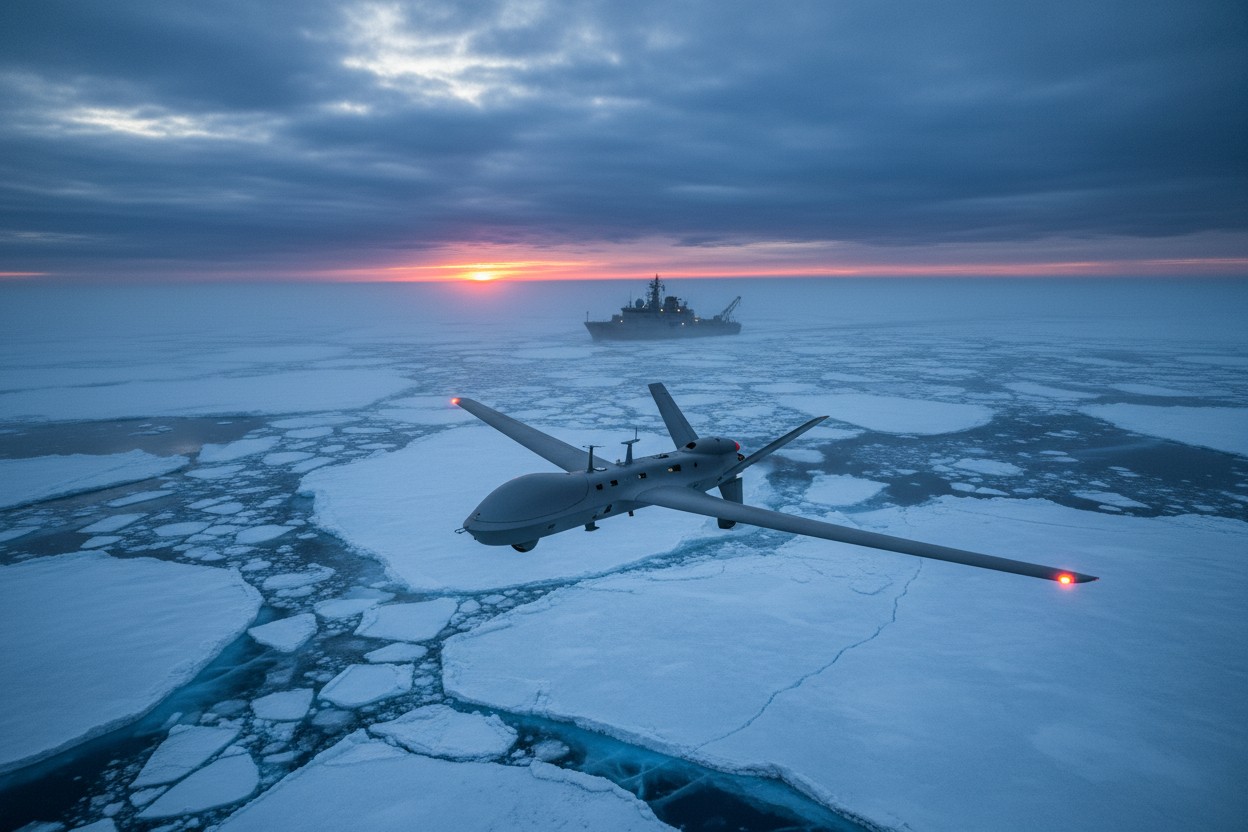
- Russia has rebuilt Cold War-era Arctic bases and deployed advanced nuclear submarines beneath the ice.
- Russia operates 42 icebreakers, including eight nuclear-powered vessels, with five more planned.
- The United States will not receive its first new icebreaker until 2028, with full delivery by 2031.
- The Northern Sea Route could reduce shipping times by 40 percent, but Russia controls access and may impose tariffs.
- NATO’s northern expansion, including Finland and Sweden’s accession, has triggered a Russian military buildup.
- Western sanctions have crippled Russia’s Arctic energy projects, pushing Moscow closer to China.
- The Arctic holds 13 percent of the world’s undiscovered oil and 30 percent of its untapped natural gas.
- Hypersonic missiles and Arctic drones risk triggering a direct conflict between Russia and NATO.
Russia’s military buildup: From Cold War relics to hypersonic threats
Russia’s Arctic strategy did not begin with the war in Ukraine. It has been evolving since 2008, when Moscow released its first formal Arctic strategy emphasizing economic development and international cooperation. But the 2020 Arctic policy marked a sharp turn. The language shifted from peaceful cooperation to sovereignty and security. Military expansion became the priority, and environmental protection was downgraded. The Arctic was no longer a shared frontier. It became a fortress. Since 2022, Russia has accelerated that transformation. Finland and Sweden’s entry into NATO, a direct consequence of the Ukraine invasion, gave Moscow a new justification for its military buildup. Russia reopened Soviet-era bases on islands like Franz Josef Land and Novaya Zemlya. It deployed advanced radar systems, coastal defense missiles, and air defense networks along the Arctic coastline. Nuclear submarines now patrol beneath the ice, invisible to most tracking systems and capable of launching strikes against targets across the Atlantic. Large-scale military drills involving over 100,000 troops have become routine. These are not exercises in theory. They are rehearsals for a conflict that Moscow appears to believe is coming. The United States and NATO have responded with words. The alliance warns of Russia’s growing Arctic militarization, but it has not matched Russian capabilities. NATO operates a fraction of the icebreakers Russia commands. The alliance’s ability to project power into the Arctic, especially during winter months, is severely limited. Russia, by contrast, maintains year-round access. Its nuclear icebreakers, like the Arktika and Sibir, can smash through ice up to three meters thick. The planned Rossiya class will be even more powerful.United States fails to gain traction in Greenland, NATO losing Arctic race
For decades, the United States has maintained a military presence at Thule Air Base in Greenland, a relic of Cold War surveillance that sits strategically along the shortest missile trajectory between Russia and North America. Greenland also holds vast reserves of rare earth minerals, oil, and natural gas, resources that could fuel American energy independence and reduce reliance on foreign supply chains. Yet Washington has failed to leverage this territory effectively, and NATO partners like Denmark have been reluctant to escalate Arctic tensions. NATO members remain divided over the Arctic’s strategic priority. Some European allies view the region as secondary to threats in Eastern Europe and the Mediterranean. Others, particularly Norway and Finland, are wary of provoking Russia further. Denmark has resisted American pressure to expand operations out of Greenland, fearing that any military buildup would be perceived as an escalation. The result is a vacuum that Russia has been happy to fill. President Donald Trump expressed skepticism toward NATO and favored bilateral deals over multilateral commitments. If he maintains that approach, Russia may feel emboldened to deepen its Arctic presence, exploiting fractures within the alliance. A divided NATO cannot mount a unified Arctic strategy. Russia knows this. Putin’s offer of “equal cooperation” in the Arctic is widely seen as a facade, designed to mask Moscow’s dependence on foreign technology investments while luring Western nations into a false sense of security. The United States seems behind in regards to controlling Arctic waters. The contracts for six new icebreakers for the Coast Guard are a start. Without a rapid expansion of Arctic military infrastructure, without a diplomatic push to align NATO partners around a common Arctic doctrine, and without a willingness to challenge Russia’s control over the Northern Sea Route, the United States could find itself locked out of the world’s next great economic and strategic corridor. The Arctic is heating up, both literally and militarily. Sources include: SputnikGlobe.com TheLoopECPR.eu CNN.com
Russia’s Massive Strike on Gas Wells is the Price of Ukraine’s Drone War on Oil
By Garrison Vance // Share

Zakharova Rejects Zelensky’s Claims on Ukraine’s Air Defense Failures
By Garrison Vance // Share

Ankara Declaration Signals Shift to NATO 3.0
By Garrison Vance // Share

Russia subverts sanctions by acquiring military technology in Japan
By Lance D Johnson // Share
NATO Summit in Ankara Launches Multiple Missile Production Programs Across Europe
By Chase Codewell // Share

Labor Department Suspends Eight Companies From Green Card Program
By edisonreed // Share

Reuters/Ipsos Poll: Trump Voters Show Lower Enthusiasm for Midterm Elections
By garrisonvance // Share
Trump Pledge on Iran Strikes Fails to Soothe Oil Markets
By sterlingashworth // Share

AI Chip Stocks Fall After Report on OpenAI Revenue Shortfall
By sterlingashworth // Share
EPA Proposes Rollback of Methane Rules for Oil and Gas Industry
By ivagreene // Share

Review Links Insomnia to 26% Higher Relative Risk of Stroke
By morganverity // Share