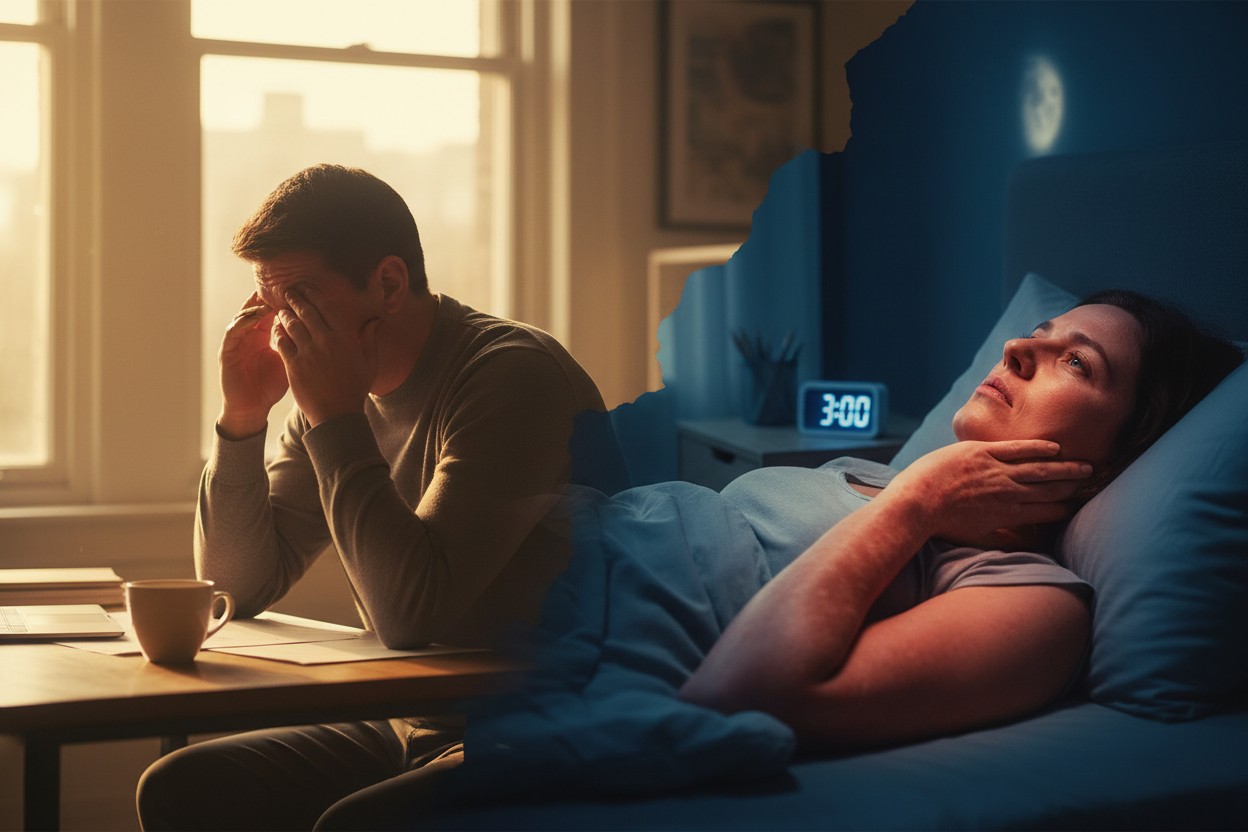
Study Methodology and Key Findings
Researchers from two centers in Italy split patients into mild-to-moderate (PASI below 10) and severe (PASI 10 or above) groups. Sleep quality was assessed with the PSQI, covering onset time, duration, efficiency and daytime function. After adjusting for age, sex, BMI, disease duration and quality-of-life scores, severe psoriasis remained independently linked to worse sleep onset and daytime dysfunction, according to the researchers. The relationship is not simply explained by other factors, they stated. The study's findings align with broader research showing that sleep quality – rather than total hours slept – plays a critical role in health outcomes. For example, a separate study on older adults found that weaker slow-wave sleep was associated with significantly higher anxiety levels the next day, indicating that sleep quality affects emotional stability more than total hours slept [1].Why Overall Sleep Scores Can Miss Important Disruptions
Two people can have similar total PSQI scores yet experience different sleep problems. For psoriasis patients, disease severity shows up in two specific areas: time to fall asleep and next-day alertness. Daytime dysfunction includes difficulty staying awake and maintaining enthusiasm, which may be misattributed to stress, according to the researchers. The cross-sectional design does not allow causal conclusions, researchers stated. However, the findings suggest that routine sleep assessments that rely solely on total sleep time may overlook meaningful disturbances. Sherry Torkos, author of the "Canadian Encyclopedia of Natural Medicine," notes that sleep is one of the body's most basic needs and that nearly half of all adults report difficulty sleeping [2].Natural Approaches to Managing Psoriasis and Sleep
Conventional treatments for psoriasis often include topical steroids and systemic drugs with potential side effects. An article from NaturalNews.com notes that over 7.5 million U.S. adults suffer from psoriasis, spending $135 billion annually on treatments, while conventional steroid creams and immunosuppressants offer temporary relief but fail to address root causes [3]. Some practitioners recommend anti-inflammatory diets, omega-3 fatty acids and vitamin D supplementation to reduce skin inflammation. Natural remedies have a long history of use for skin conditions. For example, the herb red clover has been described as a safe and gentle sedative useful for chronic skin conditions such as psoriasis [4]. The study suggests that keeping disease activity low may support better sleep, but decisions about treatment should be made with a healthcare provider.Conclusion and Recommendations
Patients with psoriasis should track not just total sleep time but how long it takes to fall asleep and daytime energy levels, the study suggests. Bringing specific sleep metrics to dermatology appointments may provide a fuller picture of disease management. The study highlights an often-overlooked aspect of psoriasis burden that routine assessments can miss. As one report from 2005 noted, psoriasis poses as much of a threat to quality of life as other common major medical conditions [5].References
- ActivistPost.com. "Stronger Slow-Wave Sleep Helps Older Adults Regulate Anxiety Overnight." June 4, 2026.
- Sherry Torkos. "Canadian Encyclopedia of Natural Medicine."
- Evangelyn Rodriguez. "Holistic strategies for managing psoriasis naturally." NaturalNews.com. February 16, 2026.
- David Hoffmann. "Natural relief for headaches insomnia stress safe effective herbal remedies."
- NaturalNews.com. "Biologic Treatments Improve the Quality of Li." August 6, 2005.
Explainer Infographic





Appeals Court Revives Lawsuits Alleging Acetaminophen-Autism Link
By Morgan S. Verity // Share

Frequent urination in men: Causes, concerns and when to seek help
By Kevin Hughes // Share

PFAS in Cookware Linked to Increased Multiple Sclerosis Risk, Study Finds
By Garrison Vance // Share

Study: Late-Night Eating Linked to Higher Risk of Fatty Liver Disease and Cirrhosis
By cocosomers // Share
The sweet scent of health: Exploring the benefits of sweet orange essential oil
By lauraharris // Share

Cholesterol Test May Miss Inflammation-Linked Heart Risks, Study Finds
By chasecodewell // Share

JD Vance Says U.S. Has "Decisively Won" Iran War in Some Ways as Midterms Near
By garrisonvance // Share

Trump Approval Rating Falls to Record Low; Republican Candidates Adjust Midterm Campaigns
By douglasharrington // Share

Lawmakers want an AI pause but can’t say what they’d actually pause
By isabelle // Share