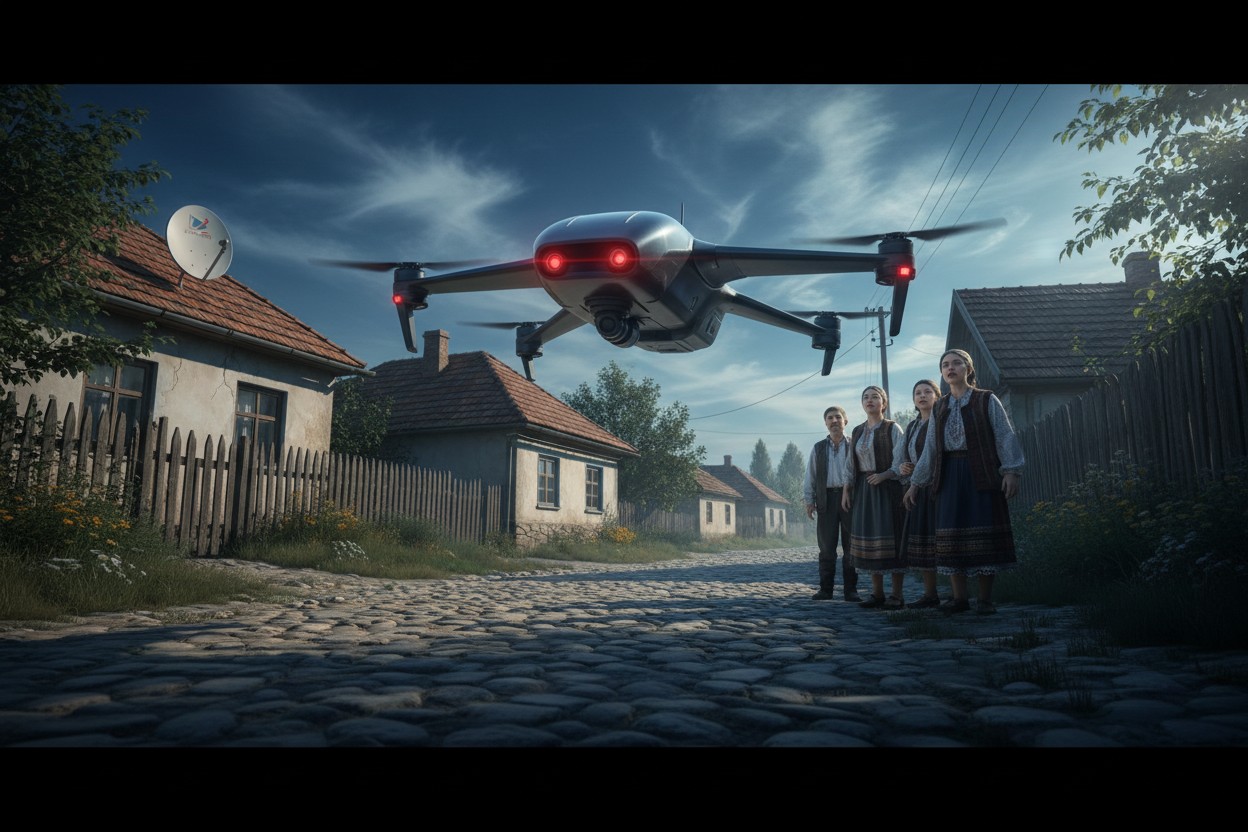
- Russia’s FSB intercepted 13 AI-equipped Ukrainian drones smuggled for an attack on Rostov-Centralny military airfield.
- A Russian citizen alerted authorities after being recruited by Ukrainian military intelligence for the operation.
- Each drone carried an improvised explosive device equivalent to more than 1 kilogram of TNT.
- The plot represents an escalation in Ukraine’s deep-strike campaign using artificial intelligence to bypass electronic countermeasures.
- The incident highlights the growing role of autonomous drone technology in the ongoing Russia-Ukraine conflict.
Intelligence breakdown: How Russian security foiled the attack
Russia’s Federal Security Service announced Friday it had prevented a large-scale terrorist attack targeting the Rostov-Centralny military airfield in the Rostov Region, seizing 13 Ukrainian AI-powered drones allegedly smuggled into the country by Kyiv’s military intelligence agency. The planned target was an airfield where Ukrainian military intelligence sought to damage aircraft and kill personnel, the FSB said. Each drone carried an improvised explosive device with a yield equivalent to more than 1 kilogram of TNT and featured artificial intelligence-based targeting systems designed to overcome electronic countermeasures. The operation unraveled when the Russian citizen recruited to carry out the attack voluntarily approached regional FSB offices and reported the plot. He then cooperated with investigators, allowing security officers to deceive Ukrainian handlers into delivering the drones and transferring an advance payment equal to 20% of the promised fee. His voluntary assistance exempts him from criminal liability under Russian law.Ukraine's expanding drone campaign: A war of attrition takes to the skies
The foiled plot represents the latest chapter in Ukraine’s evolving deep-strike campaign, which has transformed from a limited operation in early 2024 into a large-scale offensive. Ukrainian forces now launch an average of 200 to 300 drones against Russian territory every night, according to military officials. President Volodymyr Zelenskyy has characterized these strikes as “long-range sanctions,” targeting military installations and oil facilities crucial to both the conduct and financing of Russia’s war effort. The strategy aims to bring the conflict home to ordinary Russians while degrading Moscow’s ability to sustain combat operations. Recent attacks have produced measurable economic consequences. Deputy Prime Minister Alexander Novak acknowledged publicly that Russian oil production has declined this year, attributing the slowdown to unscheduled maintenance at refineries — a bureaucratic description for facilities damaged by Ukrainian strikes.Technology arms race: AI-resistant drones challenge Russian defenses
The intercepted drones represent a significant technological escalation. Each aircraft’s AI-based targeting system was specifically designed to counter Russian electronic warfare capabilities, which have previously been effective at jamming conventional drone guidance systems. Forensic analysis suggests the AI model was trained at Ukraine’s State Aviation Museum at Zhuliany Airport in Kyiv, the FSB said. The development underscores a broader technological competition in which Ukraine has emerged as a leader in autonomous drone technology. Military analysts note that artificial intelligence guidance renders drones resistant to electronic jamming, neutralizing what has been one of Russia’s most effective defensive capabilities. Ukrainian forces employ a combination of explosive-laden kamikaze drones, decoy aircraft designed to confuse air defenses, and high-speed missile drones.Asymmetric warfare in the modern era
The drone campaign reflects a fundamental shift in military strategy. Russia’s historical advantage — its vast territorial expanse — has become a vulnerability in an era of long-range precision strikes. Former U.S. Army Europe commanding general Ben Hodges observed that Moscow cannot protect every refinery, shipyard or factory across its continental scale. This asymmetry echoes historical patterns of guerrilla warfare adapted to modern technology. Ukraine’s approach resembles a distributed operations model: multiple small teams launch drones from dispersed locations across eastern Ukraine, making it difficult for Russian forces to eliminate launch sites. The operational data accumulated through thousands of missions has become one of Ukraine’s most valuable assets. Flight planners use AI-assisted software called Prisma to process real-time intelligence on Russian air defense positions and weather conditions, continuously adapting routes to avoid detection.The human cost: War without resolution
Despite the technological sophistication of modern warfare, the conflict remains fundamentally a human tragedy. Tetiana Lytvyn, a Ukrainian woman awaiting news of missing relatives, captured the enduring toll: “The war might end, but for those of us with family still missing, the war will never be over until they come home.” The fighting shows no signs of ending. Russia has escalated attacks while Ukraine refuses to surrender, prolonging suffering on both sides. Both nations conducted a prisoner exchange even as violence intensified, but peace talks remain stalled with no ceasefire in sight. The FSB’s disclosure of the foiled drone plot serves as a reminder that this conflict has entered a new phase — one where artificial intelligence, long-range precision strikes and covert operations increasingly define the battlefield. As Ukraine’s drone campaign matures and Russia adapts its defenses, the war risks becoming a protracted technological arms race with no clear victor and a cycle of endless suffering. Sources for this article include: RT.com Voennoedelo.com BusinessInsider.com

Russian Official Accuses Ukraine of Opening “Second Front” in Africa
By Garrison Vance // Share
Iran Integrates China’s Beidou System, Shifting Military Balance in Gulf
By Garrison Vance // Share

U.S. Strikes in Iran Disrupt Water Supply for 10,000 Residents
By Garrison Vance // Share

Trump Imposes Additional 50% Tariffs on Canadian Goods
By Douglas Harrington // Share

Kash Patel to make first FBI visit to Russia in 13 years
By Cassie B. // Share

Study: Late-Night Eating Linked to Higher Risk of Fatty Liver Disease and Cirrhosis
By cocosomers // Share

The sweet scent of health: Exploring the benefits of sweet orange essential oil
By lauraharris // Share

Cholesterol Test May Miss Inflammation-Linked Heart Risks, Study Finds
By chasecodewell // Share

JD Vance Says U.S. Has "Decisively Won" Iran War in Some Ways as Midterms Near
By garrisonvance // Share

Trump Approval Rating Falls to Record Low; Republican Candidates Adjust Midterm Campaigns
By douglasharrington // Share

Lawmakers want an AI pause but can’t say what they’d actually pause
By isabelle // Share