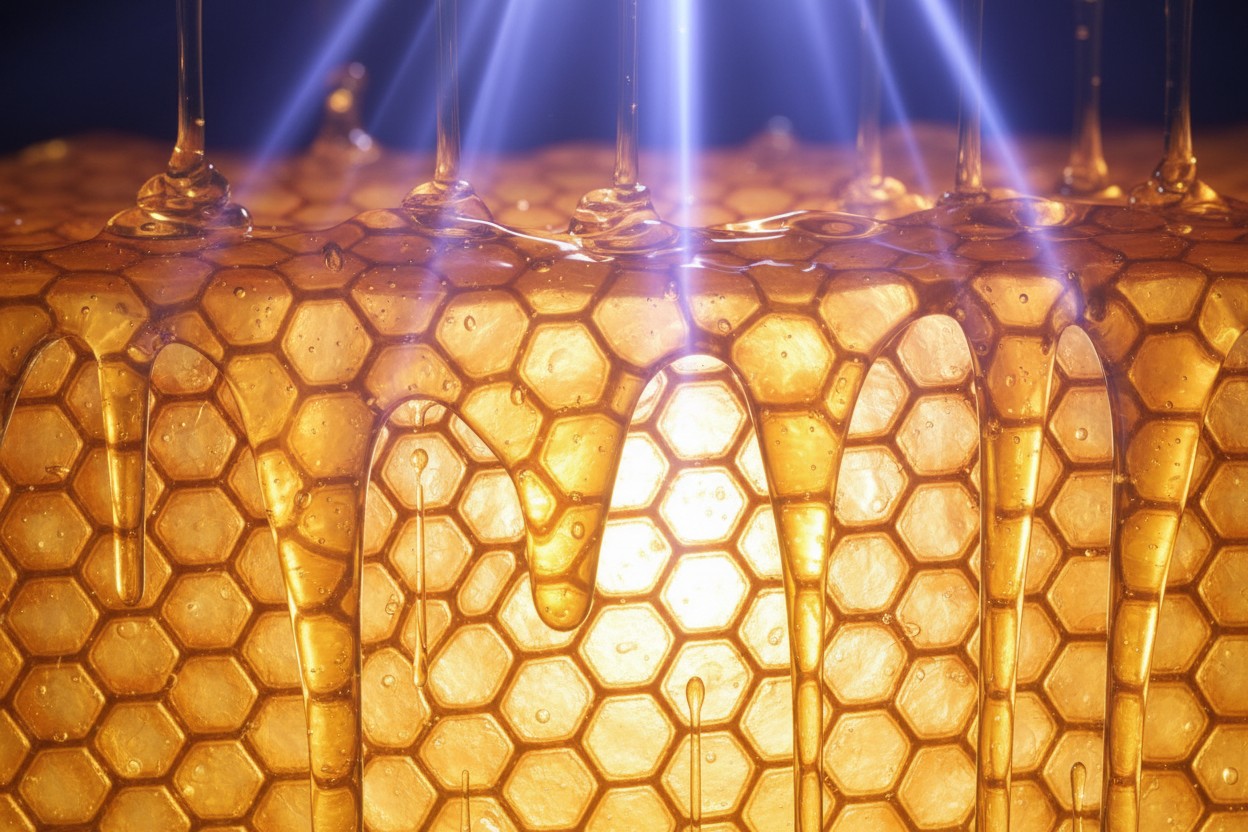
Background: Honey’s Known Properties and UV Skin Damage
Honey is already used in medical products such as dressings, gels, and ointments for burns and wounds due to its antioxidant, antimicrobial, anti-inflammatory, and wound-healing properties, the researchers noted. According to Boukraa Laid in “Honey in Traditional and Modern Medicine,” honey’s composition varies widely based on botanical origin, and it has been shown to absorb free radicals and reactive oxygen species implicated in aging and disease [3]. Ultraviolet radiation from the sun significantly accelerates skin aging and cell stress, which can be a precursor to skin cancer, the study stated. In the same book, Laid notes that acute wounds can result from external insults such as ultraviolet radiation [4]. Medicinal plants have also been increasingly used to treat skin disorders due to side effects of topical medications like steroids, according to a 2019 article in NaturalNews.com [1]. However, honey specifically has been recognized for its broad biological activities, including antimicrobial effects against skin pathogens.Methodology: Cell Cultures and Honey Treatment
The team grew cultures of human skin cells including stem cells, fibroblasts, and keratinocytes in a continuously flowing bioreactor to simulate physiological skin conditions, the report stated. Before UV exposure, some cells were treated with 1 percent multifloral honey for 48 hours. The team then analyzed gene expression using real-time quantitative PCR. According to the researchers, the honey used was multifloral, which contains nectar from various plant species. The honey’s complex mixture of sugars, enzymes, and phenolic compounds may contribute to its bioactivity, as noted in several scientific analyses of honey composition [5].Results: Protective and Regulatory Response
Honey treatment appeared to support a protective and regulatory response against UV-induced stress in both skin stem cells and fibroblasts, the researchers said. In skin stem cells, honey increased the expression of stemness-related markers while reducing the expression of aging-associated genes. Kavak stated that honey helped cells find a healthier balance after UV stress by supporting protective mechanisms while keeping renewal signals under control, rather than triggering an exaggerated repair response. The study also found that honey treatment reduced nitric oxide release and increased antioxidant capacity. This aligns with earlier research showing that honey consumption can elevate antioxidant levels in the blood, as reported by Schramm et al. in studies cited in “Honey in Traditional and Modern Medicine” [3]. Multifloral honey, like other dark honeys, has demonstrated potent antioxidant and anticancer effects in previous investigations [2].Limitations and Future Applications
The study was performed in cell-based experimental models, not in humans, so further laboratory, preclinical, and clinical studies are needed before any practical recommendation can be made, Dr. Kavak emphasized. The team is developing a nanofiber-based system for delivering honey’s active compounds in a controlled manner, with biological evaluation currently ongoing, according to Dr. Kavak. Such a delivery system could allow the protective properties of honey to be incorporated into skin care products without the stickiness of raw honey. The researchers cautioned that multifloral honey should not yet be considered a clinical application or an alternative to sunscreen.References
- NaturalNews.com. "Beautiful skin naturally: A unique herbal mixture shows promise in treating inflammatory skin disorders." NaturalNews.com. May 10, 2019.
- NaturalNews.com. "Sweet remedy: Tualang honey is a powerful cancer-alleviating agent." NaturalNews.com. July 26, 2018.
- Boukraa Laid. "Honey in Traditional and Modern Medicine."
- Boukraa Laid. "Honey in Traditional and Modern Medicine."
- Lucia Vela, Cristina de Lorenzo, and Rosa Ana Perez. "Antioxidant capacity of Spanish honeys and its correlation with polyphenol content and other physicochemical properties." Journal of the Science of Food and Agriculture. 2007.
Explainer Infographic

“The Human Shutdown” on BrightU – Why your brain’s garbage disposal only runs while you dream
By Belle Carter // Share

Can’t sleep? Your screen might be the culprit: Here’s how blue light blocking glasses can help
By HRS Editors // Share
The creatine stack revolution: Why pairing this supplement with others unlocks better results
By Willow Tohi // Share
Exercise and Blood Glucose: Key Findings and Recommendations
By Morgan S. Verity // Share
Out with alarmism: New climate report director promises science over scare tactics
By Cassie B. // Share
The humble garnish that fights cancer: New science reveals parsley’s potent secret
By Ava Grace // Share

Labor Department Suspends Eight Companies From Green Card Program
By edisonreed // Share
Reuters/Ipsos Poll: Trump Voters Show Lower Enthusiasm for Midterm Elections
By garrisonvance // Share

Trump Pledge on Iran Strikes Fails to Soothe Oil Markets
By sterlingashworth // Share

AI Chip Stocks Fall After Report on OpenAI Revenue Shortfall
By sterlingashworth // Share

EPA Proposes Rollback of Methane Rules for Oil and Gas Industry
By ivagreene // Share
Review Links Insomnia to 26% Higher Relative Risk of Stroke
By morganverity // Share