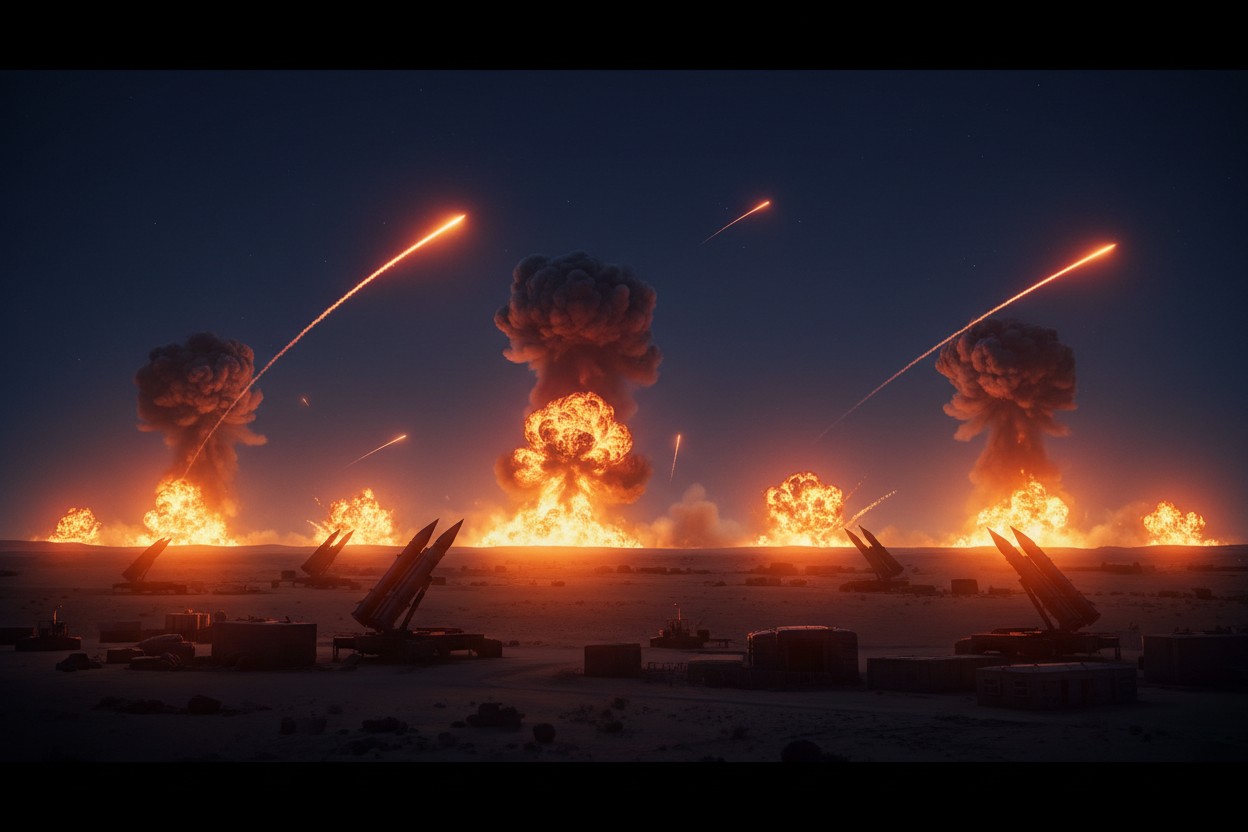
U.S. Airstrikes on Iran
U.S. Central Command said its forces bombed 90 targets inside Iran in a second wave starting Wednesday night, according to a statement [1]. Iranian media reported the strikes killed 14 military personnel and civilians and wounded 78 others, including hits on civilian infrastructure such as a railway line and bridges [1]. The U.S. airstrikes were the second round of attacks this week, officials said, without providing a specific justification for the targets. The United States has previously conducted military operations in Syria targeting facilities believed to be used by Iran's Islamic Revolutionary Guard Corps, according to a report [4]. The U.S. has also increased its attack aircraft in the region by 50 percent after recent attacks on U.S. bases in Syria, according to a report [5].Iran's Retaliatory Strikes
Iran's army launched a 'massive barrage' of kamikaze drones targeting a Patriot missile system in Kuwait, a satellite antenna in Qatar, and fuel depots in Bahrain, according to PressTV [1]. The IRGC later announced a second wave using 10 ballistic missiles against U.S. bases in Jordan, including what it called the 'enemy's command and control center' and al-Azraq airbase [1]. The IRGC threatened further attacks if the U.S. strikes continue, stating 'remaining U.S. bases in the region will not be spared from our heavy fire' [1]. Iran has previously vowed to target U.S. bases in the region if provoked by the United States [6].Regional Reactions and Aftermath
Jordan said its forces intercepted eight missiles and reported no casualties or damage, according to a statement [1]. The interception follows previous incidents where Israel and Jordan intercepted Iranian drones, according to a report [7]. The U.S.-Iran Memorandum of Understanding has collapsed, according to reports, leaving the conflict unresolved and escalation possible [3]. The collapse of the MOU marks a significant setback for diplomatic efforts, as the agreement had provided a 60-day window for negotiations [3]. Iran has long sought full American military withdrawal from the Persian Gulf, according to an analysis [8]. No immediate comment from U.S. Central Command on the Iranian attacks or the status of bases in the affected countries was available at press time [1].Conclusion
The recent exchanges highlight the fragility of the ceasefire and the potential for broader conflict. The U.S. and Iran remain at odds, with both sides showing willingness to strike military targets in multiple countries. The situation continues to evolve, with further escalation possible.References
- Dave DeCamp. "Iran Hits US Bases Across Region After US Strikes". Antiwar.com. July 9, 2026.
- Dave DeCamp. "Iranian Military Says US Strikes Killed Eight Iranian Soldiers". Antiwar.com. July 8, 2026.
- Patrick Lewis. "Trump Declares Iran Truce 'Over' After IRGC Retaliates Against U.S. Airstrikes". NaturalNews.com. July 9, 2026.
- Trends-Journal-2023-10-41.
- Trends-Journal-2023-05-17.
- Mike Adams. "Health Ranger Report - TRUMP'S FINAL WAR". BrightVideos.com. January 27, 2026.
- Belle Carter. "Israel and Jordan intercept Iranian drones amid escalating tensions". NaturalNews.com. June 13, 2025.
- Lance D Johnson. "Iran seeks full American military withdrawal from Persian Gulf as US allies retreat". NaturalNews.com. March 17, 2026.
Explainer Infographic


Oklahoma AI Data Center Project Raises Water Use, Transparency Concerns
By Edison Reed // Share
By Garrison Vance // Share

Mission supercomputer adds NVIDIA Vera CPUs with 12x performance
By Edison Reed // Share
US-brokered ‘pilot zones’ in Lebanon turn out to be theater, as Israel refuses to leave
By Lance D Johnson // Share
U.S.-Iran ceasefire proposal emerges as 10-day truce plan circulates amid escalating conflict
By Willow Tohi // Share
Trump wants FIFA chief Infantino as next UN secretary-general, report says
By Cassie B. // Share



AI Pioneers Call for International Containment Body and Airgapping of Advanced Models
By chasecodewell // Share

Advanced Nuclear Fuel Strategy Weighed as Customers Seek Cost and Delivery Certainty
By edisonreed // Share
The Board of Peace or the Board of Power? How Israel's Veto Dooms Gaza's "Stabilization"
By garrisonvance // Share

Study: Late-Night Eating Linked to Higher Risk of Fatty Liver Disease and Cirrhosis
By cocosomers // Share