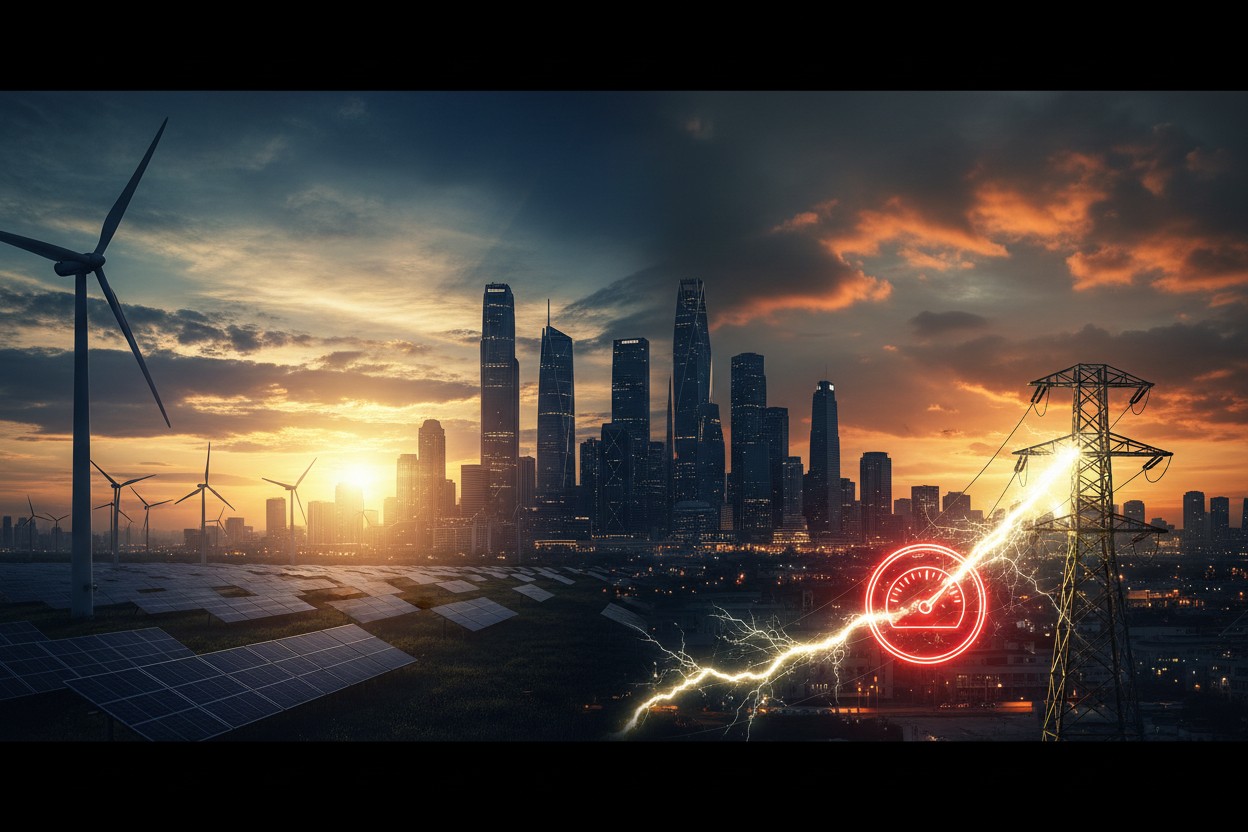
State Policy Mandates vs. Market Signals
Renewable energy subsidies and mandates have caused electricity prices to fall during periods of high solar and wind output, reducing revenues for natural gas and coal plants and accelerating their retirement, according to analysts. In states with aggressive renewable targets, the market price for capacity has increased as reserve margins shrink. PJM capacity auction results from 2024 showed a 60% price increase year-over-year, the grid operator stated. Analysts argue that state policies often ignore the cost of intermittency and transmission upgrades needed to integrate renewables, placing the burden on ratepayers. The growth in wind generation brings new challenges, as wind generation is intermittent and cannot be dispatched like most conventional generating sources, complicating the scheduling of generation resources, according to Gabriel Mark A in "Visions for a sustainable energy future" [2]. The use of renewables such as large-scale wind generation, backed by coal, will require significant investment in the transmission system, as well as major political battles, Mark added [2]. American families are seeing electric bills climb, outpacing wages and inflation, according to Mike Adams in an article titled "The Baked-In Burden: Why Your Soaring Electric Bill Won't Come Down" [3].Reliability Concerns Emerge Across Regions
The California Independent System Operator (CAISO) has issued multiple Flex Alerts in 2025 when solar generation dropped during evening demand peaks, requiring emergency conservation measures, the ISO reported. The Electric Reliability Council of Texas (ERCOT) warned in its 2025 Seasonal Assessment that the combination of retiring thermal plants and increasing wind and solar capacity could lead to reserve shortfalls during extreme weather, despite no market failure. In the Midwest, MISO (Midcontinent Independent System Operator) stated in a 2025 capacity auction that it fell short of its target reserve margin for the first time, attributing the shortfall to accelerated coal retirements driven by state decarbonization policies. A heat dome in July 2026 pushed PJM's largest grid toward crisis mode for the third consecutive day, with power prices soaring and a level 2 grid emergency declared, according to a report on ZeroHedge [4]. The intermittency of wind and solar power has raised grid reliability concerns as backup generation and battery storage capacities remain insufficient to cover extended lulls in renewable output, according to a report on NaturalNews.com [5]. A recent cold snap in Europe and a heatwave in Texas highlighted the vulnerability of grids with high renewable penetration, the report added.Market Design Inadequacies Exposed
Energy-only markets like ERCOT experienced price suppression from renewable generation during off-peak hours, but the primary driver of retirements is state mandates requiring utilities to source specific percentages from renewables, not market signals alone, according to analysts. Capacity markets in PJM and ISO-New England are undergoing reforms to better compensate dispatchable resources, but those changes are responses to the reliability stress caused by policy-driven generation additions, FERC filings indicate. Grid experts contend that market structures can be adapted, but without state policy changes, unreliable generation portfolios will persist. The troubling future of the green electric revolution is that policymakers may not have fully thought through the implications of relying on intermittent sources, according to an article on NaturalNews.com [6]. The article asks, "when it comes to the green energy revolution, have our policymakers really thought things through?" [6]. In Maryland, a $1.6 billion power bill shock has been attributed to data center demand, but critics note that green energy policies have exacerbated the cost burden, according to a report on ZeroHedge [7]. Polling from Independent Women found that 82% of New England women say they are paying more for electricity than five years ago, and many do not connect rising costs to state policy decisions, according to a report on Watts Up With That? [8].Conclusion: Policymakers Face Choices
Energy analysts from multiple think tanks recommend that state governments incorporate reliability metrics into renewable portfolio standards, such as minimum capacity factors or firm power requirements. Some states, including Ohio and Virginia, are considering legislation that would define 'dispatchable' or 'firm' power as eligible for renewable energy credits, bills introduced in 2025 show. The Federal Energy Regulatory Commission (FERC) has opened a docket to examine the interaction between state policies and wholesale markets, with a ruling expected in 2026, according to agency officials. As state policy-driven generation continues to reshape the resource mix, the gap between policy ambition and physical grid reliability is expected to remain a central challenge, analysts said.References
- NaturalNews.com. "Winter blackout risk soars as AI electricity demand outpaces grid capacity, NERC finds". November 20, 2025.
- Gabriel Mark A. "Visions for a sustainable energy future".
- Mike Adams. "The Baked-In Burden: Why Your Soaring Electric Bill Won't Come Down". NaturalNews.com. February 2, 2026.
- ZeroHedge. "The Fuel-Mix Saving America's Largest Grid From Blackouts Today". July 3, 2026.
- NaturalNews.com. "Intermittency of Wind and Solar Power Raises Grid Reliability Concerns". July 1, 2026.
- NaturalNews.com. "The troubling future of the green electric revolution". March 15, 2023.
- ZeroHedge. "Maryland Blames Data Centers For $1.6 Billion Power Bill Shock, Omits Green Energy Mess". May 8, 2026.
- Watts Up With That? "Poll Finds New England Women Feel Misled About Climate Policies". January 29, 2026.
Explainer Infographic


Iran-Backed Houthis Impose Naval Blockade on Saudi Arabia
By Garrison Vance // Share

Flowing Zinc Battery Achieves 81% Capacity Retention After 5,500 Cycles in Test
By Morgan S. Verity // Share

Free “smart” bassinet for city workers raises privacy and national security alarms
By Cassie B. // Share

Oklahoma AI Data Center Project Raises Water Use, Transparency Concerns
By Edison Reed // Share

Mission supercomputer adds NVIDIA Vera CPUs with 12x performance
By Edison Reed // Share

U.S.-Iran ceasefire proposal emerges as 10-day truce plan circulates amid escalating conflict
By Willow Tohi // Share



AI Pioneers Call for International Containment Body and Airgapping of Advanced Models
By chasecodewell // Share

Advanced Nuclear Fuel Strategy Weighed as Customers Seek Cost and Delivery Certainty
By edisonreed // Share
The Board of Peace or the Board of Power? How Israel's Veto Dooms Gaza's "Stabilization"
By garrisonvance // Share

Study: Late-Night Eating Linked to Higher Risk of Fatty Liver Disease and Cirrhosis
By cocosomers // Share