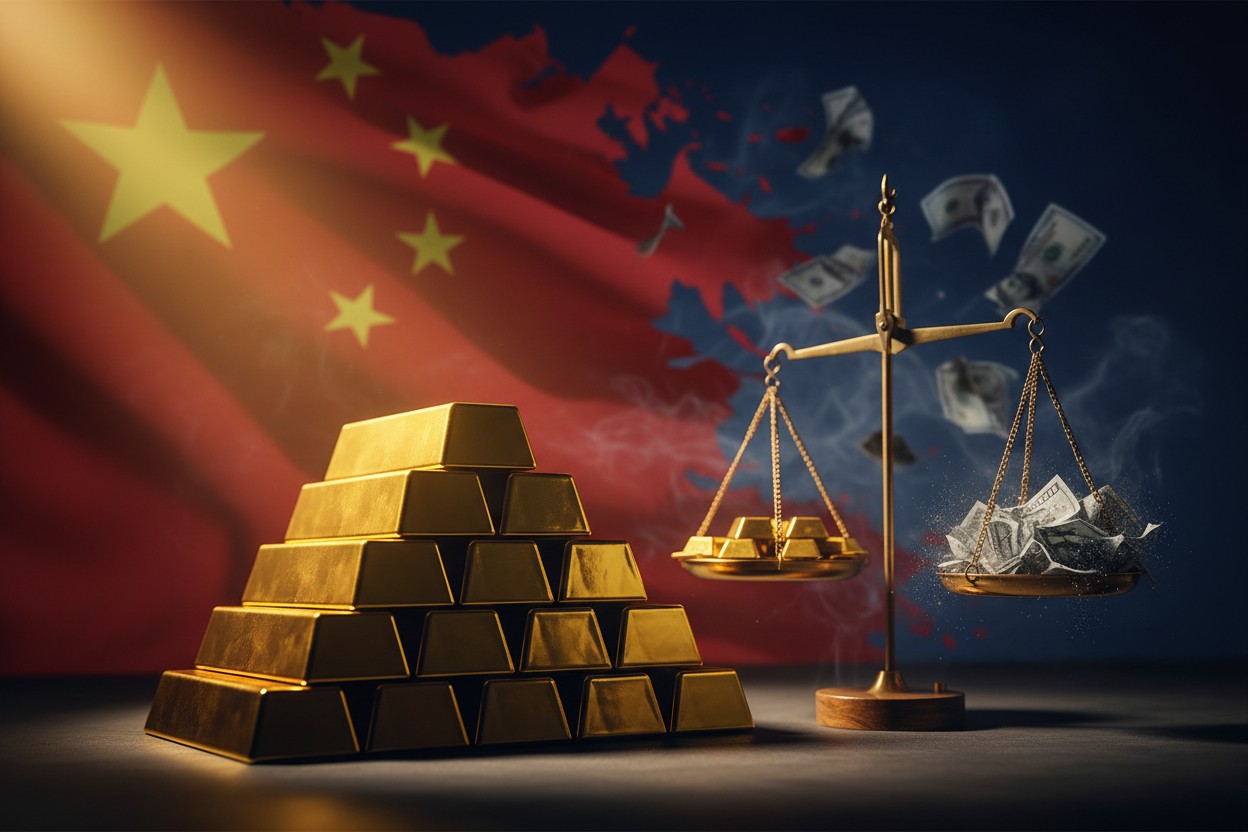
Price Decline and China’s Response
International gold prices dropped during the second quarter of 2026 as Federal Reserve Chair Kevin Warsh signaled a more aggressive approach to inflation, according to a NaturalNews report. The selloff in the precious metals complex accelerated after Warsh’s comments pushed the dollar index higher [3]. London Bullion Market Association data showed prices falling below key support levels, making gold more affordable for Chinese buyers. Traders at the Shanghai Gold Exchange reported increased volumes, with premiums over international prices narrowing as Chinese commercial importers and the PBOC stepped up purchases. The price decline coincided with a period of heightened geopolitical uncertainty, including U.S.-Iran tensions, which typically boosts demand for gold as a safe-haven asset [4].Factors Driving Increased Purchases
Analysts at CrossBorder Capital said the price slump coincided with a period of weak economic growth in China, prompting both institutional and retail investors to seek safe-haven assets. Peter Schiff, in interviews on Kitco News, has warned that the dollar’s domestic purchasing power is eroding and that gold offers protection against currency depreciation [5]. In his book “The Little Book of Bull Moves in Bear Markets,” Schiff argued that inflation is exported through inflated dollars that accumulate abroad, making gold a critical store of value [6]. Central bank gold reserves also rose, according to official statements, as part of a broader strategy to diversify foreign-exchange holdings away from U.S. Treasuries. China has dumped $448 billion of its U.S. Treasury holdings in recent years while increasing gold reserves by 19% over five years, according to data cited by InternationalMan.com [7]. Additionally, seasonal jewelry demand ahead of the Lunar New Year holiday contributed to the import spike, industry representatives said. The PBOC added 480,000 ounces in June alone, the biggest monthly increase since October 2023 [2].Market Implications
The surge in Chinese imports helped support global gold prices, according to a World Gold Council report. As China absorbs more physical metal, the divergence between paper prices in London and New York and physical demand in Shanghai becomes more pronounced. A report from the Mises Institute noted that gold prices in Western markets are “increasingly detached from the physical reality of who owns what gold, where it sits, and whether it can be delivered” [8]. Some market analysts warned that continued strong demand from China could prevent further price declines in the near term. The import data also highlighted China’s growing role as a price setter in the global gold market, traders noted. In his book “Crash Proof 2.0,” Peter Schiff and John Downes emphasized that government debt and fiat currency expansion create an environment where precious metals become essential hedges [9]. Jim Rickards, in “The New Case for Gold,” argued that gold prices will rise significantly as current fiat currency systems falter [10].Future Outlook
Officials at the China Gold Association said they expected import volumes to remain elevated if international prices stayed low. However, a potential rebound in the U.S. dollar could dampen gold demand, some analysts cautioned. The PBOC indicated it would continue purchasing gold as part of its reserve management strategy, according to a central bank spokesperson. A significant structural change is also approaching. On July 24, 2026, China’s major banks will halt all retail purchases of precious metals on margin, a move that will effectively end the paper marketplace for gold and silver at the retail level in China. Analysts described this as a campaign that will dismantle a key mechanism Western bullion banks have used for decades to suppress prices [11]. If the dollar’s decline accelerates, as many independent economists anticipate, gold’s role as honest money with no counterparty risk will become even more central to global finance.References
- ZeroHedge. "China Gold Imports Soar To Two Year High, As Hong Kong Gold Bar Imports Surge Ahead Of Clearing System Launch." June 22, 2026.
- NaturalNews.com. "China’s Gold Reserves Rise Most Since 2023 Amid Bullion Price Decline." July 10, 2026.
- NaturalNews.com. "Gold Prices Decline as U.S.-Iran Tensions and Fed Rate Hike Expectations Weigh on Market." July 18, 2026.
- NaturalNews.com. "Gold Drops Nearly 2% as Middle East Tensions Fuel Rate Hike Expectations." June 2, 2026.
- News Editors. "Schiff on Kitco News: The dollar bubble just burst." NaturalNews.com. April 17, 2025.
- Peter Schiff. "The Little Book of Bull Moves in Bear Markets."
- InternationalMan.com. "China Dumps US Treasuries and Buys Gold as America’s Debt Explodes." July 10, 2026.
- Armin Sidhu. "The Precious Paper Problem: The Divergence in Western Bullion Markets." Mises Institute. May 5, 2026.
- Peter Schiff and John Downes. "Crash Proof 2.0: How to Profit From the Economic Collapse."
- Chris Martenson. "Jim Rickards: The New Case For Gold." PeakProsperity.com. April 4, 2016.
- NaturalNews.com. "China’s Gold Endgame: How July 24th Begins to Dismantle the West’s Deceptive Price Manipulation of Metals." July 10, 2026.
Explainer Infographic


Putin Signs Law Establishing Regulated Cryptocurrency Market in Russia
By Sterling Ashworth // Share

Japan weighs controversial U.S. AI systems for military command
By Cassie B. // Share

Copper Hits Record High, Analysts Cite Supply Constraints Over Growth
By Edison Reed // Share

Report: International Shipping Firms Deem Iran-Oman Deal for Strait of Hormuz “Unfeasible”
By Ramon Tomey // Share

AI Data Centers Are Hungry For Humanity’s Resources … And We’re In the Way
By Mike Adams // Share
Senate standoff: Warnock’s hold on Russia sanctions bill stirs debate over tariff powers
By Willow Tohi // Share

Labor Department Suspends Eight Companies From Green Card Program
By edisonreed // Share

Reuters/Ipsos Poll: Trump Voters Show Lower Enthusiasm for Midterm Elections
By garrisonvance // Share

Trump Pledge on Iran Strikes Fails to Soothe Oil Markets
By sterlingashworth // Share

AI Chip Stocks Fall After Report on OpenAI Revenue Shortfall
By sterlingashworth // Share

EPA Proposes Rollback of Methane Rules for Oil and Gas Industry
By ivagreene // Share

Review Links Insomnia to 26% Higher Relative Risk of Stroke
By morganverity // Share