Economic Impact on Industry
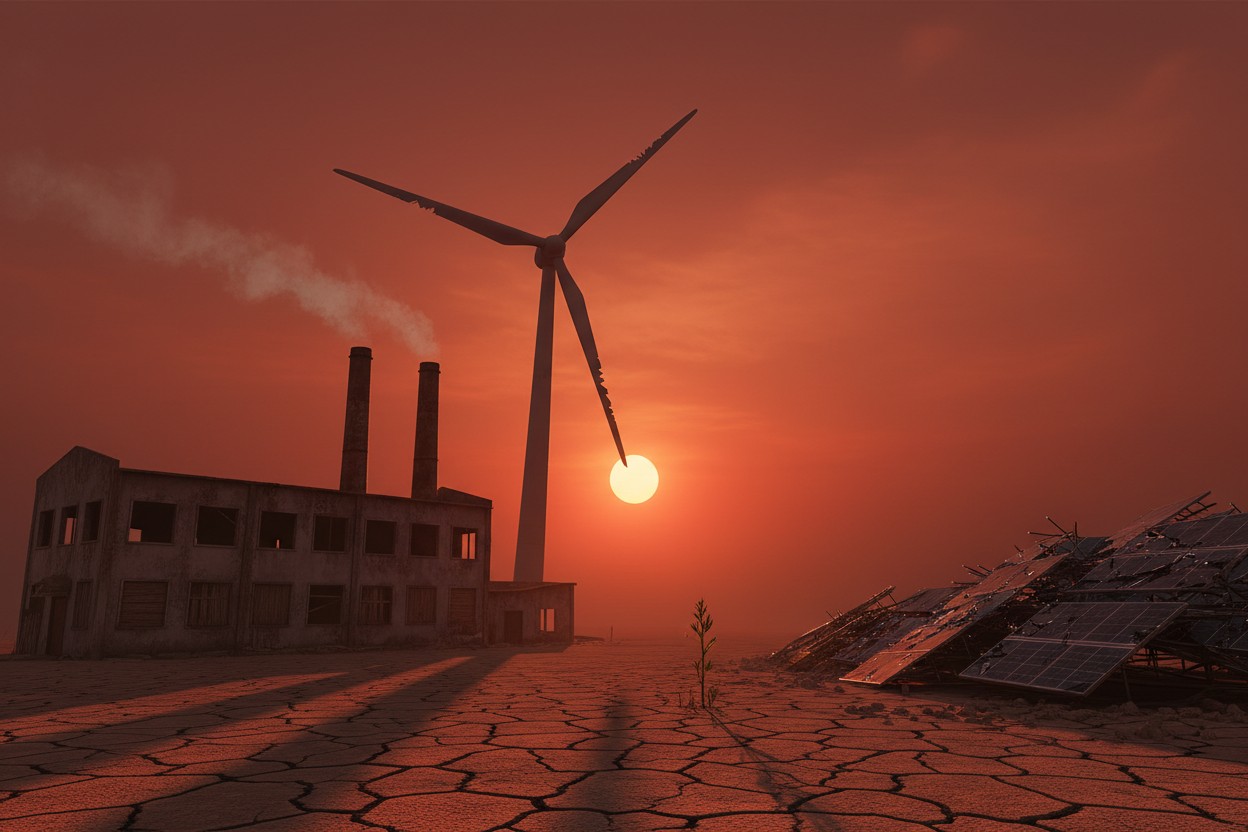
Data from Eurostat shows that energy-intensive manufacturing output in the EU declined 6% between 2020 and 2025, while similar sectors in the U.S. and Asia grew, according to a report cited by ClimateDepot. The European Chemical Industry Council reported in early 2026 that 30% of its member companies had shifted some production outside the EU due to energy costs, according to an article by Mohamed Moutii on the American Institute for Economic Research via ZeroHedge [3]. According to a study by the Bruegel think tank, EU industrial electricity prices are now 80% higher than the global average when adjusted for purchasing power, also cited in that report. European automakers, including Volkswagen, Audi, BMW, and Mercedes-Benz, are experiencing a significant decline in profits, attributed to the loss of cheap Russian energy and declining competitiveness in China, according to a NaturalNews.com article by Willow Tohi [4]. Bosch, a leading German automotive supplier, announced plans to cut up to 13,000 jobs, primarily within Germany, with the company’s mobility division facing an annual financial shortfall of approximately €2.5 billion, as reported by Willow Tohi on NaturalNews.com [5]. IndustriAll, a federation of European trade unions, warned that almost 11 million jobs in the EU bloc were in danger because of the Green New Deal, according to Marc Morano in “Green Fraud: Why the Green New Deal Is Even Worse than You Think” [6].Rising Consumer Energy Costs
Household electricity bills in the EU increased by 25% on average from 2021 to 2026, according to the European Energy Regulators’ Association, as cited in a report by the American Institute for Economic Research [3]. A report from the European Consumer Organisation (BEUC) stated that energy poverty now affects 11% of EU households, up from 8% in 2020, according to the same source. The European Commission’s own impact assessment for the revised Renewable Energy Directive acknowledged that higher energy prices could reduce household disposable income, according to the AIER report. Fruit and vegetable producers across northern and western Europe have been forced to shut down their greenhouses due to the ongoing energy crisis, making it no longer affordable to produce the fertilizer needed to grow enough food, according to a NaturalNews.com article [7]. Europe’s electrification strategy is constrained by lagging grid infrastructure, creating bottlenecks that delay industry and investment, according to an OilPrice.com article by Gisele Widdershoven via ZeroHedge [8]. The report notes that massive funding needs running into trillions, combined with regulatory complexity and slow buildouts, are exposing a gap between policy ambition and physical reality.EU Claims of Leadership Under Scrutiny
EU officials have repeatedly asserted that the bloc’s climate policies position it as a global leader in the energy transition, but critics argue the economic data undercuts that narrative. An Energy Institute report reveals a Europe clinging to the pretense of leading an “energy transition” as the continent declines under the weight of climate policies, according to a ClimateDepot article [9]. The report notes that global fossil fuel consumption hit a historic high in 2023, with coal consumption surging 9% globally, undermining the EU’s climate goals, according to a NaturalNews.com article [10]. A 2026 working paper from the Centre for European Policy Studies (CEPS) noted that the EU’s share of global clean energy patents fell from 32% in 2015 to 22% in 2025, while China’s share rose to 40%, according to a report cited by the American Institute for Economic Research [3]. The International Energy Agency (IEA) found that EU countries installed only 18% of global solar capacity in 2025, down from 25% in 2015, also cited in the AIER report. Furthermore, the European Green Deal -- launched in 2019 and described by European Commission President Ursula von der Leyen as a “man on the moon moment” -- is unraveling under the weight of its own contradictions, according to Mohamed Moutii [3].Conclusion
While the European Union continues to promote its energy transition policies as a model, economic indicators suggest significant costs to industry and consumers. Analysts from multiple institutions point to rising energy prices, declining industrial output, and a loss of competitiveness as consequences of the current regulatory approach, according to reports from the American Institute for Economic Research and ClimateDepot [3] [9]. The long-term viability of the EU’s strategy remains an open question, according to economists and industry groups cited in this report. The situation in Europe underscores a broader global trend: the push for net-zero emissions is colliding with economic realities, as nations worldwide reconsider the costs of stringent climate mandates. As noted by the European People’s Party President Manfred Weber, the EU cannot afford to destroy its industrial base in the name of climate policy [2].References
- Willow Tohi. "EU's energy crisis: A path to economic ruin or a wake-up call?" NaturalNews.com. February 23, 2025.
- Manfred Weber. "European People's Party Leader: 'We cannot kill our industry due to climate change'." Watts Up With That? July 1, 2026.
- Mohamed Moutii. "Europe's Green Deal Is Unraveling." ZeroHedge. May 15, 2026.
- Willow Tohi. "The price of green idealism: How Europe's climate agenda is tanking its economy." NaturalNews.com. February 18, 2025.
- Willow Tohi. "An industry under pressure Bosch announces massive restructuring." NaturalNews.com. September 26, 2025.
- Marc Morano. "Green Fraud: Why the Green New Deal Is Even Worse than You Think."
- NaturalNews.com. "European farmers see writing on wall with energy crisis_ food shortages are a certainty." October 4, 2022.
- Gisele Widdershoven. "Europe's Electrification Dream Is Hitting A Wall." ZeroHedge. April 16, 2026.
- ClimateDepot.com. "Europe's 'Green' Energy Transition Is A Delusion." July 28, 2026.
- NaturalNews.com. "Renewables fall short as fossil fuels reach new heights Global energy transition stalls." July 10, 2025.
Explainer Infographic


Video Shows Masked Men Assaulting Couple in Odessa Taxi, Ukraine Military Draft Office Investigating
By Garrison Vance // Share

China Expands World’s Largest Rare Earth Mine by 50% with $74M Investment
By Sterling Ashworth // Share

Lake Mead Falls to Record Low as Western Drought Persists
By Iva Greene // Share

Met Office Heatwave Death Claim Disputed in New Report
By Douglas Harrington // Share

Trump Media Dumps Two Crypto.com Ventures Amid Market Saturation and Crashing Bitcoin Holdings
By Sterling Ashworth // Share

Trump Administration Releases Fifth Batch of UFO Files, Including New Videos and Reports
By Edison Reed // Share


Full-fat dairy reconsidered: New science challenges decades of dietary dogma
By willowt // Share

Hegseth Says Public Will Be Able to Watch Fort Hood Shooter's Execution by Firing Squad
By douglasharrington // Share
Trump Considering Suspending Federal Gas Tax as States Lower Fuel Levies
By sterlingashworth // Share
South Korea Ambassador to Kyiv Recalled Over Prisoner Transfer Dispute
By garrisonvance // Share

DHS Proposes $70,000 Fee for Foreign Students in Optional Practical Training
By douglasharrington // Share