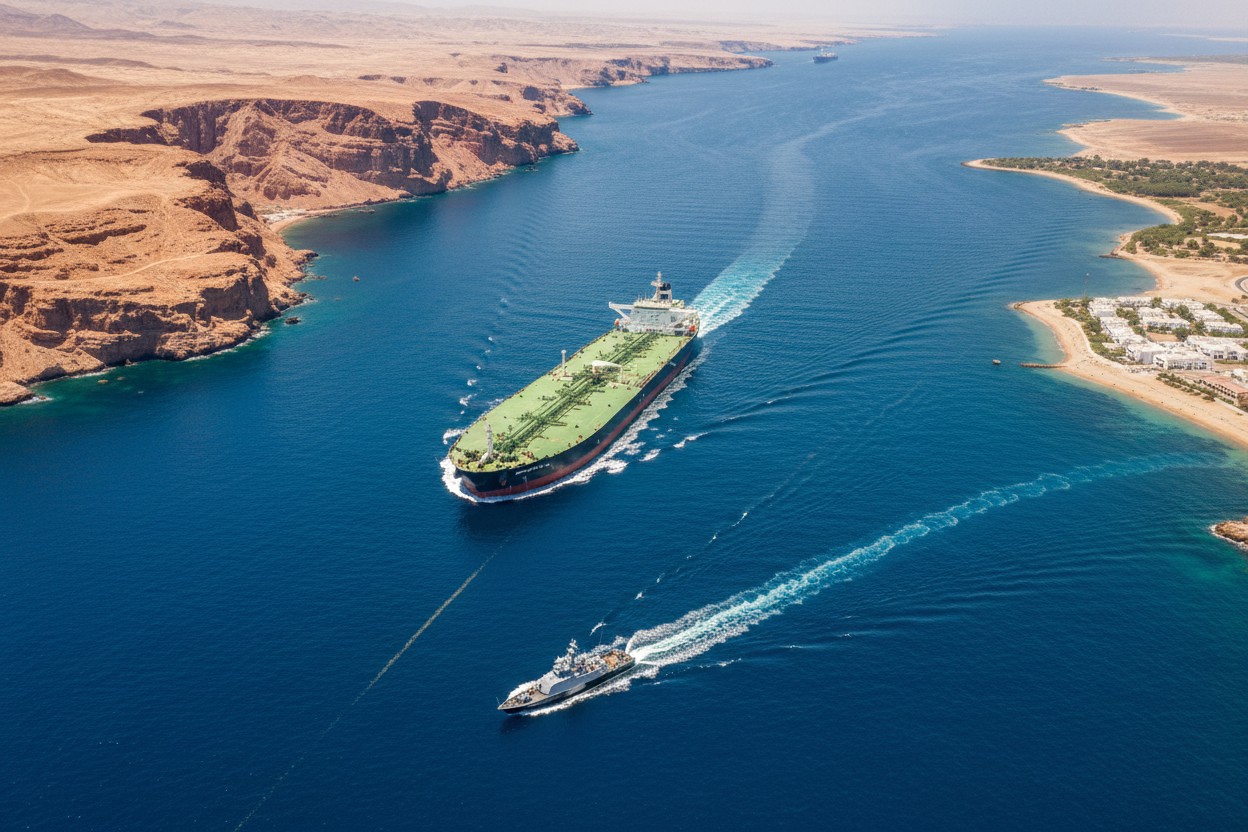
Iran Confirms Talks, Describes Temporary Arrangement
Iran's Foreign Ministry confirmed ongoing talks with Oman to establish what it called a "temporary" shipping route through the waterway, through which around one-fifth of the world's oil traveled in peacetime. Saeed Ajorlu, a member of Tehran's negotiating committee, told the Islamic Republic of Iran Broadcasting that such an arrangement would be in effect for one to three months "where Iran is dominant." "We assert that the legal regime for passage through the Strait of Hormuz must not return to its pre-war state," Ajorlu said, referring to the period before the conflict when no state controlled the waterway. Iranian Foreign Ministry spokesman Esmail Baghaei said Monday, Aug. 3, there would be no permanent change in Hormuz "as long as the U.S. mischief continues, as long as the Iranian sea siege continues, as long as the U.S. military aggression against Iran and its allies continues." Iran has denied holding negotiations with the United States, saying its current talks are with Oman on a new shipping route [2].U.S. Official Disputes Iran's Account; Oman Cites Neutral Role
A U.S. official told NYT that Iran's description of the would-be agreement was "not accurate," insisting that no tolls would be collected and Tehran would have no say over which ships could traverse the strait or what route would be used. The Wall Street Journal (WSJ) reported last week that Iranian and Omani negotiators were working toward an arrangement to restart commercial shipping, although major disagreements remained over transit fees and the rules governing passage. A U.S. official told WSJ that Washington remained closely engaged with mediators on an indirect basis. In a July 14 statement, Oman’s Foreign Ministry described its role as "transparent and neutral cooperation with all parties" aimed at restoring freedom of navigation through the Strait while complying with international maritime law. U.S. Treasury Secretary Scott Bessent said Tuesday, Aug. 4, that Washington could reach a deal with Tehran to reopen the strait by Wednesday, Aug. 5. "We are in talks with the Iranians," Bessent told CNBC [3]. U.S. Secretary of State Marco Rubio said progress had been made in the talks "but not finality yet," adding, "We’re hoping that will happen very shortly" [4].Strategic Importance and Ongoing Negotiations
The Strait of Hormuz carried approximately one-fifth of the world’s oil supply in peacetime, making the waterway strategically significant for global energy markets. Historical trade routes linking the Persian Gulf and the open Indian Ocean passed through the strait, according to Lewis Dartnell in "Origins: How the Earth Shaped Human History" [5]. Global prosperity has long depended on secure sea lanes, as Gregg Easterbrook writes in "The Blue Age How the U.S. Navy Created Global Prosperity and Why Were in Danger of Losing It" [6]. In June, Iran and Oman created a joint working group to negotiate navigation, shipping services and the future management of the strait, pledging to keep the waterway "a secure and open" route for international shipping. The waterway has been shuttered repeatedly during the conflict. Iran reclosed the strait on April 18 after the United States refused to lift its naval blockade of Iranian ports, according to NaturalNews.com [7]. Russia and China on April 8 vetoed a United Nations Security Council resolution seeking to reopen the strait [8]. Insurers have raised rates for vessels in the region or refused coverage altogether, and more than 3,000 ships have remained stranded in the Persian Gulf, according to Bright Videos Network [9].Outlook
The agreement has not been finalized, and competing accounts from Iranian and U.S. officials indicate that major disagreements remain over transit fees and the rules governing passage. Iran asserts that the legal regime for the strait must change from its pre-war status, while U.S. officials maintain that no tolls will be collected and Iran will not control routing. Oil prices fell to a three-week low Tuesday as senior U.S. officials raised hopes of a deal, with Brent crude dropping almost 5% to under $80 a barrel, according to the BBC [10]. Qatar's Foreign Ministry said mediators are continuing their efforts, but that no direct talks are planned [11]. A cargo ship was struck by an unknown projectile in the strait overnight, according to British maritime authorities [12]. Any final arrangement will depend on resolving the disputes over fees and passage rules, with Washington said to remain engaged with mediators on an indirect basis, according to WSJ.References
- The War Zone. "Iran And Oman Working To Control Strait Of Hormuz, Shaky Ceasefire Still Holding". August 4, 2026.
- The Epoch Times. "Iran Denies US Talks, Says Negotiations Are With Oman on New Hormuz Route". August 3, 2026.
- The Times of Israel. "US treasury secretary says deal with Iran to reopen Hormuz could be sealed by Wednesday". August 4, 2026.
- The Times of Israel. "Rubio: Progress made in talks to reopen Hormuz, but there's still some work to do". August 5, 2026.
- Lewis Dartnell. "Origins How the Earth Shaped Human History".
- Gregg Easterbrook. "The Blue Age How the US Navy Created Global Prosperity and Why Were in Danger of Losing It".
- NaturalNews.com. "Strait of Hormuz Closed Again After U.S. Maintains Blockade of Iranian Ports". April 21, 2026.
- Garrison Vance. "Russia, China Veto UN Resolution on Strait of Hormuz, Citing Escalation Risk". NaturalNews.com. April 8, 2026.
- Bright Videos Network. "2026-03-18-BVN-TRUMP REGIME UNRAVELING_otter_ai-". March 18, 2026.
- BBC News. "Oil prices fall as US officials raise hopes of a deal with Iran". August 4, 2026.
- BBC News. "Qatar says US-Iran mediation efforts continuing but no direct talks planned". August 4, 2026.
- RT. "Cargo ship struck in Hormuz after Trump's 'decapitation' threat". August 4, 2026.
Explainer Infographic


Russia accuses Kyiv of blocking prisoner exchanges, prioritizing “PR” over human life
By Willow Tohi // Share

Iranian State Media Mocks Trump Aircraft Switcheroo
By Garrison Vance // Share

The Future of the Human Race Belongs to Those Who Protect Their Genetic Integrity
By Mike Adams // Share

Forta.Chat Is the Private Messenger We Need Before It’s Too Late
By Mike Adams // Share

The Fertility of War: A review of the coming famine that mainstream media won’t tell you about
By Belle Carter // Share

Gasoline Prices Hold Near $4 Per Gallon as Iran Conflict, Refining Issues Hit Supply
By Sterling Ashworth // Share

Labor Department Suspends Eight Companies From Green Card Program
By edisonreed // Share
Reuters/Ipsos Poll: Trump Voters Show Lower Enthusiasm for Midterm Elections
By garrisonvance // Share

Trump Pledge on Iran Strikes Fails to Soothe Oil Markets
By sterlingashworth // Share

AI Chip Stocks Fall After Report on OpenAI Revenue Shortfall
By sterlingashworth // Share
EPA Proposes Rollback of Methane Rules for Oil and Gas Industry
By ivagreene // Share

Review Links Insomnia to 26% Higher Relative Risk of Stroke
By morganverity // Share