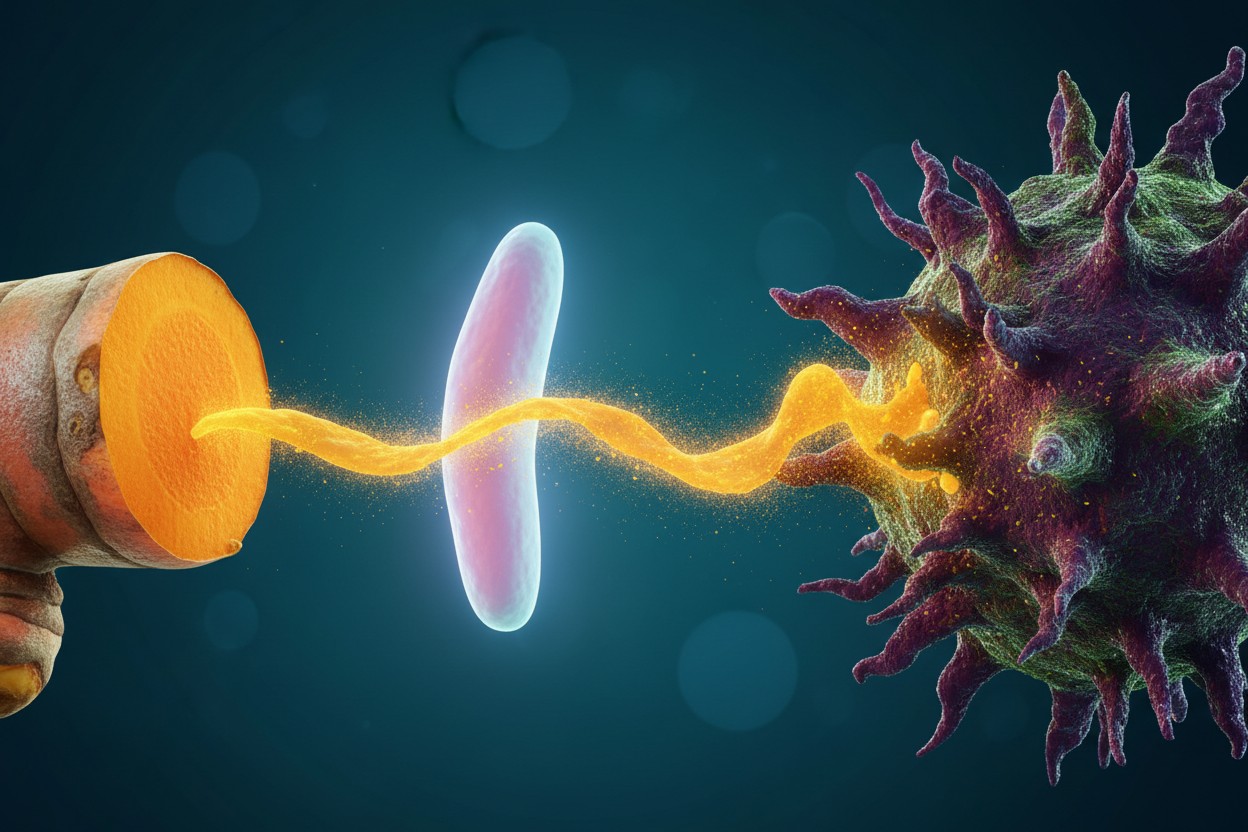
Curcumin Among Five Compounds Tested Against Fibrosarcoma Cells
The researchers tested curcumin, berberine, caffeic acid phenethyl ester, biochanin A, and cucurbitacin E against mouse fibrosarcoma cells and normal rat muscle cells. Each compound was selected for its history in traditional medicine and its interaction with NF-κB, a signaling protein that, when active, helps tumors survive and spread, according to the paper. Chronic inflammation has been linked to an estimated 15-20% of human malignancies, according to the book "Genomics Proteomics and Metabolomics in Nutraceuticals" [2]. Fibrosarcoma is a rare, aggressive cancer that grows within muscle tissue, which makes treatments that spare surrounding tissue difficult to develop, the study noted. The study reported that curcumin and caffeic acid phenethyl ester appeared to target cancer cells more strongly than healthy cells from the outset, while results for the other three compounds varied.Study Design and Methods
Researchers exposed fibrosarcoma cells and normal muscle cells to each compound and measured survival rates, energy levels, and a marker of cellular senescence, a state in which stressed cells stop dividing but do not die outright. The team also injected the compounds into wax moth larvae and tracked survival over five days, according to the paper. Caffeic acid phenethyl ester is found in propolis, the resin bees use to seal their hives. Propolis has been used as a natural remedy since ancient times, according to an article published by Mercola.com [3]. Curcumin, described in the scientific literature as a polyphenol present in turmeric and an anti-inflammatory agent used in traditional medicine [4], was among the five candidates. The experiment used two rodent cell lines, one from a mouse fibrosarcoma tumor and one from normal rat muscle, so the comparison would reflect differences between cancerous and healthy tissue rather than random variation, the authors stated.Cell Experiments Show Energy Collapse in Cancer Cells
Fibrosarcoma cells lost 83% to 92% of their energy stores after treatment, while normal muscle cells lost between 25% and 75%, the study stated. Both cell types started with similar energy levels, which the authors said indicated cancer cells could not recover the way normal cells could. Berberine drained roughly 92% of cancer cell fuel. Curcumin drove more than 75% of fibrosarcoma cells into a senescence-associated state, compared with 16% to 18% of untreated cells, according to the paper. Laboratory studies have previously shown curcumin can downregulate cyclins D1 and D3 in cancer cell lines [5] and can inhibit cancer cell invasion in vitro [6]. Curcumin has also been reported to induce apoptosis in various human cancer cells by increasing the nuclear translocation and DNA binding of p53 [7]. Biochanin A, by contrast, slightly increased mitochondrial activity in cancer cells, a finding the researchers said they could not explain.Biochanin A Performed Poorly in Larvae; Curcumin and Berberine Held Up
In the wax moth larvae, biochanin A was the worst performer, with only 2 of 10 larvae surviving past the first day, according to the researchers. The compound had looked effective against cancer cells in culture, the authors said. The study reported that fibrosarcoma cells treated with biochanin A showed a rebound in several tumor-survival genes by 48 hours, including a sugar-burning gene that rose to nine times normal levels. Prior research has shown tumor cells can behave unpredictably depending on their environment; in one mouse study, weakly tumorigenic fibrosarcoma cells formed aggressive tumors when co-implanted with a foreign body that generated an immune response [6]. Curcumin had 7 of 10 larvae alive by day five, and berberine had 9 of 10 alive, results the authors said were in line with untreated controls and made the two compounds the top candidates for further research. Cucurbitacin E showed no such gene rebound but was harder on the larvae than curcumin or berberine, the paper stated.Limitations and Next Steps
The authors acknowledged that the study compared rodent cell lines from different species and tissue backgrounds, so observed differences may partly reflect baseline biological variation unrelated to malignant transformation. Gene expression analysis was limited to one cancer cell line and two of the five compounds, the paper noted. NF-κB activity was inferred from gene transcript levels rather than direct protein measurements, and some mitochondrial measurements were conducted with limited replication, according to the study. The larval model provides only a preliminary acute toxicity screen and cannot substitute for mammalian pharmacokinetic studies, the authors stated. The researchers called for future work using human sarcoma models, direct NF-κB activation assays, metabolic flux measurements, and combination studies with standard sarcoma therapies.Conclusion
The results are preliminary. The study examined a single fibrosarcoma cell line alongside one normal muscle cell type, not a tumor growing in a living animal, and none of the compounds has been shown to prevent, treat, or cure cancer in humans. Curcumin is the subject of more than 10,000 peer-reviewed studies, though the human body struggles to absorb it, according to reporting by NaturalNews.com [8]. Other recent research has described plant compounds in turmeric as capable of blocking prostate cancer cells from consuming glutamine [9]. The authors said the current findings identify specific, measurable effects on cancer cells that merit further investigation.References
- "Mitocans, a class of emerging anti-cancer drugs". Molecular Nutrition & Food Research. 2014.
- Debasis Bagchi, Anand Swaroop, and Manashi Bagchi. "Genomics Proteomics and Metabolomics in Nutraceuticals".
- Mercola.com. "The Latest Weapon in the War on Cancer Honey". November 24, 2012.
- "Benevolent effects of dietary polyphenols using lung inflammation as a model". Journal of the Science of Food and Agriculture. 2006.
- GreenMedInfo.com. "Targeting Cancer Stem Cells with NonToxic Therapies".
- Boik John. "Natural compounds in cancer therapy".
- "Redox Modulation of p53: Mechanisms and Functional Significance". Oxidative Medicine and Cellular Longevity. 2011.
- NaturalNews.com. "The golden key: How a pinch of black pepper unlocks turmeric's ancient healing power". April 13, 2026.
- NaturalNews.com. "Study: Natural compounds in turmeric, grapes and apples STARVE prostate cancer cells". February 26, 2026.
Explainer Infographic

Study: Fossil fuel emissions act as fertilizer, driving global plant growth surge
By Cassie B. // Share
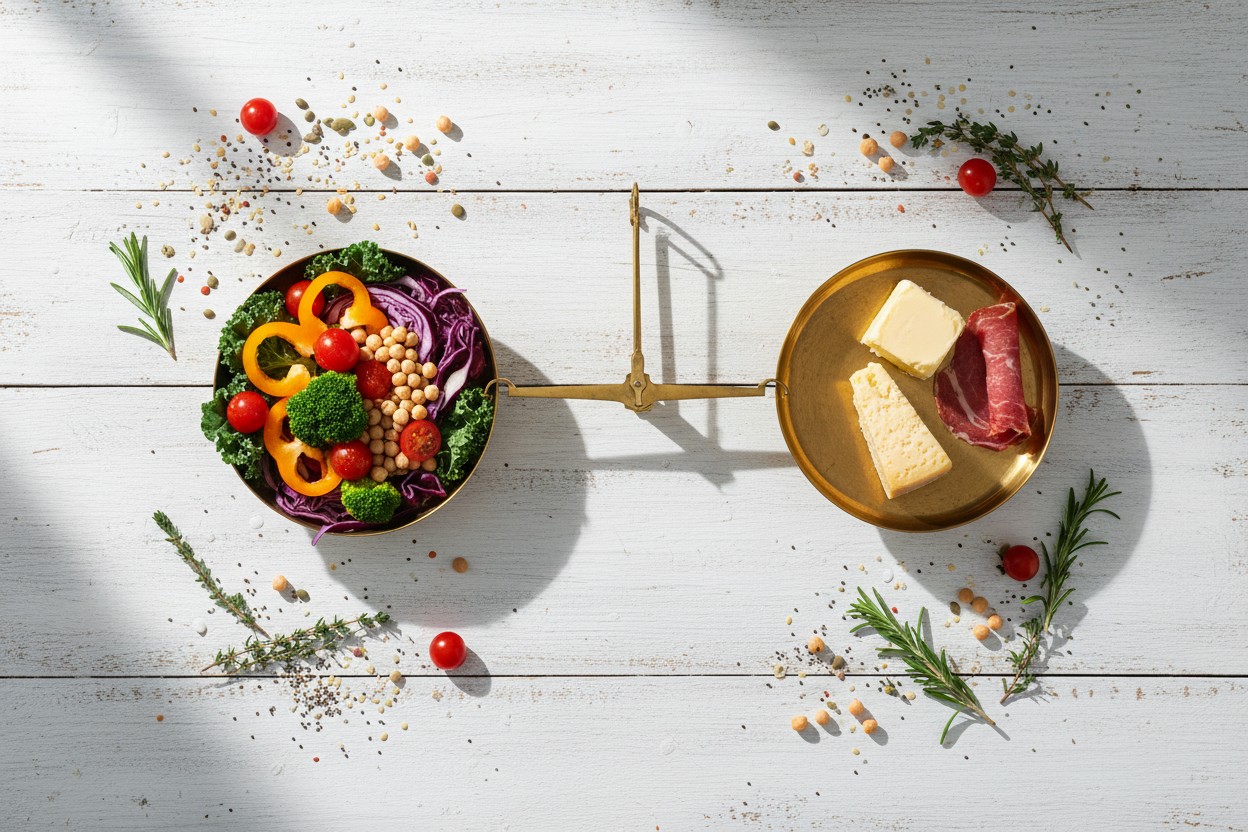
Low-fat vegan diet cuts dietary energy density by 30%, study finds
By Coco Somers // Share
The whole truth: Why eating an entire avocado daily is key to a healthier diet
By Ava Grace // Share

Home-Based Interval Training Improves Aerobic Fitness in Older Adults, Study Finds
By Petra Stone // Share

Seven-year study confirms social media’s dose-dependent toll on youth mental health
By Willow Tohi // Share
Magnesium May Reduce Dementia Risk and Improve Sleep, Experts Say
By Coco Somers // Share

Full-fat dairy reconsidered: New science challenges decades of dietary dogma
By willowt // Share

Hegseth Says Public Will Be Able to Watch Fort Hood Shooter's Execution by Firing Squad
By douglasharrington // Share

Trump Considering Suspending Federal Gas Tax as States Lower Fuel Levies
By sterlingashworth // Share

South Korea Ambassador to Kyiv Recalled Over Prisoner Transfer Dispute
By garrisonvance // Share

DHS Proposes $70,000 Fee for Foreign Students in Optional Practical Training
By douglasharrington // Share