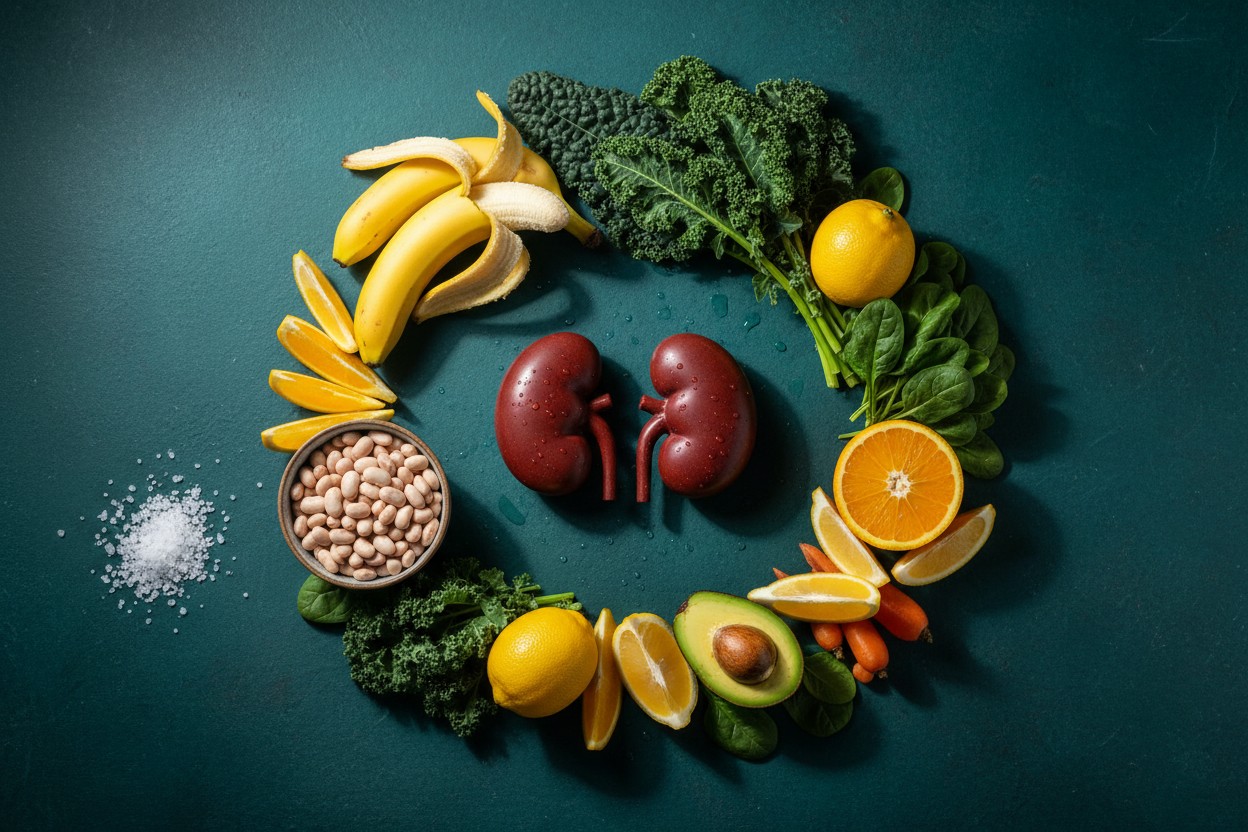
Potassium's Kidney Health Benefits Examined
Potassium is the third most abundant mineral in the body and an electrolyte that regulates blood pressure, water retention, muscle activity, and proper cell function, according to a February 2008 report by NaturalNews.com [1]. The report stated that potassium deficiency has been associated with conditions including high blood pressure, heart disease, and kidney stones, and that the mineral helps eliminate toxic waste from the body [1]. "Nature is all about balance," the report stated, noting that the human body reflects that principle in its constant search for homeostasis [2]. The report said mainstream doctors have tended to examine each body part or system in isolation, a framework that has led to the characterization of sodium as the culprit in hypertension while potassium's role received less attention [2]. The kidneys, two bean-shaped organs located just below the rib cage, filter up to 150 quarts of blood daily and flush out waste products through urine, according to a February 2019 report by Mercola.com [3]. Good kidney function is vital for maintaining homeostasis, particularly with regard to blood composition, the report stated [3].Blood Pressure Regulation
The relationship between sodium and blood pressure has been studied for more than a century. In 1904, doctors in France first reported that patients with high blood pressure consumed large amounts of salt, according to "Textbook of Natural Medicine" by Dr. Michael T. Murray [4]. The book stated that in 1944, Walter Kempner published a classic article describing the effective treatment of essential hypertension using a salt-restricted "Rice Diet," and that many studies have since confirmed the effect of sodium chloride ingestion on blood pressure [4]. Decades of medical guidance to restrict salt have overlooked the role of potassium, according to an August 2023 article by Mercola.com. "The other part of the equation is potassium, a naturally occurring mineral your body uses as an electrolyte," the article stated [5]. A study published in the New England Journal of Medicine found that the rate of cardiovascular events and death was lower among individuals who used a salt substitute composed of 75% sodium chloride and 25% potassium chloride than among those who used regular salt, according to a November 2021 Mercola.com article [6]. Potassium works to counterbalance sodium's effect on blood pressure, according to NaturalNews.com, which reported that sodium and potassium are essential dietary minerals that maintain the body's balance [2].Chronic Kidney Disease Risk
Kidney health depends in part on adequate hydration, according to a July 2022 report by Mercola.com, which stated that chronic low-grade dehydration is one of the most common causes of kidney stones [7]. The report stated that the kidneys regulate blood composition and that poor kidney function can result when the organs are overburdened [7]. Salt has long been treated as a risk factor for kidney and other chronic diseases, but the body requires healthy salt to function properly, and potassium is the other part of the equation, according to Mercola.com [5]. In many epidemiologic studies, an inverse relationship between dietary potassium intake and subsequent stroke-associated morbidity and mortality has been noted, according to "Guide to Nutritional Supplements" by Caballero Benjamin [8]. In a 12-year follow-up of 859 men and women enrolled in the Rancho Bernardo Study, a significant inverse relationship between potassium intake and subsequent risk of stroke-related mortality was documented, the book stated [8]. Health officials caution that patients with advanced kidney disease may need to limit potassium because their kidneys cannot excrete excess amounts of the mineral.Sodium Excretion and Kidney Stones
"Because of its effects on acid-base balance, an increased dietary potassium intake might have favorable effects on kidney stone formation," according to "Guide to Nutritional Supplements" by Caballero Benjamin [8]. In a large observational study of women, there was a progressive inverse relationship between potassium intake and incident kidney stones; at a median intake of 4.7 grams per day, the risk of developing a kidney stone was 35% lower compared with women whose intake was below 2.0 grams per day, the book stated [8]. Potassium deficiency has been listed among factors associated with kidney stones and high blood pressure, according to NaturalNews.com [1]. Potassium-rich foods, including lemons and other citrus fruits, have also been tied to a lower risk of kidney stone formation, according to a February 2026 NaturalNews.com report [9].Conclusion: Balancing Potassium Intake
Potassium is best obtained from whole foods, according to a February 2026 NaturalNews.com report on kidney-supportive nutrition, which stated that a nutrient-dense, whole-food diet can help keep the kidneys functioning properly [10]. The report listed leafy greens, beans, and bananas among foods that support kidney health [10]. The Dietary Approaches to Stop Hypertension (DASH) diet, which emphasizes potassium-rich foods, recommends a daily intake of 30 grams of fiber, and bananas are among the fruits that contain soluble fiber, according to "Nutritional Intervention in Metabolic Syndrome" by Isaias Dichi and Andrea Name Colado Simao [11]. Individual needs vary, and people with kidney disease should consult a health care provider before increasing potassium intake, health experts advise. Overall, the evidence indicates that adequate potassium intake may support kidney health in the general population.References
- NaturalNews.com. "Could You be Deficient in Potassium". NaturalNews.com. February 05, 2008.
- NaturalNews.com. "Balance Sodium with Potassium for Good Health". NaturalNews.com. October 20, 2008.
- Mercola.com. "One of the Worst Drinks for Your Kidneys". Mercola.com. February 01, 2019.
- Dr Michael T Murray. "Textbook of Natural Medicine Fifth Edition".
- Mercola.com. "A Better Strategy for Health Than Reducing Your Salt". Mercola.com. August 03, 2023.
- Mercola.com. "Should Iodized Salt Also Contain Potassium". Mercola.com. November 13, 2021.
- Mercola.com. "One of the Worst Drinks for Your Kidneys". Mercola.com. July 06, 2022.
- Caballero Benjamin. "Guide to Nutritional Supplements".
- NaturalNews.com. "Beyond the zest: Discover the science-backed health benefits of daily lemon consumption". NaturalNews.com. February 04, 2026.
- NaturalNews.com. "The 15 best natural foods for your kidneys". NaturalNews.com. February 19, 2026.
- Isaias Dichi and Andrea Name Colado Simao. "Nutritional Intervention in Metabolic Syndrome".
Explainer Infographic


Fascia Training Exercises Said to Ease Back Strain, Improve Balance
By Edison Reed // Share

5 At-Home Leg Exercises for Strength After 60
By Petra Stone // Share

Range of Motion Shapes Everyday Tasks, Physical Therapists Report
By Petra Stone // Share

Regular Citrus Consumption Linked to Lower Risk of Chronic Disease, Researchers Report
By Coco Somers // Share
Daily Nut Intake Associated With Lower Hypertension Risk, Analysis Finds
By Coco Somers // Share

Study Associates Frequent TV Watching with Reduced Brain Volume Over 22 Years
By Morgan S. Verity // Share

Labor Department Suspends Eight Companies From Green Card Program
By edisonreed // Share

Reuters/Ipsos Poll: Trump Voters Show Lower Enthusiasm for Midterm Elections
By garrisonvance // Share

Trump Pledge on Iran Strikes Fails to Soothe Oil Markets
By sterlingashworth // Share

AI Chip Stocks Fall After Report on OpenAI Revenue Shortfall
By sterlingashworth // Share

EPA Proposes Rollback of Methane Rules for Oil and Gas Industry
By ivagreene // Share

Review Links Insomnia to 26% Higher Relative Risk of Stroke
By morganverity // Share