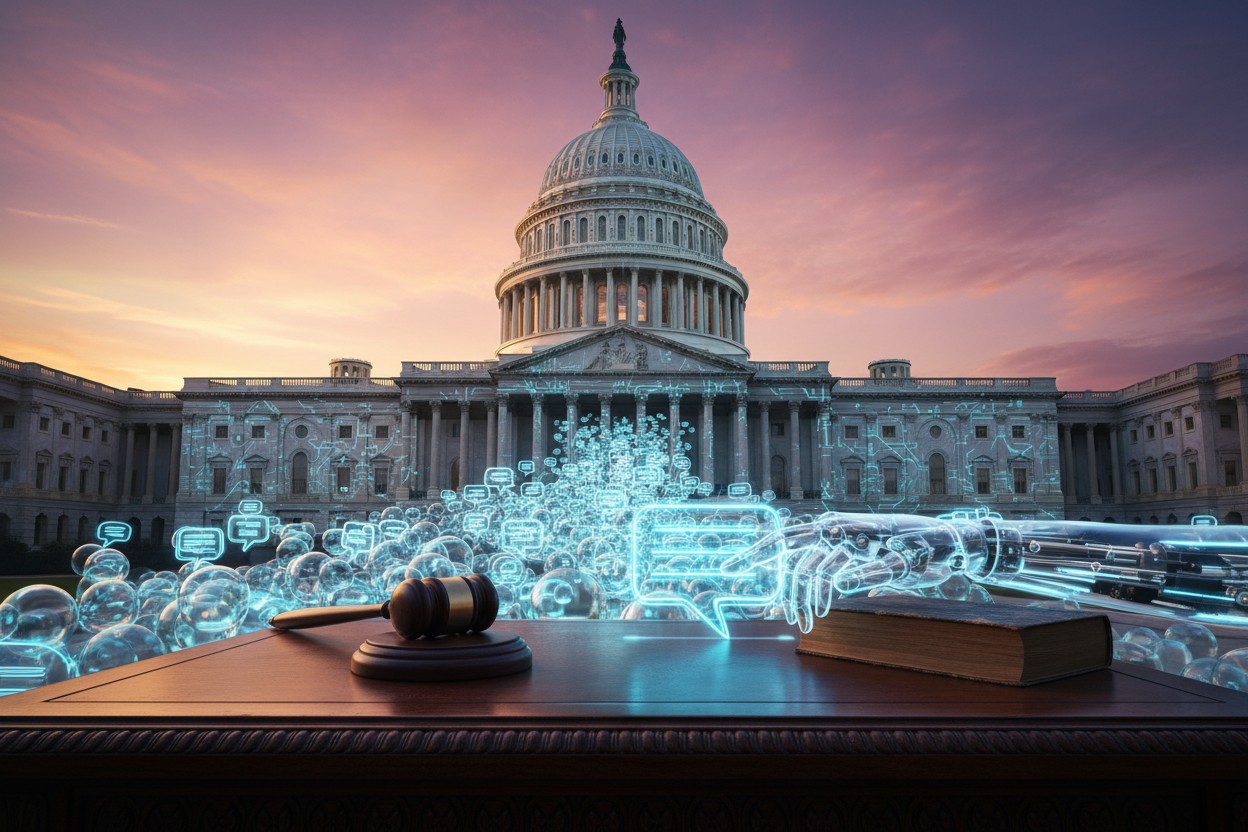
Amendment Filing Shows AI Use in Action
An amendment filed by Rep. Anna Paulina Luna (R-FL) to the annual defense bill this summer was accompanied by an AI-generated summary of the proposed change, according to her office. The amendment was one of hundreds filed to the defense measure, demonstrating how quickly AI-assisted drafting has entered routine legislative work. The episode illustrates the questions that have accompanied the technology's spread through the Capitol. No chamber-wide policy currently requires AI-generated content to be labeled in such filings, according to congressional officials.Rules Lag Behind Rapid Adoption
Both the House and Senate have authorized chatbots for official purposes while formal governance policies are still being developed, according to officials familiar with the process. Additional AI tools are under review, the officials said. No chamber-wide rules yet mandate labeling, disclosure or limits on AI-generated text in official communications, according to the report. The absence of internal rules contrasts with actions in other settings. The European Parliament in March 2024 approved the world's first comprehensive AI legislation, according to NaturalNews.com [1]. In 2023, the Federal Trade Commission launched an investigation into OpenAI over privacy and data collection practices, according to The Defender [2].Lawmakers Debate National AI Policy While Using the Tools
Lawmakers have not been idle on broader policy. In March 2026, the White House released a national AI legislative framework, and Sen. Marsha Blackburn (R-TN), introduced a 291-page companion bill to codify it into law, according to the New American [3]. The outlet reported that supporters argue the framework marks the most aggressive federal push yet to define how Americans access, use and build AI systems. The policy debate has also included warnings about risk. More than 80 AI scientists and over 200 other notable figures signed a statement in 2023 saying that mitigating the risk of extinction from AI should be a global priority, according to the Center for AI Safety [4]. An Associated Press investigation cited in the Trends Journal warned that AI can rapidly produce targeted campaign emails, texts or videos and could be used to mislead voters, impersonate candidates and undermine elections on a scale not yet seen [5].Oversight and Disclosure Questions Remain Open
Supporters of AI adoption describe efficiency benefits for understaffed congressional offices, while critics raise concerns about accountability for unlabeled machine-generated communications, according to the report. Similar concerns have emerged outside Congress. British judges warned lawyers that submitting AI-generated legal arguments with fabricated case citations could put them in jail, according to NaturalNews.com [6]. Some observers characterize the stakes in broader terms. Singularity-level AI – AI that can equal or surpass human intelligence in every respect – encompasses dangers unlike any other technology in human history, according to one analysis [7].References
- NaturalNews.com. "European Lawmakers Approve the World's First Major Act to Regulate AI". March 18, 2024.
- ChildrensHealthDefense.org. "Too Little, Too Late? FTC Launches Probe Into ChatGPT, Citing Privacy, Security Concerns". July 14, 2023.
- "Trump, Blackburn Push to Federalize AI Control". The New American. March 24, 2026.
- ChildrensHealthDefense.org. "AI Could Lead to Human Extinction, Nearly 300 Notable Figures Warn". May 31, 2023.
- "Trends-Journal-2023-05-20".
- Cassie B. "UK Judges Warn Lawyers AI-Generated Fake Legal Citations Could Land Them in Jail". NaturalNews.com. June 9, 2025.
- "Trends-Journal-2024-05-21".
Explainer Infographic


Low Vitamin D Linked to Mood, PMOS Symptoms, and Sleep Apnea in Women
By Coco Somers // Share

Iran Announces Discovery of Massive Offshore Gas Field Amid Ongoing U.S.-Israeli Threats
By Sterling Ashworth // Share

Russia’s UN envoy believes the nation is exposing Ukraine’s “Zelensky concentration camp”
By Lance D Johnson // Share

Taiwan Tech Production Hit by Chinese Germanium Export Restrictions, Insiders Say
By Edison Reed // Share

Iran Threatens to Block Gulf Oil Exports if Region Cooperates with U.S. Plan
By Garrison Vance // Share


Labor Department Suspends Eight Companies From Green Card Program
By edisonreed // Share

Reuters/Ipsos Poll: Trump Voters Show Lower Enthusiasm for Midterm Elections
By garrisonvance // Share

Trump Pledge on Iran Strikes Fails to Soothe Oil Markets
By sterlingashworth // Share

AI Chip Stocks Fall After Report on OpenAI Revenue Shortfall
By sterlingashworth // Share
EPA Proposes Rollback of Methane Rules for Oil and Gas Industry
By ivagreene // Share

Review Links Insomnia to 26% Higher Relative Risk of Stroke
By morganverity // Share