Review of 24 Trials Links Legumes to Lower Lab Values
A meta-analysis by researchers at the University of Otago found that adding roughly half a cup of beans or other legumes to daily meals was associated with lower total cholesterol, LDL cholesterol, and fasting blood sugar levels. The review pooled 24 randomized controlled trials with 1,938 adult participants, according to the research team. Participants who added legumes, close to 86 grams a day, saw total cholesterol drop 0.23 mmol/L, LDL cholesterol drop 0.16 mmol/L, and fasting blood sugar drop 0.18 mmol/L compared with control groups, the study reported. The trials compared diets that included legumes with control diets that did not, according to the report. The review is among the largest pooled samples for legume research, the research team said. Earlier meta-analyses of randomized controlled trials also found that non-soy legume consumption lowers cholesterol, according to research cited in “How Not to Diet” [1].The Findings: Moderate Reductions in Three Lab Measures
The reductions in LDL cholesterol generally appeared within six to twelve weeks, according to the report, a timeline similar to that observed with statin use in clinical trials. Researchers assigned a GRADE rating of moderate certainty to the results, saying the evidence was unlikely to be overturned by future studies. The rating was based on pooled data across all 24 trials, the report stated. The review’s lead author said, “The LDL reduction is modest, but at a population level it could translate into fewer cardiovascular events.” The report described the change as small on an individual level but noted that even modest shifts can matter at the population level. Fasting blood sugar reductions were included in the same moderate-certainty rating, according to the report.Why Legumes May Affect Testing Results
A half-cup serving of cooked legumes contains roughly six to eight grams of fiber, according to nutrition reference data [2]. Dietary fiber has been linked to digestive health and regularity in reviews of fiber research [3]. Fiber-rich foods are also relevant to glucose management because carbohydrate type and meal composition affect blood sugar response, according to a registered dietitian cited in a report on carbohydrate sources [4]. Legumes also provide magnesium, according to an article on magnesium-rich foods [5]. Magnesium is an essential mineral for the body, and low intake is common, the same report stated. Several legume varieties are described as nutrient-dense in reports on traditional staples such as mung beans [6]. The pooled trial data did not isolate which legume component produced the changes in cholesterol or glucose, the authors reported. The review’s authors noted that legumes are consumed as whole foods, so the effects may reflect the combination of fiber, minerals, and plant protein rather than a single compound.Practical Dietary Swaps and Recommendations
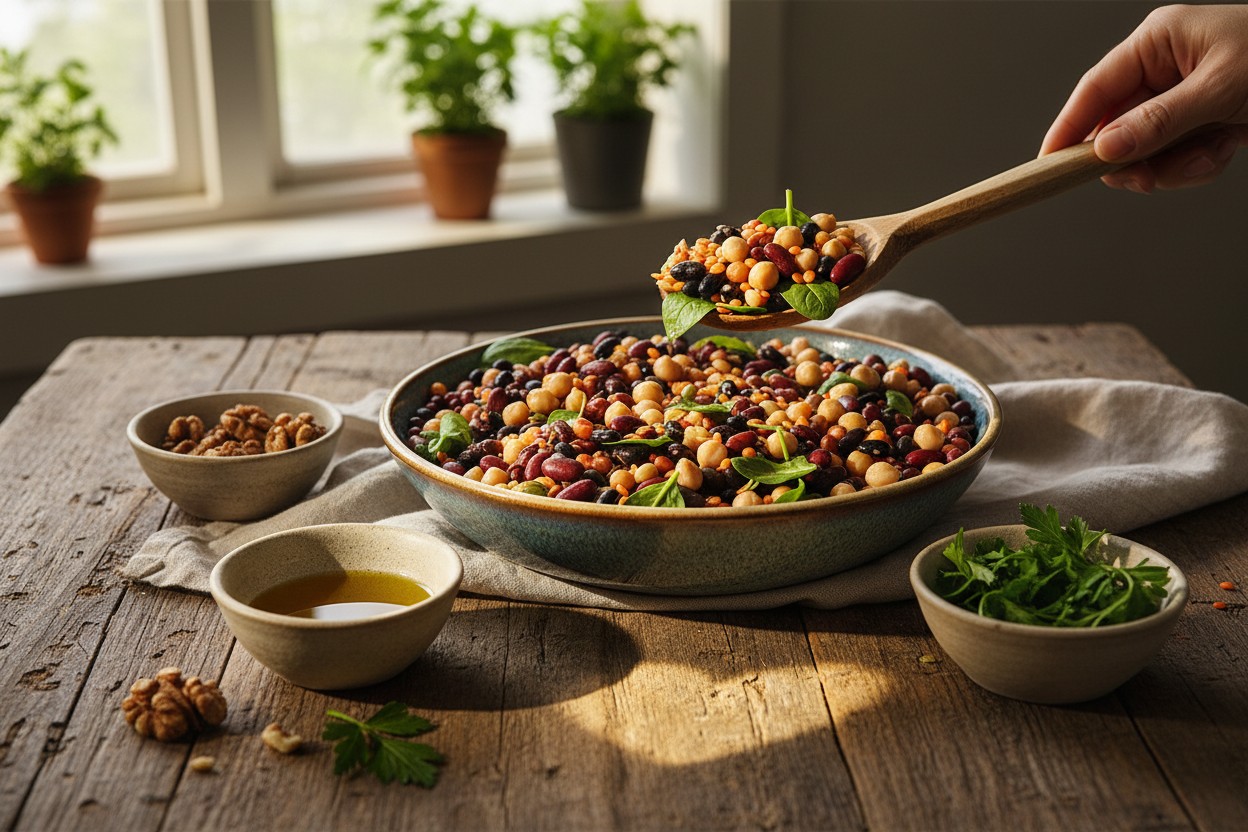
Researchers recommended simple substitutions, such as replacing white rice or dinner rolls with black beans, lentils, or chickpeas at least four nights per week, according to the report. The recommendation uses a half-cup portion, the amount tested in the pooled trials. Small swaps of this kind can add legumes without increasing the total amount of food eaten, the report said. According to the report, soaking dry beans overnight and using a splash of apple cider vinegar in the soaking water may reduce cooking time and lower gastrointestinal discomfort for new consumers. Split peas and lentils cook more quickly than larger beans, the report noted. Research on legume processing has examined how soaking and cooking affect the nutrient content of beans [7]. The report suggested that variety across legume types may offer broader nutritional benefits, and that combining beans with olive oil, walnuts, and leafy greens could support cardiovascular health. Research on plant-based diets has found that replacing animal fats with plant fats reduces LDL cholesterol, according to a book on vegetarian nutrition [8]. Foods such as pumpkin seeds and avocado, which supply magnesium and potassium, can accompany legume-based meals, the report said.Context and Caveats
The review did not directly measure liver fat, so it remains unclear whether improved cholesterol and blood sugar numbers correspond to changes in liver health, the authors reported. Cholesterol and blood sugar values track closely with liver fat, the report noted, but the trials did not test that relationship directly. The authors emphasized that legumes should complement prescribed treatments, not replace them, and that individuals should consult clinicians before changing their diets, according to the report. A dietitian not involved in the review said, “These findings support dietary change as an adjunct, not an alternative, to medication.” The review’s results add to a food-as-medicine movement that has gained mainstream momentum in medical institutions, according to a separate report [9]. That movement emphasizes dietary changes as a component of prevention and treatment, the report stated.References
- Michael Greger MD FACLM. “How Not to Diet”.
- Whitney Eleanor Noss. “Understanding Nutrition”.
- GreenMedInfo.com. “9 Reasons to Eat More Fiber”.
- Coco Somers. “Ten Carbohydrate Sources Identified for Blood Sugar Management”. NaturalNews.com. April 7, 2026.
- NaturalNews.com. “Magnesium rich foods and why you need them”. July 31, 2024.
- NaturalNews.com. “Mung beans: An ancient superfood making a modern comeback”. November 10, 2025.
- “Influence of soaking and cooking on the thiamin, riboflavin and niacin contents of legumes”. Journal of the Science of Food and Agriculture. 2003.
- Donald R. Hall. “The vegetarian advantage live longer healthier and happier”.
- NaturalNews.com. “Food as medicine movement gains traction to combat chronic disease crisis”. February 3, 2026.
Explainer Infographic


Eggplant’s hidden power: The purple produce that fights disease at the cellular level
By Willow Tohi // Share

Study: Creatine Supplementation Supports Memory, Learning, and Cognitive Resilience in Adults
By Chase Codewell // Share

Report: Raspberries Provide Fiber, Antioxidants, and Metabolic Effects
By Coco Somers // Share

Spice up your life: Herbs like rosemary, ginger, turmeric show promise in reducing DNA damage
By Willow Tohi // Share

TCM Practitioner Reports Father’s Age Spot Faded After Digestive Treatment
By Chase Codewell // Share

Bitter Breakfasts Are Going Viral: Does a Handful of Raw Spinach Really Kill Sugar Cravings?
By Coco Somers // Share

Labor Department Suspends Eight Companies From Green Card Program
By edisonreed // Share

Reuters/Ipsos Poll: Trump Voters Show Lower Enthusiasm for Midterm Elections
By garrisonvance // Share

Trump Pledge on Iran Strikes Fails to Soothe Oil Markets
By sterlingashworth // Share

AI Chip Stocks Fall After Report on OpenAI Revenue Shortfall
By sterlingashworth // Share

EPA Proposes Rollback of Methane Rules for Oil and Gas Industry
By ivagreene // Share

Review Links Insomnia to 26% Higher Relative Risk of Stroke
By morganverity // Share