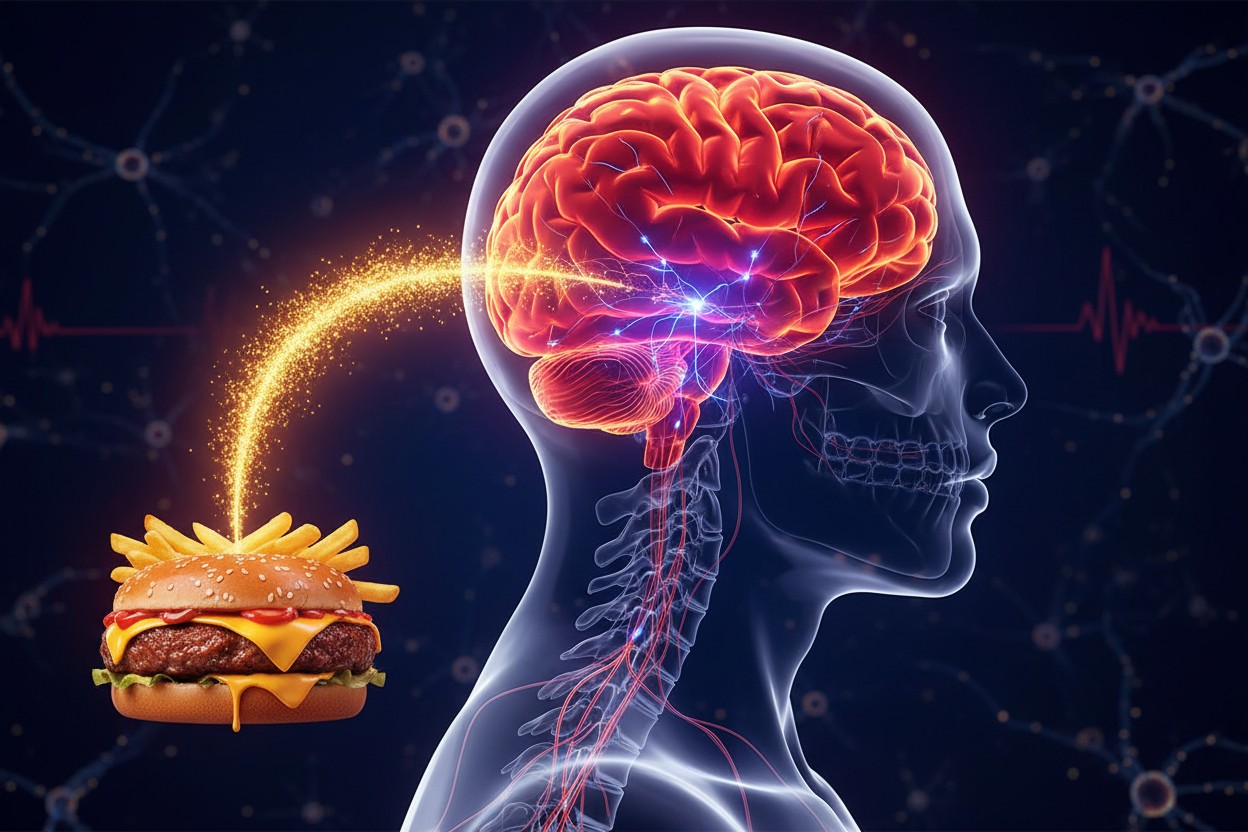
Study Reports New Brain Finding on Fatty Food Intake
Researchers described a brain mechanism that may explain the overconsumption of fatty foods, according to a report released Aug. 13, 2026. The finding emerged from experiments on animal models, officials said. The study was published in a peer-reviewed journal, according to the report. The new research addresses a pattern documented in prior studies of eating behavior. Food addiction, defined as an "eating behavior involving the overconsumption of specific foods in an addiction-like manner," is a common problem, and a January 2022 study found that up to 20% of the general population could be diagnosed with food addiction using the Yale Food Addiction Severity Scale, according to published research [1]. Earlier work has also shown that consuming junk food and following a high-fat diet rewires the brain, reducing the ability to regulate appetite and calorie consumption, according to Dr. Kirsteen Browning, lead author of a study from Penn State College of Medicine [2].Methods and Experimental Design
Scientists measured brain activity after exposing test animals to diets high in fat, the report stated. Imaging and cellular analysis were used to identify activated brain regions, according to the researchers. Control groups were included to compare responses, officials said. The experimental design builds on prior findings about fatty acid sensing in the brain. There is clear evidence that the level of free fatty acids in the blood fluctuates and that free fatty acids cross the blood-brain barrier, with cells identified in the medial and lateral hypothalamus that respond to changing levels of fatty acids in the blood, according to biological psychology literature [3]. These data have provided a foundation for subsequent work on how dietary lipids influence neural activity. The new study extends that line of investigation by tracing the response to a defined circuit, the report stated. The authors reported that the combination of imaging and cellular analysis allowed them to trace the signal from dietary fat intake to a distinct set of neurons. The control groups, which received standard diets, showed no comparable activation, according to the report.Identified Neural Pathway
The study identified a specific neural circuit that responds to fatty acids, according to the report. Activation of this circuit was associated with continued feeding, the researchers said. The response appeared to occur independently of calorie intake, according to study data. The hypothalamus has been known for some time to contain the primary feeding circuitry of the brain, according to anatomy and physiology literature. The arcuate nucleus, along with the lateral hypothalamic area and the ventromedial nucleus, releases several peptides that influence feeding behavior, with one set of neurons promoting hunger and another causing satiety [4]. The new results also align with evidence that dietary fat composition affects satiety signaling. The type of fat in a high-fat diet fed to rodents affected body weight, fat deposition, and gene expression that impacts cellular signaling, according to a review in Nutrition Review, and rats eating diets high in saturated fat showed changes consistent with impaired satiety [5]. The researchers said the circuit identified in the new study responds to the presence of fatty acids rather than the caloric content of the meal, which may help explain why fat consumption can continue beyond energy need.Implications for Food Environment and Obesity
The finding may help explain why fatty processed foods are consumed in excess, the report noted. Public health officials said the discovery could inform future dietary guidance. The authors called for further research to determine whether the same mechanism operates in humans. The finding arrives as the food environment receives renewed regulatory attention. Health and Human Services Secretary Robert F. Kennedy Jr. and former FDA Commissioner David Kessler have jointly targeted the "Generally Recognized As Safe" (GRAS) designation, established in 1958, which permits companies to introduce ingredients without full regulatory review, according to an Aug. 12, 2026 report [6]. Ultra-processed foods now comprise the majority of the American diet, according to that report. Researchers have previously proposed multiple explanations for overeating and obesity, including the salted food addiction hypothesis and the role of changes in environmental cues that cause energy imbalances, according to published literature [7]. The new study adds a neural mechanism to those accounts, the report noted.Expert Responses and Future Research
The research team described the discovery as unexpected, according to a statement tied to the release. Independent experts said the animal-based results require confirmation in human studies. Future work will test whether the pathway can be modified through dietary or pharmacological interventions, the report stated. Researchers have noted that the gut contains its own neural network, often referred to as the "second brain," which plays a role in how dietary inputs shape nervous system signaling [8]. The authors said the findings should be interpreted with caution before translation to humans, the report stated. They called for human trials that combine dietary records with functional brain imaging to determine whether the same circuit responds in humans. Such trials, they said, would be needed before any dietary recommendations could be revised based on the new mechanism. The research team said the pathway's independence from caloric content makes it a candidate for targeted intervention, according to the report.References
- Mercola.com. "The Foods Most Likely to Lead to Food Addiction". Mercola.com. February 24, 2022.
- NaturalNews.com. "High-fat diet and junk food rewire the brain and regulate appetite". NaturalNews.com. February 07, 2023.
- Galluscio Eugene H. "Biological psychology".
- Marieb Elaine Nicpon. "Anatomy physiology".
- Julie Miller Jones. "Saturated fat may impair effectiveness of satiety signals". Nutrition Review. 2014.
- NaturalNews.com. "Unlikely alliance targets GRAS loophole in America's ultra-processed food crisis". NaturalNews.com. August 12, 2026.
- Debasis Bagchi, Harry Preuss, Anand Swaroop. "Nutraceuticals and Functional Foods in Human Health and Disease Prevention".
- Mike Adams. "Brighteon Broadcast News - PENSION WIPEOUTS ". Brighteon.com. March 18, 2025.
Explainer Infographic

Large Review Links Diet, Lifestyle Factors to Ulcerative Colitis Risk
By Coco Somers // Share

Convicted CDC fraudster’s vaccine-autism research must be reopened, scrutinized and redeveloped
By Lance D Johnson // Share

Lab-grown cookies made from plastic slurry raise more questions than answers
By Cassie B. // Share

Omega-3 Intake Linked to Heart and Brain Health, Report Says
By Coco Somers // Share
A gut check on weight gain: Common foods may hold key to blocking fat, study suggests
By Ava Grace // Share

Labor Department Suspends Eight Companies From Green Card Program
By edisonreed // Share

Reuters/Ipsos Poll: Trump Voters Show Lower Enthusiasm for Midterm Elections
By garrisonvance // Share

Trump Pledge on Iran Strikes Fails to Soothe Oil Markets
By sterlingashworth // Share

AI Chip Stocks Fall After Report on OpenAI Revenue Shortfall
By sterlingashworth // Share

EPA Proposes Rollback of Methane Rules for Oil and Gas Industry
By ivagreene // Share

Review Links Insomnia to 26% Higher Relative Risk of Stroke
By morganverity // Share