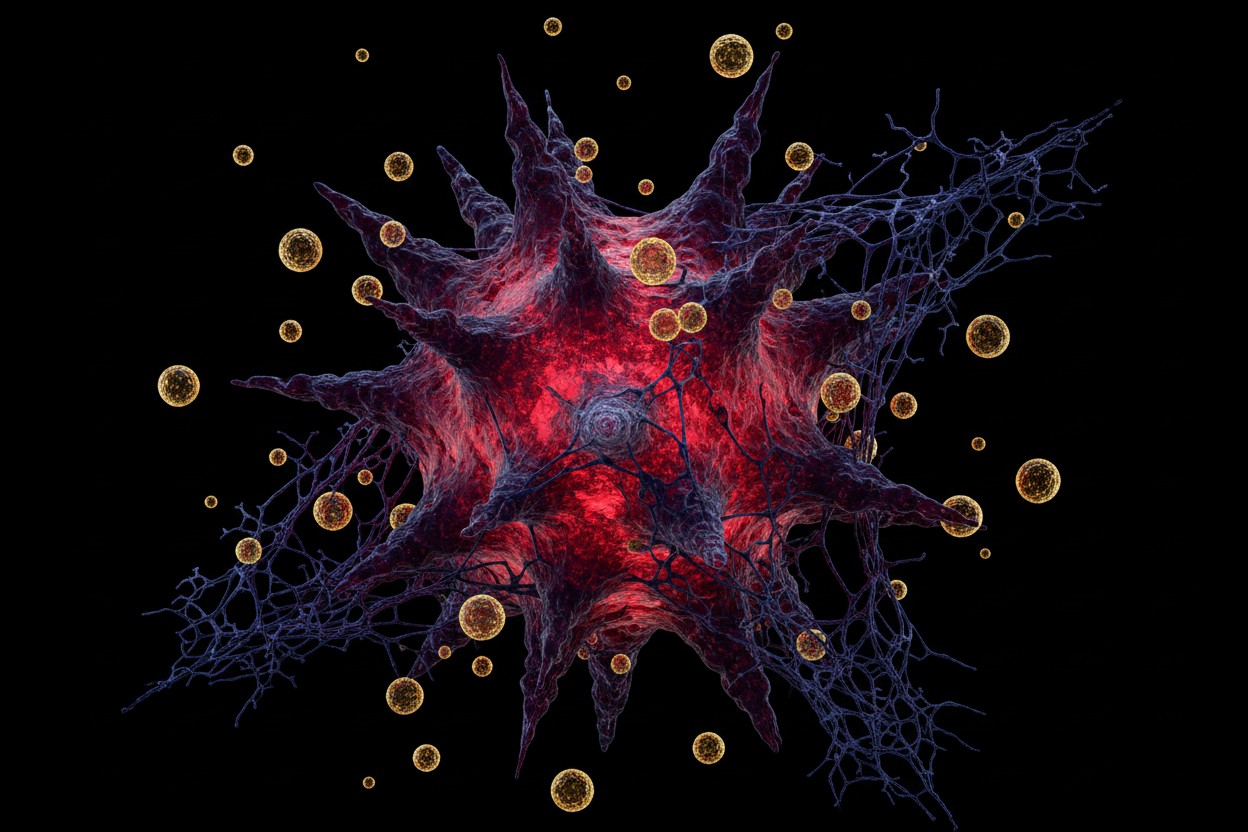
Study Overview
Researchers at Princeton University used three-dimensional tumor models to investigate how different nutrient environments affect triple-negative breast cancer cells, according to a report published on August 16, 2026. The study focused on a particularly aggressive subtype of breast cancer that accounts for a significant proportion of breast cancer mortality, as described in the book "Breasts: The Owner's Manual" by Kristi Funk [1]. Triple-negative breast cancer lacks the three most common receptors targeted by standard therapies, the book states. The experiment was designed to mimic metabolic conditions that arise from different human diets. The scientists created four distinct nutrient environments: high insulin, high glucose, high ketones, and high fat. Each condition was calibrated to resemble metabolic states achievable through dietary patterns, according to the research team. The tumors were grown in a specialized fluid designed to closely replicate human blood plasma, allowing researchers to control the mix of circulating nutrients.Methodology
Rather than growing cancer cells in standard laboratory media, the Princeton team engineered three-dimensional tumor models that behave more like real tumors, according to the report. This approach provides a more realistic representation of how cancer cells interact with their surrounding biochemical environment inside the body, the researchers said. Tumors are constantly bathed in circulating nutrients delivered through blood and interstitial fluid, making traditional two-dimensional cultures less reliable for studying nutrient effects. The scientists created four metabolic environments in the lab: one with elevated insulin levels, one with high glucose, one with high ketone bodies, and one with high levels of fatty acids. These conditions were chosen because they correspond roughly to metabolic states associated with different dietary patterns, such as high-carbohydrate diets, ketogenic diets, and high-fat diets. The study did not test whole diets in humans and was conducted entirely in vitro, the researchers emphasized.Key Findings
Across the four nutrient environments, one condition produced a notably different tumor response. Tumors exposed to the high-fat environment grew larger and became more invasive compared with those in the high-glucose, high-insulin, or high-ketone conditions, the study found. The researchers identified a potential molecular mechanism: high-fat conditions increased the expression of an enzyme called MMP1, which breaks down the structural scaffolding surrounding cells. When this matrix degrades, cancer cells can more easily migrate and invade nearby tissue, the report stated. The other metabolic states -- high glucose, high insulin, and high ketones -- did not produce the same effects in this model, according to the researchers. The authors noted that the findings do not mean those factors are irrelevant in real cancer growth, which involves immune responses, hormones, microbiome activity, and interactions with surrounding tissues that were not present in this simplified system. The study offers a controlled window into direct cellular effects of individual nutrients, the researchers said.Expert Commentary
The lead author of the study said the findings offer a controlled window into direct cellular effects but cautioned against translating them into diet advice for humans, according to the report. The authors emphasized that no single nutrient determines cancer progression and that overall dietary patterns remain the focus of prevention guidelines. Outside researchers not involved in the study noted that the in vitro model does not account for immune responses, hormones, or other factors present in the body, making direct dietary recommendations premature. The study adds to a growing body of research examining how the body's metabolic environment, shaped in part by diet, can influence cancer cell behavior. For example, a comprehensive review of 11 meta-analyses found that higher fiber consumption correlates with reduced risk of several cancers, including gastric, esophageal, ovarian, and endometrial tumors [2]. Additionally, research on dietary linoleic acid from seed oils has identified mechanisms linking modern dietary patterns to increased cancer risk [3].Implications for Diet and Cancer Research
The experimental platform used in this study may allow scientists to test how tumor response to chemotherapy varies by nutrient environment, the researchers said. Such research could potentially inform more personalized dietary recommendations during cancer treatment, though the authors stressed that the results do not suggest dietary fat automatically causes cancer in humans. Human metabolism is far more complex than any lab model, and many additional variables influence tumor behavior in the body. Cancer prevention guidelines consistently recommend prioritizing whole foods, limiting ultra-processed foods, and maintaining a healthy body weight. Natural compounds have also shown promise in preclinical studies. Curcumin, the active ingredient in turmeric, has demonstrated anticancer effects in cell and animal models [4]. A compound in licorice root, glycyrrhizin, has been shown to target genes linked to tumor growth in breast cancer cells [5]. Cannabidiol (CBD) has been found to inhibit growth and metastasis of highly aggressive breast cancer subtypes including triple-negative breast cancer, according to research compiled in "CBD: A Patient's Guide to Medicinal Cannabis" [6]. These findings underscore that the body's metabolic environment, shaped by diet and lifestyle, interacts with cancer biology in complex ways.References
- Kristi Funk. "Breasts the owners manual".'
- ActivistPost.com. "Study Links Fiber Consumption to Epigenetic Changes with Anticancer Effects". August 21, 2026.
- ActivistPost.com. "Historical Rise of Cancer and Dietary Linoleic Acid — Mechanisms and Therapeutic Strategies". July 22, 2026.
- NaturalNews.com. "Curcumin found to stop cancer cell growth". July 18, 2022.
- Evangelyn Rodriguez. "Research reveals licorices potential to fight breast cancer". NaturalNews.com. June 9, 2025.
- Leonard Leinow and Juliana Birnbaum. "CBD A Patients Guide to Medicinal Cannabis-Healing without the High".
Explainer Infographic

Nearly half of the world’s farmers poisoned by pesticides each year, study finds
By Cassie B. // Share

Wheatgrass Juice: Evidence on Ulcerative Colitis, Inflammation, and Safety
By Coco Somers // Share
The gut-heart connection: Fermented foods linked to improved heart health markers
By Ava Grace // Share

Study: Hot Water in Plastic-Lined Paper Cups Releases Millions of Microplastic Particles
By Coco Somers // Share

Ancient papyrus rekindles debate: Did biblical giants walk the Earth?
By Jacob Thomas // Share

Large Study Links Diet Quality to Lung Function, Especially in COPD Patients
By Coco Somers // Share


Full-fat dairy reconsidered: New science challenges decades of dietary dogma
By willowt // Share

Hegseth Says Public Will Be Able to Watch Fort Hood Shooter's Execution by Firing Squad
By douglasharrington // Share

Trump Considering Suspending Federal Gas Tax as States Lower Fuel Levies
By sterlingashworth // Share

South Korea Ambassador to Kyiv Recalled Over Prisoner Transfer Dispute
By garrisonvance // Share

DHS Proposes $70,000 Fee for Foreign Students in Optional Practical Training
By douglasharrington // Share