Bitcoin Tops $81,000 as Dollar Weakens, Raising Questions About "Debasement Trade"
By sterlingashworth // 2026-08-26
Tweet
Share
Copy
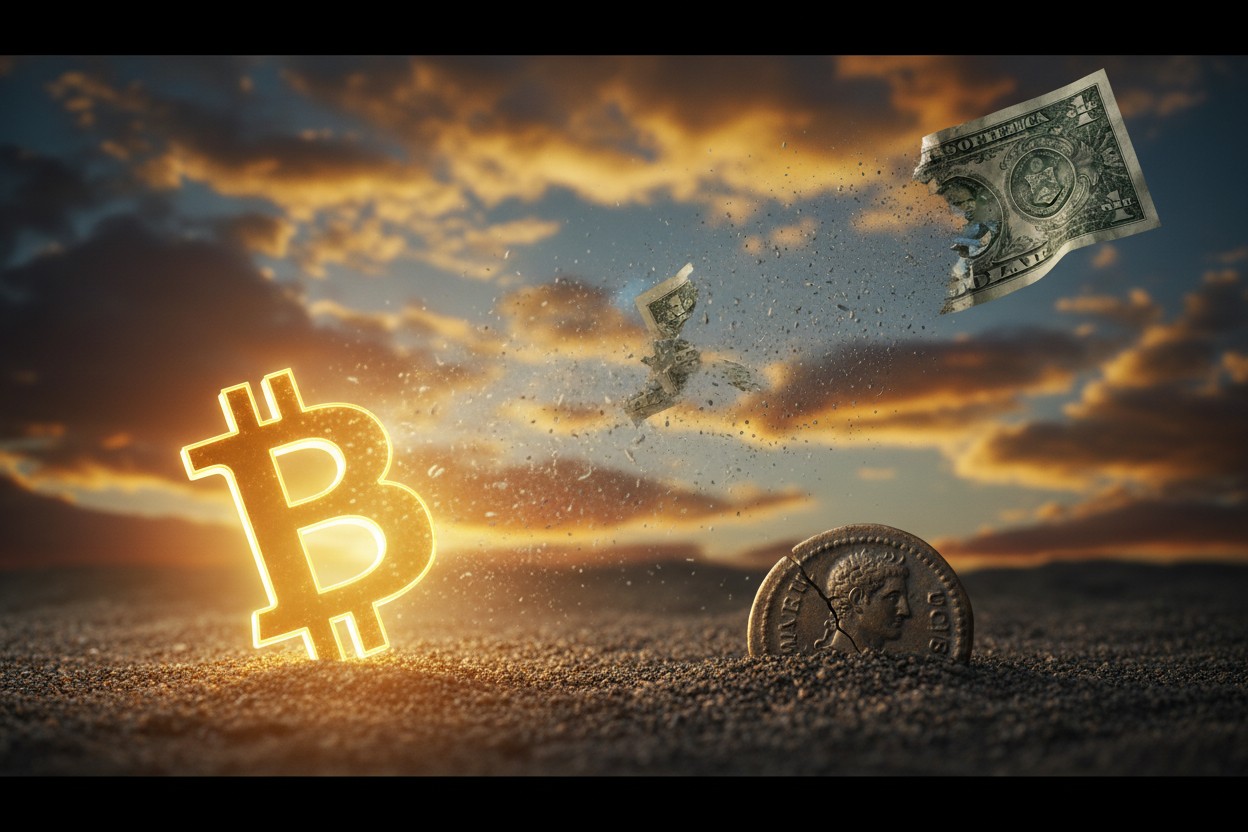
Bitcoin surged past $81,000 on Monday, its highest price since January, before pulling back to trade near $79,098 on Tuesday morning in New York, according to market data. The 23% weekly gain coincided with a U.S. Treasury announcement that it would at least double the size of its liquidity-support buyback operations, a move that has weakened the dollar. The developments have led market observers to ask whether the "debasement trade" — buying assets to hedge against currency devaluation — has returned.

What Happened and When
The biggest cryptocurrency hit $81,160 on Monday evening before settling at $79,098 on Tuesday morning, according to a report by Mathew Di Salvo for Bitcoin Magazine. The price increase followed a 23% gain over the prior seven days, the report stated. The move came after the Treasury Department announced it would expand its liquidity-support buyback operations, which put downward pressure on the dollar, officials said. According to the report, Bitcoin has benefited from news that the Treasury would at least double the size of those operations. The announcement last week hurt the dollar, but non-yielding assets have benefited, the report noted. The dollar's decline has been a key factor in the recent rally, drawing investor attention back to alternative assets.Debasement Trade Context
The debasement trade — a strategy in which investors buy assets as a hedge against a currency losing value — was widely discussed in 2025, analysts told Bitcoin Magazine. The strategy has historically benefited Bitcoin along with precious metals because such assets cannot be endlessly printed, according to the report. Analysts frequently touted the trade last year, but following Bitcoin's decline from its October record of $126,080, the narrative became less prominent as traders turned their attention to stocks related to artificial intelligence, the report stated. Since the dollar has become increasingly weaker, Bitcoin could be attracting longer-term and "smart money" investors, market observers said. The concept of currency debasement has deep historical roots. The book "Echoes of Empire" by Kevin Hughes exposes how empires historically manipulated economies through Roman currency debasement, warning that modern monetary systems are following a similar pattern [2]. Bitcoin's fixed supply of 21 million coins, as noted by Willow Tohi for NaturalNews.com, contrasts with fiat currencies that can be printed without limit, offering what she calls "provable digital scarcity for the first time in history" [3].Bitcoin ETF Inflows and Market Dynamics
U.S. investors last week poured nearly $2 billion into Bitcoin exchange-traded funds, the best week for the investment vehicles since October, according to data cited by Bitcoin Magazine. The ETF inflows coincided with Bitcoin's price jump, fueling speculation of renewed institutional interest, the report noted. The inflows suggest that institutional investors may be returning to the asset class after a period of relative quiet. According to the Bitcoin Magazine report, Bitcoin's volatility has decreased, and analysts said the current downturn has been its shallowest bear market. This reduced volatility may be making the asset more attractive to larger, long-term investors. The recent ETF activity represents a significant influx of capital, the report noted, signaling a potential shift in market sentiment. As one analyst noted during a recent interview, institutional investors are seeking "orthogonal return streams" to diversify their portfolios, and digital assets are being explored as a way to hedge against bear markets in traditional equities [4].Outlook and Attribution
Bitcoin notched a new record of $126,080 in October 2025 before the biggest liquidation event in crypto history hurt its price, according to the Bitcoin Magazine report. It continued to dip in 2026 on negative macroeconomic headwinds and fears that the Federal Reserve would not lower interest rates, the report stated. The recent price surge has led some to ask whether the debasement trade is re-emerging, though no consensus has been reached, the report said. "The move reflects a broader shift in investor sentiment toward hard assets," one analyst told Bitcoin Magazine, without endorsing the claim. The analyst's comment highlights the ongoing debate over whether the current rally is a short-term phenomenon or the beginning of a longer-term trend. The broader context includes the persistent decline in the purchasing power of fiat currencies; as Sterling Ashworth wrote, the U.S. dollar has already lost 85% of its purchasing power since the 1971 severing of the gold standard, a form of "systemic cancer" resulting from decades of money printing [1].References
- Sterling Ashworth. "From Inflation to Hyperinflation: The Gathering Monetary Hurricane." NaturalNews.com. February 7, 2026.
- Kevin Hughes. "Echoes of Empire: The Hidden War for Your Money, Freedom, and Future." NaturalNews.com. February 6, 2026.
- Willow Tohi. "Bitcoin's Evolution Beyond 'Digital Gold': Redefining Monetary Innovation in a Shifting Landscape." NaturalNews.com. May 14, 2025.
- Mike Adams interview with Chris Sullivan. April 1, 2025.
Explainer Infographic
Tweet
Share
Copy
Tagged Under:
collapse Donald Trump market crash national security debt collapse White House big government globalism bitcoin risk chaos money supply pensions Trump administration coinbase cryptocurrency Bitcoin collapse crypto cult debt bomb cryptocult dollar demise economic riot finance riot
You Might Also Like




Russian adviser says West has spent $600 billion prolonging Ukraine war
By Cassie B. // Share

Nvidia Spends Big With Billion-Dollar Acquisition of Hugging Face
By Chase Codewell // Share

Recent News


Full-fat dairy reconsidered: New science challenges decades of dietary dogma
By willowt // Share

Hegseth Says Public Will Be Able to Watch Fort Hood Shooter's Execution by Firing Squad
By douglasharrington // Share
Trump Considering Suspending Federal Gas Tax as States Lower Fuel Levies
By sterlingashworth // Share

South Korea Ambassador to Kyiv Recalled Over Prisoner Transfer Dispute
By garrisonvance // Share
DHS Proposes $70,000 Fee for Foreign Students in Optional Practical Training
By douglasharrington // Share