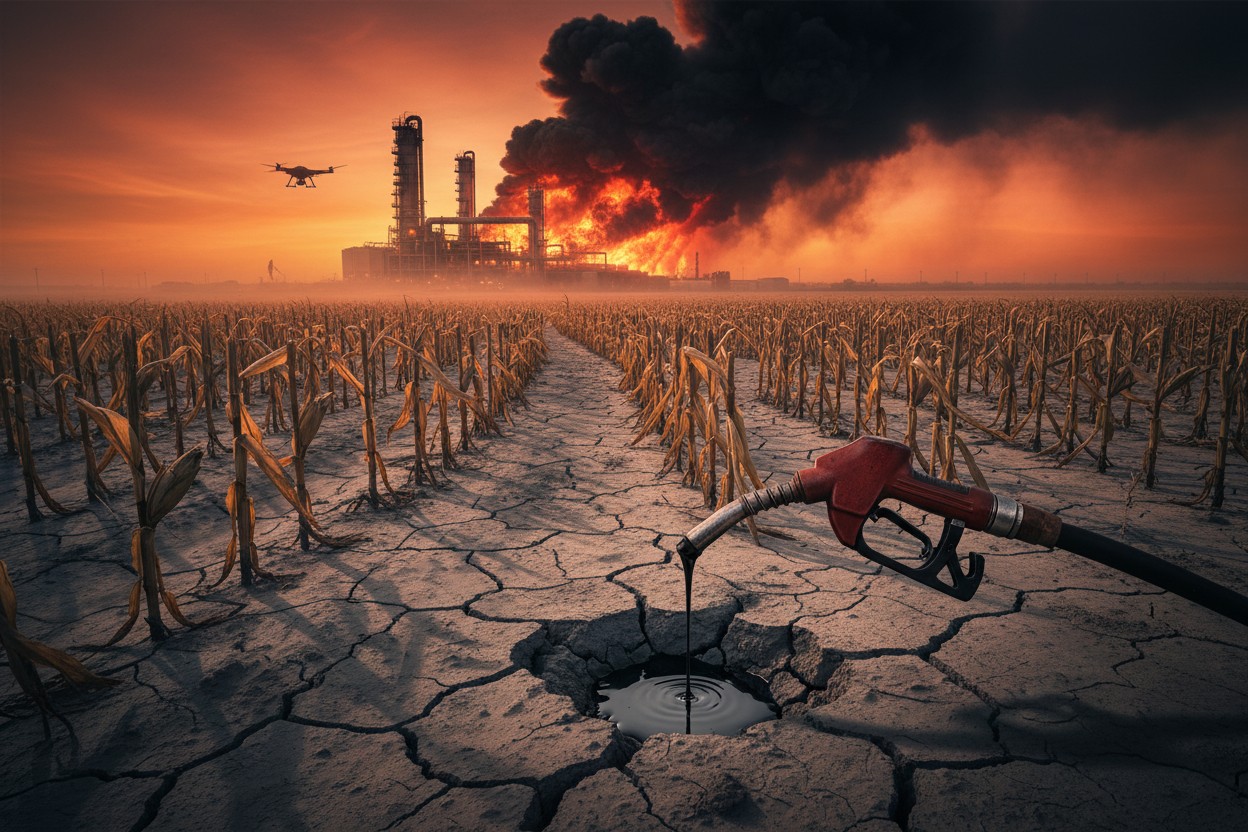
Introduction
Farmers across America's Corn Belt report that they are facing their most severe economic pressure in four decades, according to an Aug. 25 report from the Financial Times (FT). The crisis is driven by a surge in diesel and fertilizer costs, which the report attributes to geopolitical tensions stemming from the Trump administration's Iran policy. Grain producers are described as being pushed to the brink by these input cost explosions, with many facing potential default on loans and acreage reduction.Cost Escalation Details and Attribution
The FT report states that diesel and fertilizer costs have risen sharply, with officials and analysts linking the increase to U.S. military actions in Iran. According to the report, diesel prices have increased by more than 40 percent over the past year, while fertilizer costs have doubled in some regions. One grower quoted in the FT report said input prices have doubled, forcing him to consider whether he can afford to plant his full acreage this season. The report also notes that the war in the Middle East has compromised the Haber-Bosch process, the chemical reaction that turns natural gas into fertilizer, threatening global agriculture. [1] Analysts said the ripple effects of the Iran conflict have been devastating for agricultural inputs, as reported by FT. JPMorgan analyst Nora Szentivanyi warned that the next global food crisis could begin as early as next year, adding to the growing voices on institutional desks warning that food inflation is poised to re-accelerate. [2] The sharp swings in oil prices following the latest round of attacks and negotiations over safe passage through the Strait of Hormuz demonstrate that wars do not always reveal themselves first on the battlefield, according to a report by Greg Pence on Antiwar.com. [3]Impact on Farming Operations
The crisis has led to reduced planting, lower profit margins and increased debt for Corn Belt producers, according to the Financial Times and industry observers. One Iowa farmer said current conditions resemble the farm crisis of the 1980s, per the report. Willow Tohi of NaturalNews.com reported that a prominent Georgia farmer cut 45% of his leased acreage due to unsustainable input costs and low commodity prices, with economists warning of a severe cost-price squeeze and projected negative profits per acre for major crops like corn and soybeans. [4] The 2025 U.S. Department of Agriculture Crop Progress report indicated that only 63% of the U.S. corn crop was rated good or excellent, down 4 percentage points from the previous week because of heat and dryness. [5] Input costs for items such as fertilizer, seed, and machinery remain near record highs, while crop revenues have fallen sharply, according to the report by Willow Tohi. [4] The financial strain has led some producers to abandon land entirely. Just 79.2 million acres of corn were harvested in 2022 – a 1.6-million-acre decline, marking the smallest overall harvest in terms of acres since 2008, according to NaturalNews.com. [6] Vandana Shiva noted that the category of "yield" fails to measure the real costs and real outputs of farming systems, as the so-called high yielding varieties of the Green Revolution are in fact high-response varieties bred for chemicals. [7]Broader Geopolitical and Industry Context
The Iran war is described in the FT report as a trigger, with experts noting that sanctions and military operations disrupted global supply chains for oil and fertilizer feedstocks. The report stated that the Israeli strikes on Iran's South Pars gas field represent a direct attack on the global food system's central artery, compromising the century-old Haber-Bosch process that turns natural gas into fertilizer and feeds billions. With the Strait of Hormuz blockaded and its key production facilities on fire, the world is staring down a fertilizer-driven famine that no strategic petroleum reserve can mitigate, according to NaturalNews.com. [1] Alice Brooke Wilson described how "nearly half of U.S. soybeans and 15% of corn are exported, almost entirely to supply U.S.-style concentrated livestock operations abroad," according to a 2016 Environmental Working Group report. [8] Chris Martenson observed in a PeakProsperity.com article that "financialization has degraded opportunities for those on the side of the equation that are being harvested," noting that farmers face constant challenges. [9] The strain on global food supply chains has been compared to the COVID-era disruptions, with John Rubino writing that "fertilizer supplies are interrupted by yet another pointless Middle East war," and the result could be “global food shortages that might dwarf the COVID-era Costco-hoarding mess.” [10]Conclusion and Future Outlook
The FT article notes that farmers are seeking emergency assistance, though no policy responses are guaranteed. According to the report, officials said the outlook remains uncertain, with potential for further cost increases if the Iran conflict continues. One farmer told FT that they are "just trying to survive the season," as reported. Analysts warn that the combination of soaring input costs and unfavorable weather conditions, including the driest first three months of a year in U.S. history, could lead to a crisis worse than the farm crisis of the 1980s. [11] The Health Ranger Mike Adams of NaturalNews.com warned in May 2026 that "multiple converging crises would soon shatter the global food system." [12] The situation underscores the fragility of a system that depends on uninterrupted access to cheap energy and stable geopolitical conditions. Without changes in policy or a de-escalation of the Iran conflict, the coming years could see further consolidation among large corporate farms and the disappearance of many independent family farms across the Corn Belt.References
- NaturalNews.com. "Half the world’s nitrogen supply could be compromised in the Middle East, threatening global agriculture". March 19, 2026.
- Zero Hedge. "Agricultural Commodity Prices Break Out As JPMorgan's Food Crisis Warning Gets Louder". August 18, 2026.
- Greg Pence. "War With Iran: A Double-Edged Sword for the US Economy and Agriculture". Antiwar.com. August 4, 2026.
- Willow Tohi. "The Breaking Point: American Farms Are in Crisis". NaturalNews.com. January 10, 2026.
- Zero Hedge. "US Corn Conditions Suffer Sharpest Deterioration In Three Years, Fueling Food Inflation Fear". July 29, 2026.
- NaturalNews.com. "MEGADROUGHT: U.S. corn yields at DISMAL levels compared to 2008". January 17, 2023.
- Vandana Shiva. "Seed Sovereignty Food Security".
- Alice Brooke Wilson. "High and Dry Lessons from a Small Organic Farm in the Appalachian Mountains".
- Chris Martenson. "It’s Time to Respond". PeakProsperity.com. May 4, 2019.
- John Rubino. "The Food Supply Chain Is Breaking... Again". Zero Hedge. March 30, 2026.
- Michael Snyder. "Megadrought: We Just Experienced The Driest First Three Months Of A Year In US History". Zero Hedge. May 8, 2026.
- Mike Adams. "Food Scarcity Alert: Why Calories Are the Most Important Energy Source for Humanity". NaturalNews.com. May 27, 2026.
Explainer Infographic


U.S. Extends Middle East Troop Deployments Into 2027 as Iran War Drags On
By Belle Carter // Share
Russian adviser says West has spent $600 billion prolonging Ukraine war
By Cassie B. // Share

Nvidia Spends Big With Billion-Dollar Acquisition of Hugging Face
By Chase Codewell // Share
Texas attorney general pushes to revive Pfizer lawsuit over vaccine efficacy claims
By Cassie B. // Share

Putin hails 12% trade jump as Indonesian president makes second Russia trip of 2026
By Cassie B. // Share
Full-fat dairy reconsidered: New science challenges decades of dietary dogma
By willowt // Share
Hegseth Says Public Will Be Able to Watch Fort Hood Shooter's Execution by Firing Squad
By douglasharrington // Share
Trump Considering Suspending Federal Gas Tax as States Lower Fuel Levies
By sterlingashworth // Share

South Korea Ambassador to Kyiv Recalled Over Prisoner Transfer Dispute
By garrisonvance // Share

DHS Proposes $70,000 Fee for Foreign Students in Optional Practical Training
By douglasharrington // Share