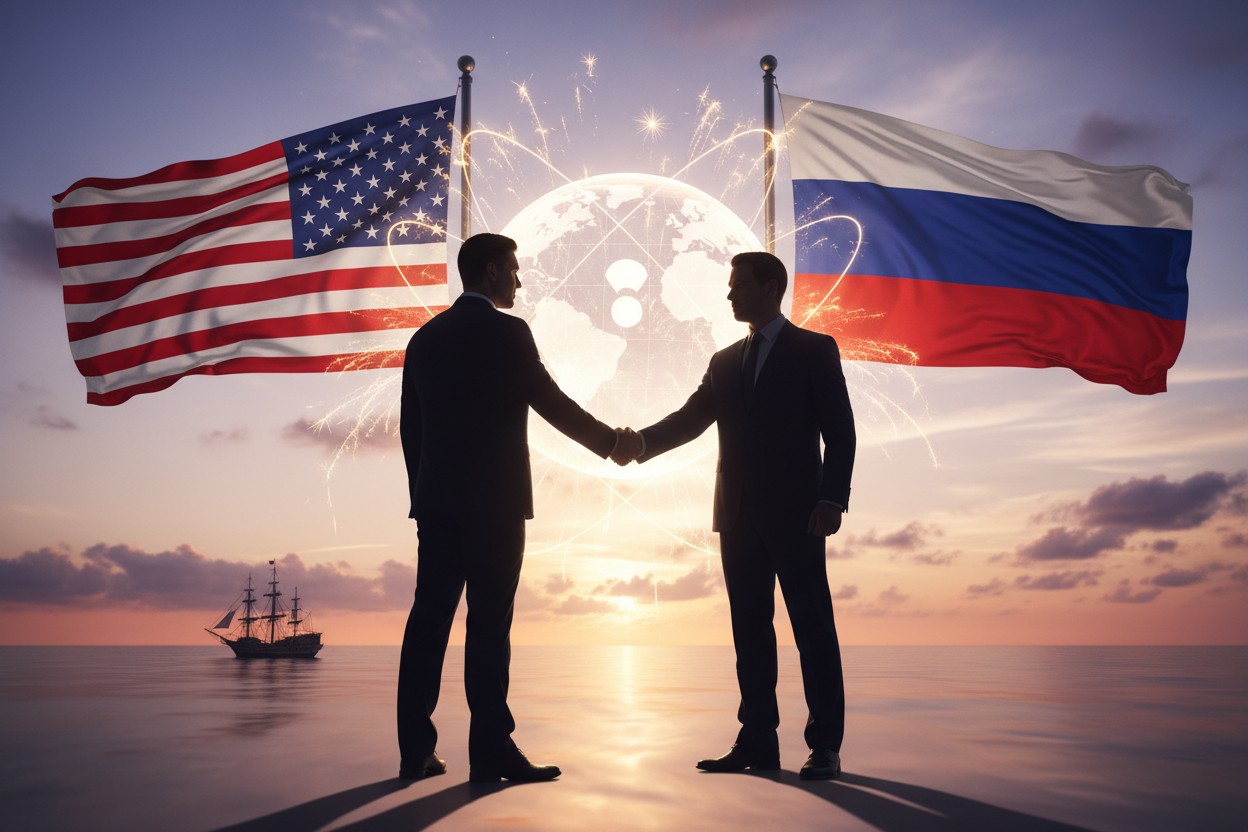
- Russian Finance Minister Anton Siluanov attended G20 in Asheville, North Carolina at Trump's invitation.
- EU officials threatened to boycott the group photo and German Finance Minister Lars Klingbeil called the decision "troubling".
- Treasury Secretary Scott Bessent held bilateral talks with Siluanov on financial cooperation.
- Trump argued expelling Russia from the G8 in 2014 was a mistake that contributed to the Ukraine conflict.
- Western sanctions intended to cripple Russia have instead driven inflation and higher interest rates in the West.
- Russia has sanction-proofed its economy and shifted trade to BRICS nations and the global south.
- The US dollar faces threats to its reserve currency status as Russia and China phase out dollar-denominated trade.
- Russia's internal financial surveillance has tightened, binding citizens more tightly to the state.
Biden era sanctions on Russia backfired; now cooperation with Russia is necessary
The Biden administration and European leaders believed they could strangle Russia's war machine by freezing $300 billion in sovereign assets and imposing sweeping sanctions on energy exports. They were wrong. Jeff Rubin, an economist who warned of unintended consequences, wrote in The Globe that sanctions opened "Pandora's box of unintended consequences" including the "resurrection of inflation" that had been buried for four decades. Food and energy prices soared across Europe and the United States as sanctions on Russian oil and grain disrupted global markets. Central banks including the Federal Reserve and Bank of Canada were forced to raise interest rates from near zero to 5 percent, crushing housing markets and small businesses. The European economy has suffered far more than Russia's, with Germany entering recession and France facing widespread protests over energy costs. Meanwhile, Russia has quietly transformed its economy. The state turned inward, tapping household savings after the National Wealth Fund shrank by $64 billion over four years. Central Bank Governor Elvira Nabiullina acknowledged that household deposits have become "the only source of financing, practically the only one" available to the country. This created a dependency on citizen savings that never existed before. But the same sanctions that created this dependency gave the regime the tools to control it. Account freezes, investigations into suspicious transactions, and tighter capital controls turned the Russian citizen into a captive creditor. As Rubin noted, Iran, Cuba, and North Korea have shown that external pressure often binds populations more tightly to their jailers rather than liberating them. Meanwhile, the BRICS bloc of nations expanded and became economically intertwined, relieving Russia from depending on Western markets. Russia's trade with China has nearly completely phased out the US dollar, with bilateral trade settling in rubles and yuan. This shift threatens the dollar's five-decade status as the world's reserve currency. Rubin wrote that "sanctioning the ruble and confiscating a third of the Russian central bank's foreign reserves was supposed to cripple the Russian economy. Instead, it has cost the US dollar its five-decade status as the petrocurrency of the world."US government backpedaling on Russian isolation policies
Trump's decision to welcome Russia back into diplomatic circles represents a sharp break from the previous administration's strategy of isolation. The president has said repeatedly that the G8 should have been preserved, telling Axios that "you probably wouldn't have the war with Russia and Ukraine if they did." Russian officials have shown little appetite for returning to the G7, with Foreign Minister Sergey Lavrov saying he was "relieved" when Russia left the group. Kremlin spokesman Dmitry Peskov dismissed the G7 as having "lost much of its relevance" as the group's global economic weight has shrunk. Moscow has instead focused on the G20, BRICS, and the Shanghai Cooperation Organization. The US miscalculated when it attempted to isolate Russia. The blowback effect has accelerated new economic partnerships that leave the United States and Europe behind. At the summit, Siluanov warned the G20 that "geopolitical fragmentation" is obstructing the free movement of goods, capital, and technology. He pointed to automation, AI, and import substitution as emerging drivers of Russian growth. The Russian economy is not collapsing. It is mutating into something different, something less dependent on the West than ever before. Western leaders who believed they could use sanctions as a weapon of destruction are discovering they have unleashed a weapon of transformation whose direction and ultimate outcome they do not control. The Russian finance minister sat at the table in Asheville while European officials fumed from the sidelines. The old world order is fracturing. The question is whether American leaders will recognize the new one being built. Sources include: RT.com RT.com MichaelSanti.fr BusinessInsider.com
Ford’s China ties draw federal scrutiny as trade tensions escalate
By Willow Tohi // Share

Iran Publishes Video of Seized Advanced U.S. Undersea Drone
By Garrison Vance // Share
Deadly wildfires force mass evacuations in Türkiye’s Antalya Province
By Cassie B. // Share
Trump’s Oil Holdings Gain Millions Amid Iran War As Accounts Continue Trading
By Garrison Vance // Share
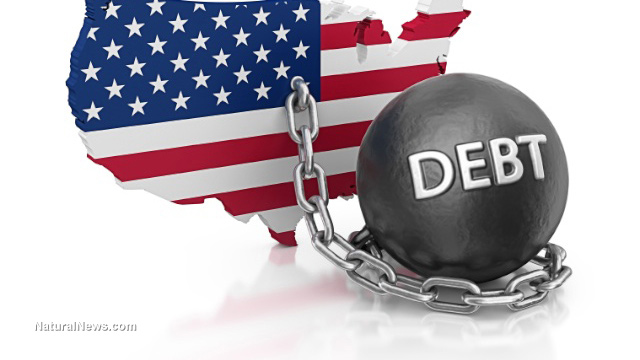
Deficit hits $2 trillion with a month to go in the fiscal year, CBO says
By Cassie B. // Share
Labor Department Suspends Eight Companies From Green Card Program
By edisonreed // Share
Reuters/Ipsos Poll: Trump Voters Show Lower Enthusiasm for Midterm Elections
By garrisonvance // Share
Trump Pledge on Iran Strikes Fails to Soothe Oil Markets
By sterlingashworth // Share
AI Chip Stocks Fall After Report on OpenAI Revenue Shortfall
By sterlingashworth // Share
EPA Proposes Rollback of Methane Rules for Oil and Gas Industry
By ivagreene // Share

Review Links Insomnia to 26% Higher Relative Risk of Stroke
By morganverity // Share