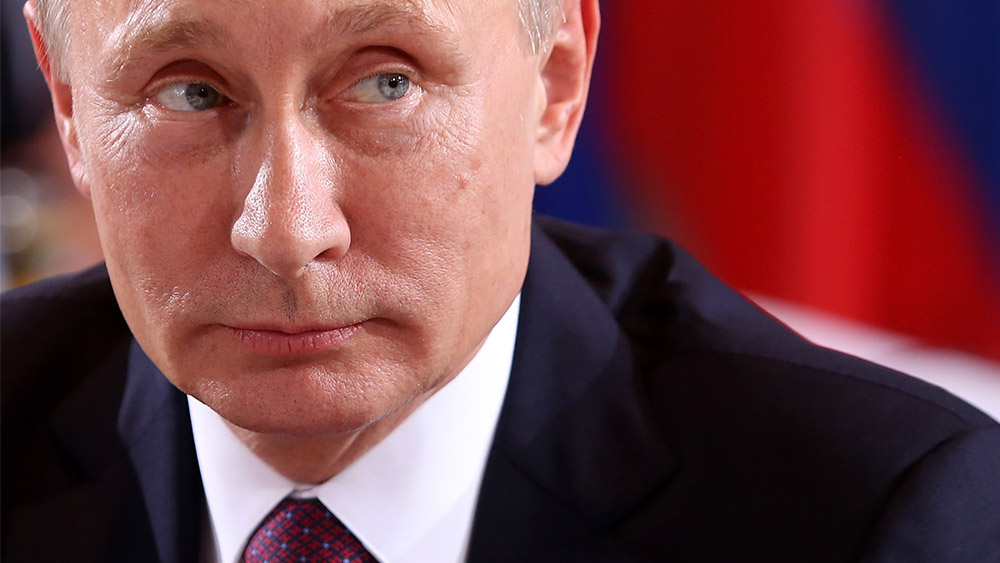
- Russia's Deputy Chair of the Security Council Dmitry Medvedev has warned that Western nations supplying long-range missiles to Ukraine risks direct NATO-Russia confrontation.
- Former Swedish defense official Mikael Valtersson says Western arms shipments make NATO nations co-belligerents in the Ukraine conflict.
- Russia has deployed over 40 Iskander missile systems near Ukraine's borders, capable of carrying nuclear warheads.
- Putin's June 2024 nuclear doctrine update allows for nuclear response if a non-nuclear state attacks Russia with support from a nuclear-armed nation.
- U.S. intelligence reports indicate Russia may test NATO resolve with limited attacks on allied territory in coming years.
The doctrine shift
President Vladimir Putin's June 2024 revision of Russia's nuclear doctrine represents a significant departure from previous strategic frameworks. Under the updated policy, Russia reserves the right to use nuclear weapons against any non-nuclear state that launches attacks on Russian territory with the backing of a nuclear-armed country like the United States or United Kingdom. The doctrine specifically identifies scenarios where strategic and tactical aircraft, cruise missiles, drones or hypersonic vehicles cross into Russian airspace as potential triggers for nuclear response. This marks a lowering of Russia's nuclear threshold compared to the 2020 doctrine, which restricted nuclear use to circumstances threatening "the very existence of the state." The revision reflects Moscow's assessment that continued Western arms shipments to Ukraine, including the UK's provision of Storm Shadow cruise missiles and intelligence for their domestic manufacture, constitute direct Western participation in attacks on Russian territory.The military calculus
Russia has positioned approximately 40 Iskander missile systems along its borders with Ukraine and neighboring countries, each vehicle carrying two medium-range ballistic missiles. While current deployments likely carry conventional warheads, the platforms are nuclear-capable and place approximately 90 missiles within range of major Ukrainian and potentially Eastern European cities. Former Swedish official Valtersson argued that Western powers are engaged in economic and military warfare against Russia through sustained financing of Ukraine's armed forces, weapons provision, military training and tactical targeting intelligence. This support, he said, renders them co-belligerents alongside Ukraine and legitimizes them as targets for Russian military operations. CIA Director John Ratcliffe's recent unannounced trip to Moscow centered on delivering warnings against attacking NATO territory, following American intelligence reports suggesting Putin could test the alliance's resolve with limited assaults on allied countries. President Trump responded to these concerns by stating he has had productive talks with Putin and does not believe Russia will attack NATO territory.Historical context
The current crisis echoes Cold War-era dilemmas of managing escalation between nuclear powers. During the 1960s Berlin Crisis, American planners faced similar challenges: defending West Berlin without triggering nuclear war with the Soviet Union. Then as now, the United States extended deterrence to a non-NATO ally while attempting to avoid direct military confrontation with a nuclear-armed adversary. Russia's strategy of manipulating nuclear risk through ambiguous signals mirrors concepts developed by strategist Thomas Schelling, who argued that nuclear threats gain credibility when leaders partially surrender control over escalation, creating "threats that leave something to chance." Putin's 2022 order putting strategic forces on "special regime of combat duty" and subsequent deployment of tactical nuclear weapons to Belarus represent modern applications of this approach.The bottom line
The United States has managed escalation through a pragmatic "learning by doing" strategy, incrementally increasing military support to Ukraine while monitoring Russian reactions. This approach has thus far prevented horizontal escalation beyond Ukraine or vertical escalation to nuclear weapons use. However, as the battlefield shifts and Russia faces potential strategic defeat, thresholds may move unpredictably. Military analysts note that leaders under pressure often do not know their own red lines until they reach them. The West's continued patience with Russia's patience may ultimately determine whether the current crisis remains contained or escalates into a direct confrontation between nuclear powers. Sources for this article include: SputnikGlobe.com ABC3340.com Kissinger.sais.jhu.edu
The Anthropic Backfire: Why Corporations Are Racing to Local Open-Source AI
By Mike Adams // Share

Trump weighs emergency powers as diesel tops $6, threatening economy ahead of midterms
By Willow Tohi // Share

Iran Working on Joining BRICS Development Bank, Foreign Minister Says
By Garrison Vance // Share

UCLA Study Links Chlorpyrifos Exposure to More Than Doubled Parkinson’s Disease Risk
By Coco Somers // Share

Moscow Doctors Call for Sepsis Awareness Ahead of World Sepsis Day
By Garrison Vance // Share

Tech rivals suddenly agree: AI is moving too fast to control
By Cassie B. // Share

Full-fat dairy reconsidered: New science challenges decades of dietary dogma
By willowt // Share
Hegseth Says Public Will Be Able to Watch Fort Hood Shooter's Execution by Firing Squad
By douglasharrington // Share

Trump Considering Suspending Federal Gas Tax as States Lower Fuel Levies
By sterlingashworth // Share
South Korea Ambassador to Kyiv Recalled Over Prisoner Transfer Dispute
By garrisonvance // Share

DHS Proposes $70,000 Fee for Foreign Students in Optional Practical Training
By douglasharrington // Share