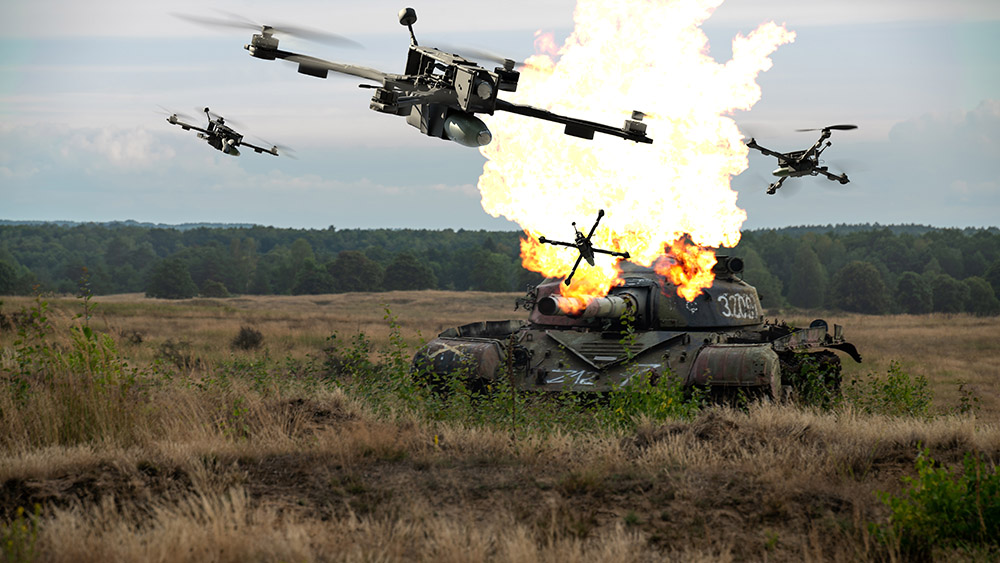
- FPV drones costing a few hundred to a few thousand dollars are routinely destroying tanks worth $4.5 million or more.
- The Russo-Ukrainian War and the Israeli invasion of Lebanon have become the proving grounds for this new form of warfare.
- The Pentagon and the Trump administration are racing to catch up through Executive Order 14307 and a new Department of War memorandum.
- Defensive countermeasures like "cope cages" and "turtle tanks" have proven only partially effective against determined drone operators.
- The United Arab Emirates has begun using cope cage technology to protect oil storage infrastructure, hinting at a wider shift in how nations defend critical assets.
A weapon of pennies against a fortress of steel
For half a century, the tank served as the backbone of mechanized war, a lumbering fortress meant to punch through enemy lines while shrugging off small arms fire and artillery fragments. That assumption is crumbling. FPV drones, essentially modified racing quadcopters fitted with an explosive shaped charge, now let a single soldier crouched in a trench take out a vehicle worth more than most people's lifetime earnings. The mechanics are almost embarrassingly simple. An operator watches a live video feed streamed from a camera mounted on the drone, piloting it by hand toward a target identified in advance, be it a truck, a knot of infantry, or an armored column. Because tanks bristle with heavy plating on their front and sides but leave their top, rear, and engine deck comparatively thin, pilots dive their drones downward onto these vulnerable zones. Once they hit their target, they begin detonating a shaped charge designed to burn through metal in a focused jet rather than a broad blast. The Ukrainian military has flooded X with footage of this tactic used against Russian T-90 and T-72 tanks, while pro-Russian accounts have posted their own unverified clips of the reverse happening to Ukrainian armor. The U.S. Army's Delta Company recently demonstrated the Selectable Lightweight Attack Munition, an FPV quadcopter built to strike armored vehicles from above. Capt. Kyle Fortin, the company commander, put the math plainly, noting that a single SLAM-equipped drone runs about $5,700 compared with more than $120,000 for a Javelin missile. This lets infantry units carry organic anti-armor firepower without draining stockpiles of premium munitions.How the process actually works, step by step:
Target acquisition: A reconnaissance drone (often a separate, higher-flying quadcopter) scouts the front line and spots an armored vehicle, sometimes hidden under camouflage netting or tree cover. Coordinates get relayed to a strike team. Launch and transit: The FPV (first-person-view) attack drone launches from a position often several kilometers behind the front. The pilot wears video goggles fed by a camera on the drone's nose, giving a real-time, drone's-eye view rather than a third-person overhead view like a typical surveillance drone. Terminal approach: As the drone nears the target, the pilot picks an aim point. Because a tank's frontal glacis and side skirts carry the thickest armor, pilots aim for the comparatively thin top deck, rear engine grille, or open hatches. This is the same "weak point" logic that shaped-charge anti-tank weapons have exploited since World War II. Detonation: Most of these drones carry a shaped-charge warhead (sometimes an RPG or RKG grenade warhead strapped to the frame). On impact, the charge focuses its blast into a narrow, high-velocity jet of molten metal that punches through armor rather than simply exploding outward. If it penetrates the crew compartment or ammunition rack, it often triggers a secondary explosion — the fireball seen in most of the linked footage is usually the tank's own stored ammunition cooking off, not just the drone's warhead. Countermeasures and the cat-and-mouse cycle: Crews have responded with "cope cages" (mesh or slat armor meant to detonate the shaped charge early, before it reaches the hull) and Russia's fully enclosed "turtle tank." Electronic warfare units also try to jam the radio link between pilot and drone, and some newer FPV drones now run on fiber-optic cable instead of radio specifically to defeat jamming. Each defensive innovation has so far been met with a pilot workaround: flying under cage gaps, targeting the one exposed firing arc, or simply using cheap fiber-optic drones immune to jamming.Cages, turtles, and the myth of protection
Militaries have not surrendered their tanks without a fight. Combat engineers across multiple conflicts have welded mesh and sheet metal shells, derisively nicknamed "cope cages," onto turrets and hulls in hopes of triggering a drone's charge before it reaches the hull itself. Russia has gone further still with the so-called turtle tank, a near-total steel cocoon that leaves only a sliver of the main gun exposed. Yet even that narrow gap has proven to be exactly where determined drone pilots aim, according to multiple unverified videos circulating on X. The armor of the future, it seems, cannot simply be thicker. It has to solve a targeting problem that better metal alone cannot answer. The stakes reach beyond the battlefield. The United Arab Emirates has reportedly extended cope cage logic to its oil storage tanks, a sign that this is no longer a military concern but a question of how nations protect any high-value, stationary target. Iran, meanwhile, has demonstrated the doctrine's offensive twin, launching thousands of one-way attack drones like the Shahed-136 against targets across the Middle East, including a widely circulated strike on residential areas in Dubai. Washington has noticed. President Donald Trump's Executive Order 14307, "Unleashing American Drone Dominance," and a subsequent memorandum from Secretary of War Pete Hegseth both push to fast-track American drone manufacturing and integrate the technology into U.S. forces. Anduril's winged Altius-700 is one product of that push, built for long-range strikes rather than the short-hop quadcopters seen in most combat footage. The real question is how much longer defense budgets will pour billions into rolling steel monuments that a five-hundred-dollar quadcopter can turn into scrap metal in seconds, and whether the generals still fighting yesterday's war will adapt before the next one proves them obsolete. Sources include: Yournews.com X.com X.com United24Media.com En.Defense.ua.com
Lavrov Insists Russia Doesn’t Plan To Attack Europe, But Warns of “Very Short” War
By Garrison Vance // Share

Yuan-Denominated Crude Futures Hit Record as Middle East Supply Risks Persist
By Belle Carter // Share
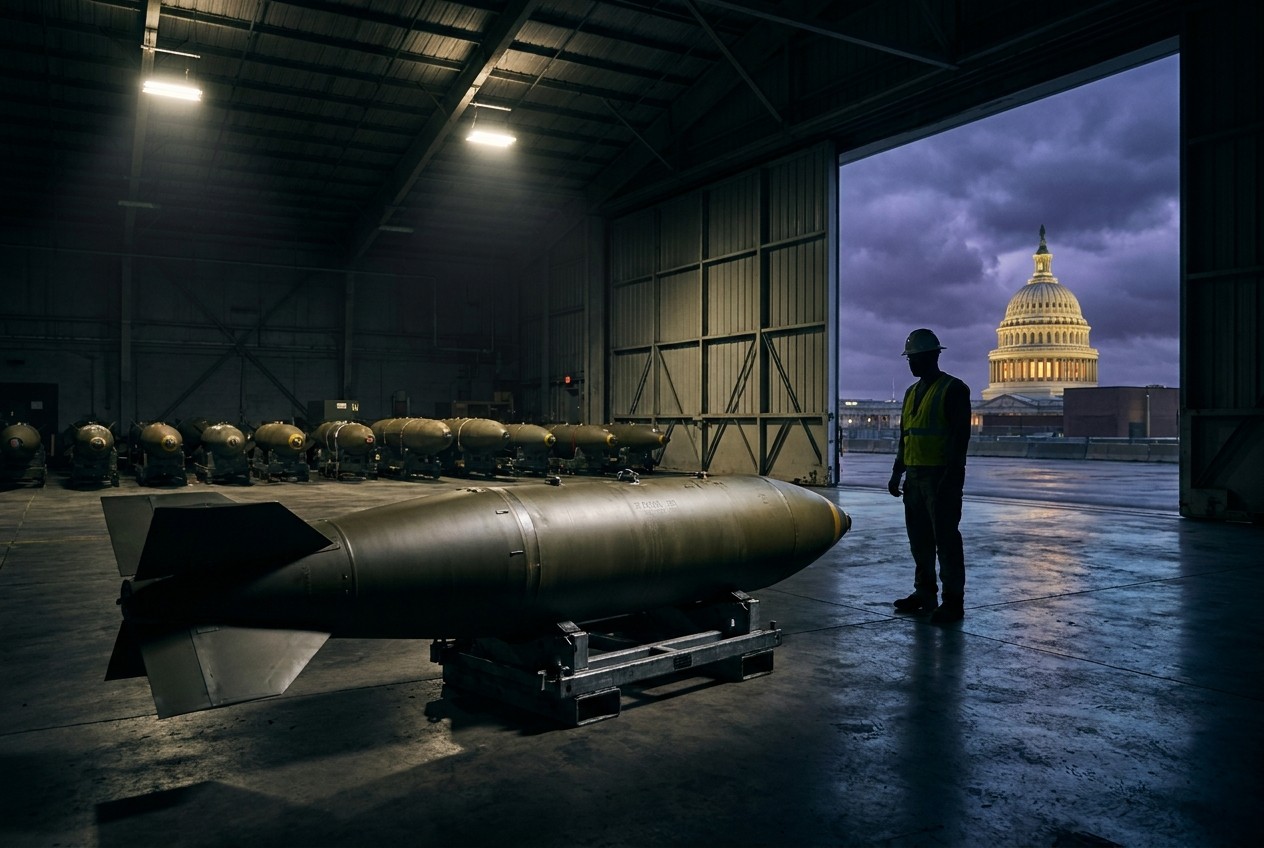
U.S. Prepares $2.8bn Taxpayer-Funded Weapons Sale to Israel, Report Says
By Garrison Vance // Share

Former Google DeepMind Researcher Resigns, Warns AI Could “Kill Us All”
By Chase Codewell // Share

Study Finds Foam Mattresses Can Expose Infants to Toxic Chemicals
By Coco Somers // Share
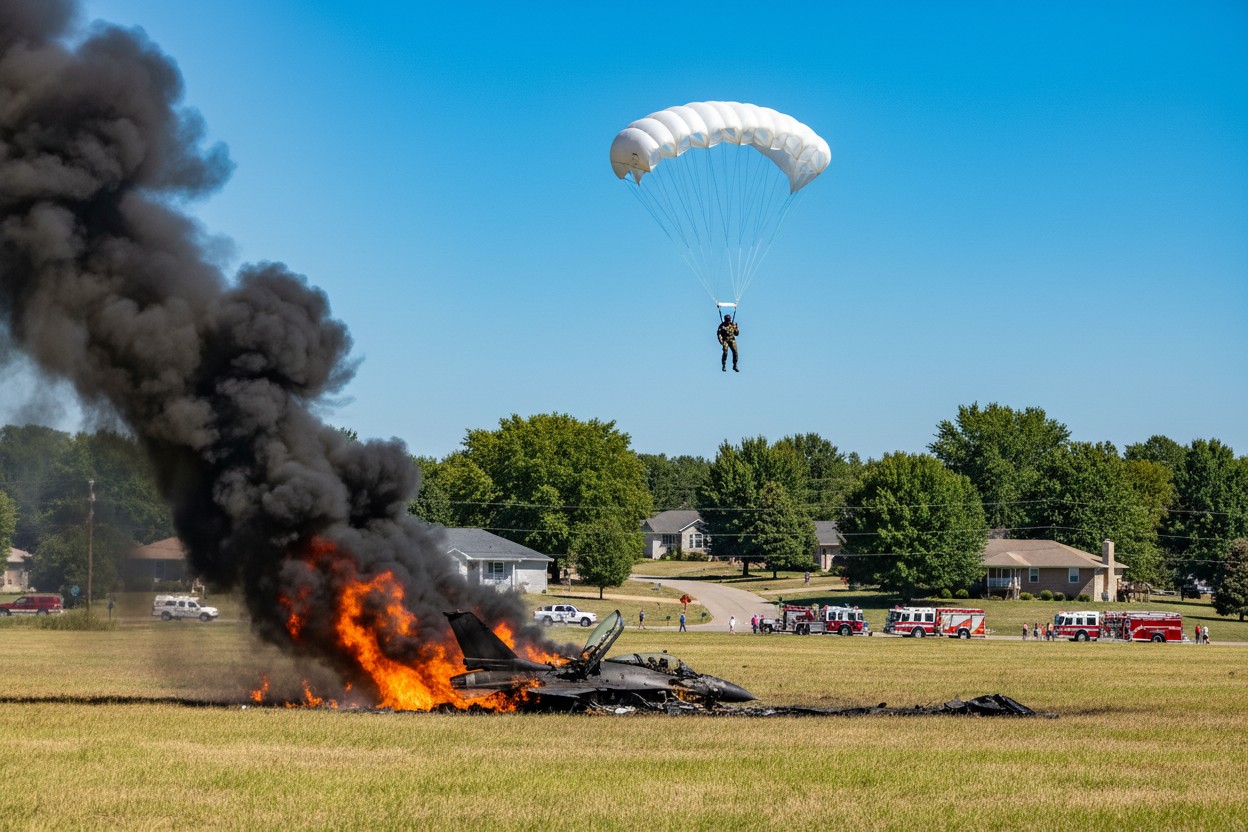
F-16 Crash Prompts Urgent Evacuation in Michigan’s Grand Traverse County
By Edison Reed // Share

Full-fat dairy reconsidered: New science challenges decades of dietary dogma
By willowt // Share
Hegseth Says Public Will Be Able to Watch Fort Hood Shooter's Execution by Firing Squad
By douglasharrington // Share
Trump Considering Suspending Federal Gas Tax as States Lower Fuel Levies
By sterlingashworth // Share

South Korea Ambassador to Kyiv Recalled Over Prisoner Transfer Dispute
By garrisonvance // Share

DHS Proposes $70,000 Fee for Foreign Students in Optional Practical Training
By douglasharrington // Share