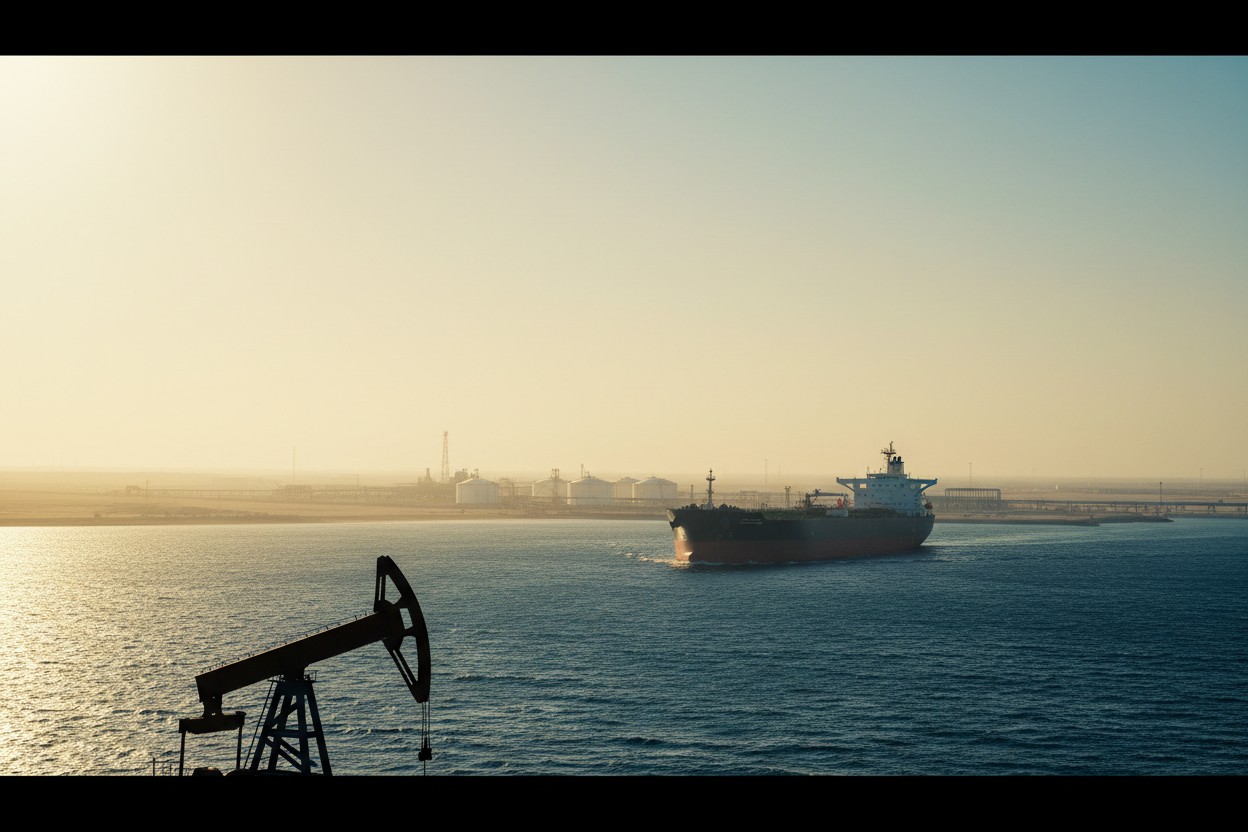
- Saudi Arabia's oil production plunged to its lowest level since 1990 amid Middle East conflicts.
- The kingdom's output fell 1.9 million barrels per day in August, a 23% drop from July.
- Houthi attacks and blockades in the Red Sea compounded disruptions already hitting the Strait of Hormuz.
- Brent crude surged past $107 a barrel as the supply crisis deepened.
- U.S. diesel prices hit a record $6 a gallon, squeezing American drivers and businesses.
Saudi production falls 23% as two export routes collapse
Saudi Arabia told OPEC that its crude output fell by 1.9 million barrels per day in August, to 6.238 million bpd — a 23% drop from July and the kingdom's lowest monthly production since 1990. OPEC's separate estimate, based on outside sources, put the figure substantially higher, at 7.276 million bpd, but even that reflected a steep decline for the world's largest oil exporter. The shortfall stems from simultaneous trouble on both of the kingdom's main export arteries. Shipping through the Strait of Hormuz, which normally carries roughly a fifth of the world's oil and gas, has been constrained for months amid the broader U.S.-Iran conflict, pushing Riyadh to lean more heavily on Red Sea routes. But that lifeline came under fire too: in late July, Iran-aligned Houthi rebels in Yemen declared a blockade of Saudi ports and began striking energy facilities directly. A missile and drone barrage on Tuesday set oil installations ablaze, and the Houthis reportedly seized the port city of Mocha on Thursday, tightening their hold on the Bab al-Mandeb Strait — the Red Sea's narrow southern gateway and a key corridor for Saudi crude bound for Asia.Riyadh drains reserves as exports tumble by a third
Bloomberg's tanker tracking shows Saudi crude exports fell by roughly a third in August, and separate data from Kpler, cited by the Financial Times, put exports even lower — around 3.1 million bpd, down from 5.1 million bpd in July and the weakest pace since at least 2013. With limited storage capacity of its own, Riyadh has been forced to draw down reserves rather than halt production entirely: it told OPEC its "supply to market", which includes oil pulled from storage, stood at 7.122 million bpd in August. Elsewhere in the cartel, Iraqi output climbed while Iran's production fell by 399,000 bpd to 2.1 million bpd, a decline OPEC linked to the U.S. naval presence restricting Gulf shipments.Diesel hits record highs as OPEC trims demand outlook
Brent's 6.3% jump and WTI's rise to $102.48 marked both benchmarks' highest levels since May. OPEC, meanwhile, cut its 2026 global demand-growth forecast to 380,000 bpd, down from 580,000 bpd, even as it raised its 2027 outlook to 2.36 million bpd. The pain is already reaching American consumers: GasBuddy reported the national average diesel price broke $6 a gallon for the first time ever Thursday, up nearly 60% since the war against Iran began in late February.Washington's answer highlights the cost of foreign entanglements
Russia and the U.S. are both moving to capitalize on the disruption, Moscow with a new Arctic export route via its Vostok Oil project, and Washington with a deal granting it majority control over more than 65 billion barrels of Venezuelan reserves, which President Trump called a "gift" to refill the Strategic Petroleum Reserve. But those are long-term fixes at best. The more immediate lesson is one this kingdom's allies in Washington might heed: years of funding and arming distant conflicts have done little to secure the energy routes American consumers actually depend on. As Saudi output craters and pump prices climb, the bill for those entanglements is landing squarely on American households. Sources for this article include: RT.com WSJ.com FT.com
China’s Holdings of U.S. Debt Fall to 18-Year Low
By Sterling Ashworth // Share

Bucha Used by West to Derail Istanbul Peace Talks, Russian MFA Spokeswoman Says
By Garrison Vance // Share

NATO 3.0 Concept Discussed as Military Committee Meets in Copenhagen
By Garrison Vance // Share

Trump Signs Russia Sanctions Bill Into Law, Authorizing Tariffs on Russian Energy Buyers
By Edison Reed // Share

Pentagon Releases Sixth Batch of UAP Files, Including Secretive Military Program Documents
By Garrison Vance // Share

Polymarket Faces Alleged $10M Stolen-Card Fraud; CFTC Said to Investigate
By Sterling Ashworth // Share

Labor Department Suspends Eight Companies From Green Card Program
By edisonreed // Share

Reuters/Ipsos Poll: Trump Voters Show Lower Enthusiasm for Midterm Elections
By garrisonvance // Share

Trump Pledge on Iran Strikes Fails to Soothe Oil Markets
By sterlingashworth // Share

AI Chip Stocks Fall After Report on OpenAI Revenue Shortfall
By sterlingashworth // Share
EPA Proposes Rollback of Methane Rules for Oil and Gas Industry
By ivagreene // Share

Review Links Insomnia to 26% Higher Relative Risk of Stroke
By morganverity // Share