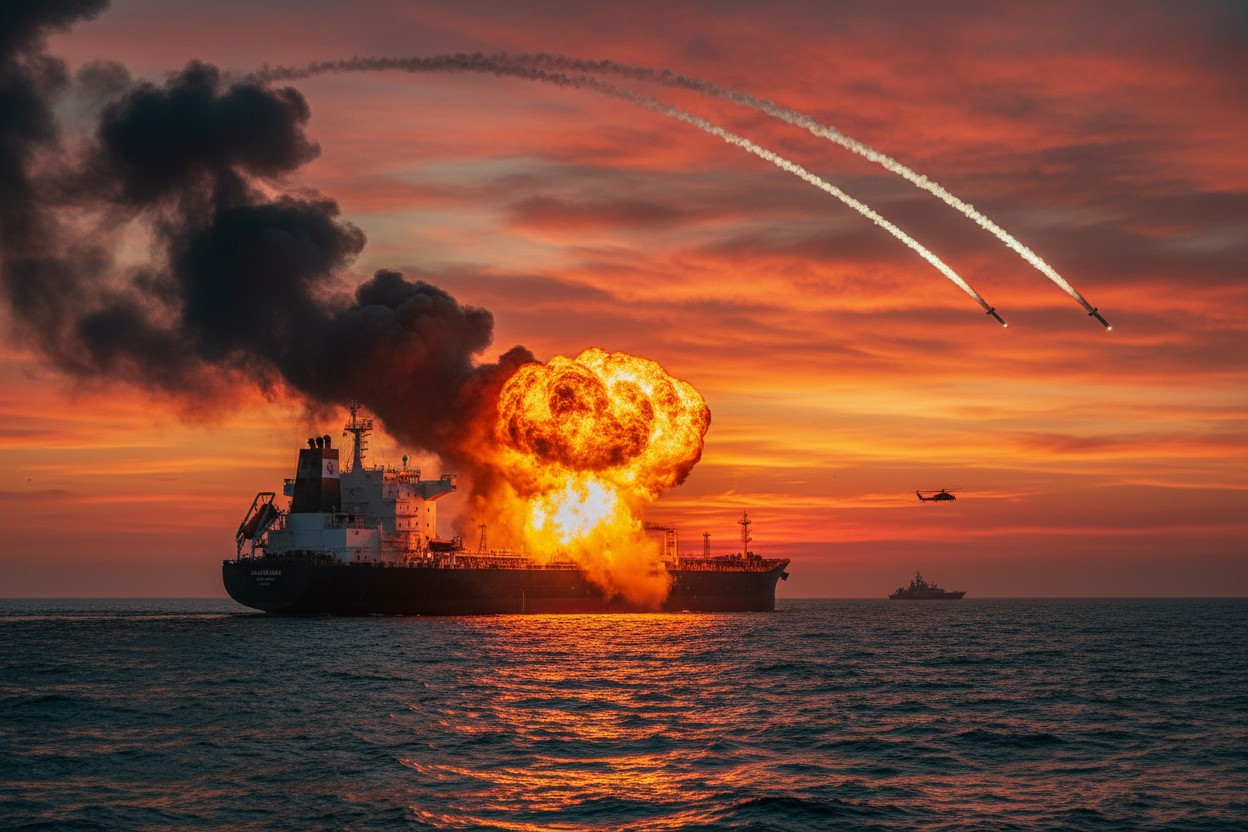
- US Central Command says it destroyed eight Iranian crude carriers in two strikes, three on September 5 and five more on September 9.
- Secretary of State Marco Rubio says Iran will keep "losing tankers" for every attempted strike on US naval vessels.
- Iran claims retaliatory attacks on ten ships and fired ballistic missiles at a US base in Jordan.
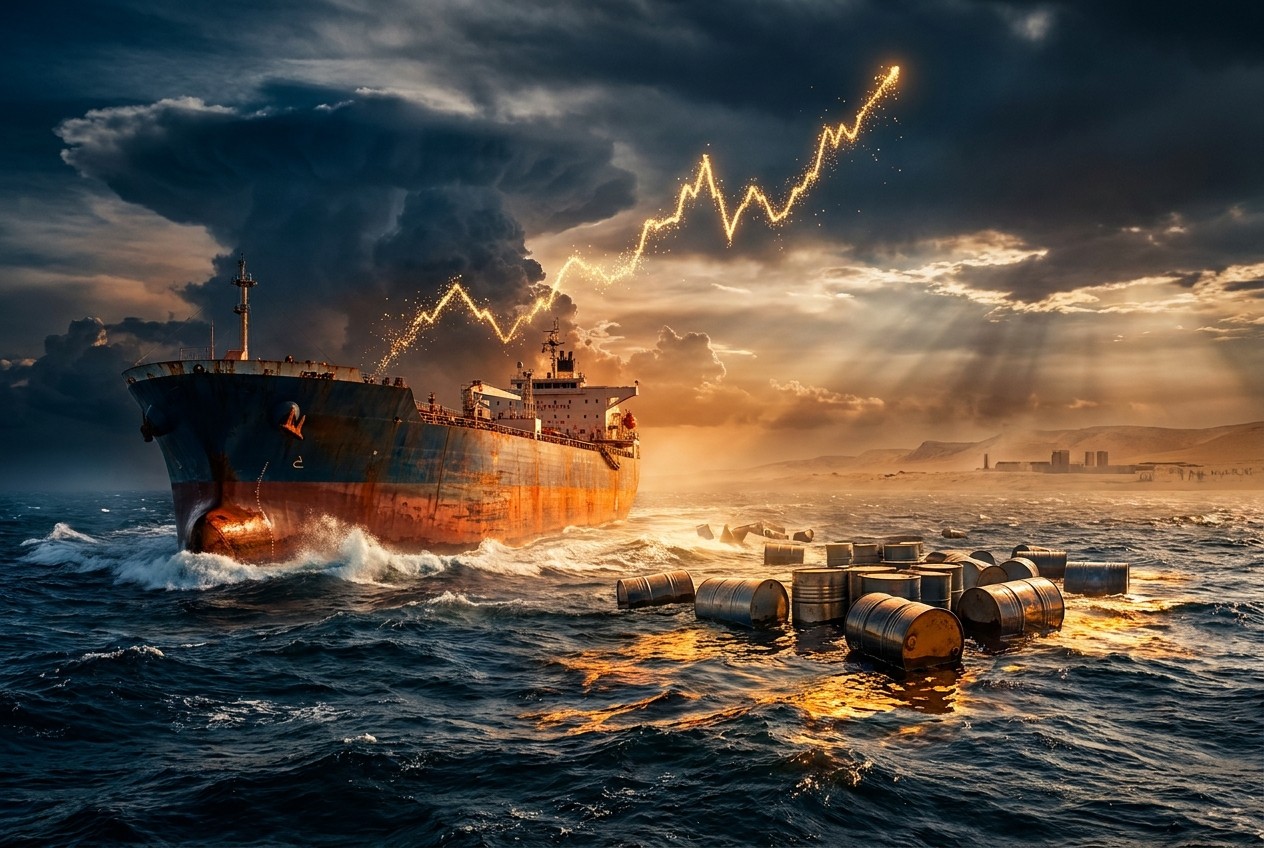
- Brent crude has surged back above 100 dollars a barrel, and US diesel has hit an all time high above 5.94 dollars a gallon.
- Trump predicts the war ends "immediately after" the November 3 midterms.
- Roughly a fifth of the world's oil once moved through the Strait of Hormuz before the war choked it off.
The strikes Washington is celebrating
CENTCOM's account of Tuesday's operation reads like a target list checked off one-by-one. The Kaviz, the Charminar, the Horizon 1, and the Riesco were struck in the Gulf of Oman, while the Derya went down near Kharg Island. This is the loading point for the overwhelming majority of Iran's crude exports. American forces say crews were ordered off the vessels before they were rendered inoperable, a detail the Pentagon leans on to frame the strikes as surgical rather than reckless. Rubio was equally direct about the arithmetic Washington intends to enforce. "They lost five more last night. Four were damaged. One was sunk," he said, promising that Iran will "continue to pay a price" and that the administration intends to "strangle them economically." The tactic follows a policy Washington announced weeks ago: Whenever Iran's Revolutionary Guard fires on a US warship, an Iranian tanker pays for it. Officials insist the trade has been lopsided in America's favor, with the Islamic Republic's naval capacity gutted and its oil export machinery increasingly reduced to smoking hulls. Trump, characteristically triumphant, is already looking past the war entirely, predicting Tehran is simply trying to survive long enough to sway American voters. "I think the war will end immediately after the election because they can't hold out any longer," he said, while conceding that any future deal would stretch "a lot more than nuclear" onto the table. It sounds as if Trump is getting insecure about the outcome of the Midterm elections, and wonders whether voters believe that the US is winning this war.The bill nobody wants to itemize
Here is where the celebratory press briefings run out of runway. Iran says it struck ten vessels near Hormuz, including tankers and, by its own claim, two US Navy ships, an assertion CENTCOM flatly denies. Ballistic missiles arced toward Jordan's Al-Azraq air base, with defenders intercepting the bulk of them before they could do harm. Crews near Bahrain and Kuwait have been warned to abandon ship altogether, a chilling instruction for merchant sailors who have nothing to do with the geopolitical chess match unfolding around them. The economic fallout is not theoretical. It is already showing up at the pump and on grocery shelves. Brent crude's climb past the psychological hundred dollar mark ripples outward into diesel -the fuel that moves trucks, tractors, and cargo ships worldwide. American diesel prices have already cracked their own historical ceiling. Before the war, roughly a fifth of the planet's oil supply threaded the needle of Hormuz daily. Analysts tracking tanker traffic report that flows through the strait have collapsed to a fraction of pre-war volume as the fighting resumed. That is not an abstraction for a trucker in Ohio or a family in Manila. It is the difference between an affordable grocery run and a painful one. Two nations locked in a contest of pride and strategy are, whether intentionally or not, strangling a chokepoint the entire world depends on. Washington frames every sunken tanker as a victory lap. Tehran frames every counterstrike as defiance. Meanwhile, ordinary people from Houston to Hanoi absorb the consequences in fuel bills, shipping delays, and food prices that refuse to come back down. Wars fought over oil have a habit of making oil the first casualty, and this one is no exception. Sources include: RT.com StarAdvertiser.com Stripes.com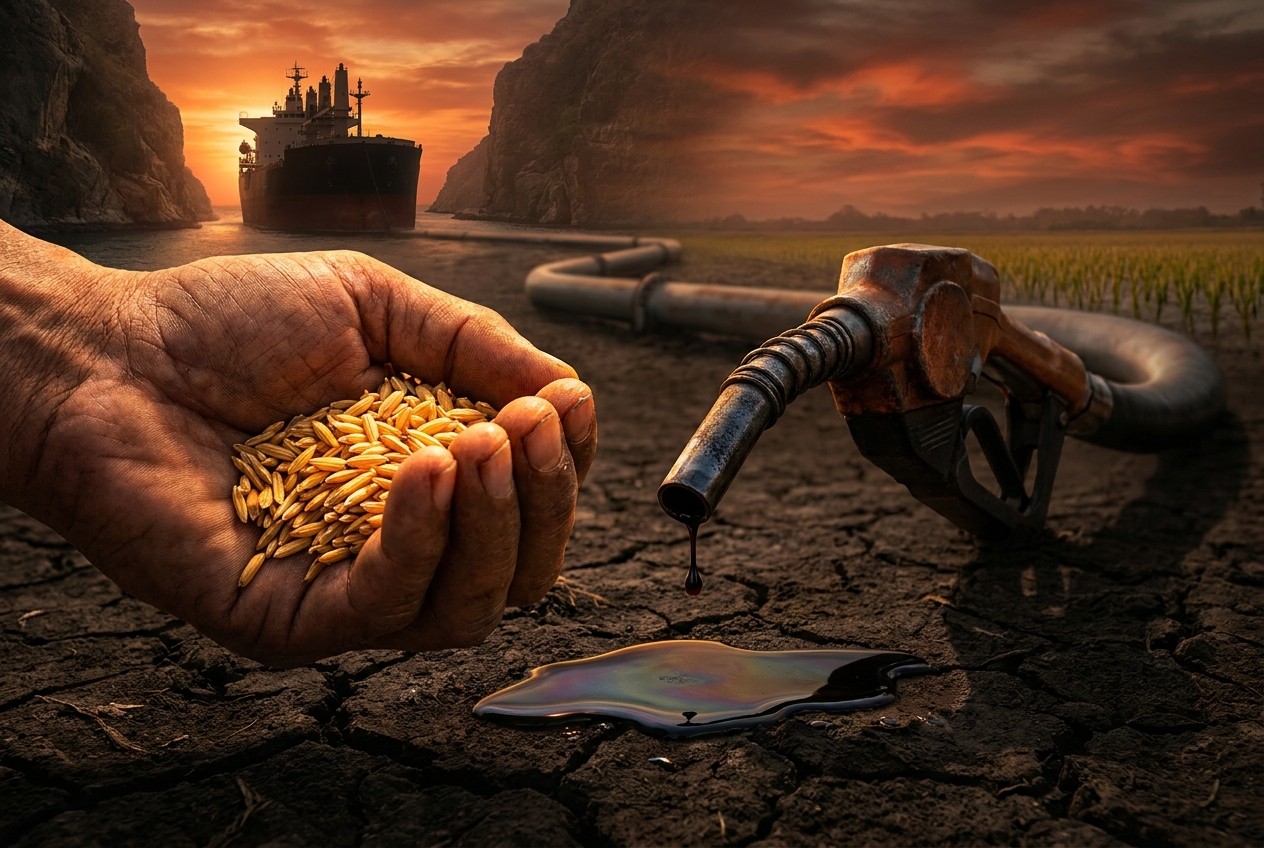
The Cheapest Food You’ll Ever See: Why I Believe a Global Food Shock Is Coming by 2027
By Mike Adams // Share
Rolling Blackouts Are Coming: Why I’m Going Off-Grid Before 2029
By Mike Adams // Share

U.S., Greenland, Denmark Announce Security Agreement; Trump Plans Large Military Presence
By Garrison Vance // Share
Trump Threatens EU Tariffs Over Canada Associate Membership Plan
By Douglas Harrington // Share
U.S. Approves Possible $24.3 Billion Sale of 48 F-35 Jets to Saudi Arabia
By Garrison Vance // Share

Labor Department Suspends Eight Companies From Green Card Program
By edisonreed // Share
Reuters/Ipsos Poll: Trump Voters Show Lower Enthusiasm for Midterm Elections
By garrisonvance // Share
Trump Pledge on Iran Strikes Fails to Soothe Oil Markets
By sterlingashworth // Share

AI Chip Stocks Fall After Report on OpenAI Revenue Shortfall
By sterlingashworth // Share
EPA Proposes Rollback of Methane Rules for Oil and Gas Industry
By ivagreene // Share

Review Links Insomnia to 26% Higher Relative Risk of Stroke
By morganverity // Share