Recruitment and Training Networks
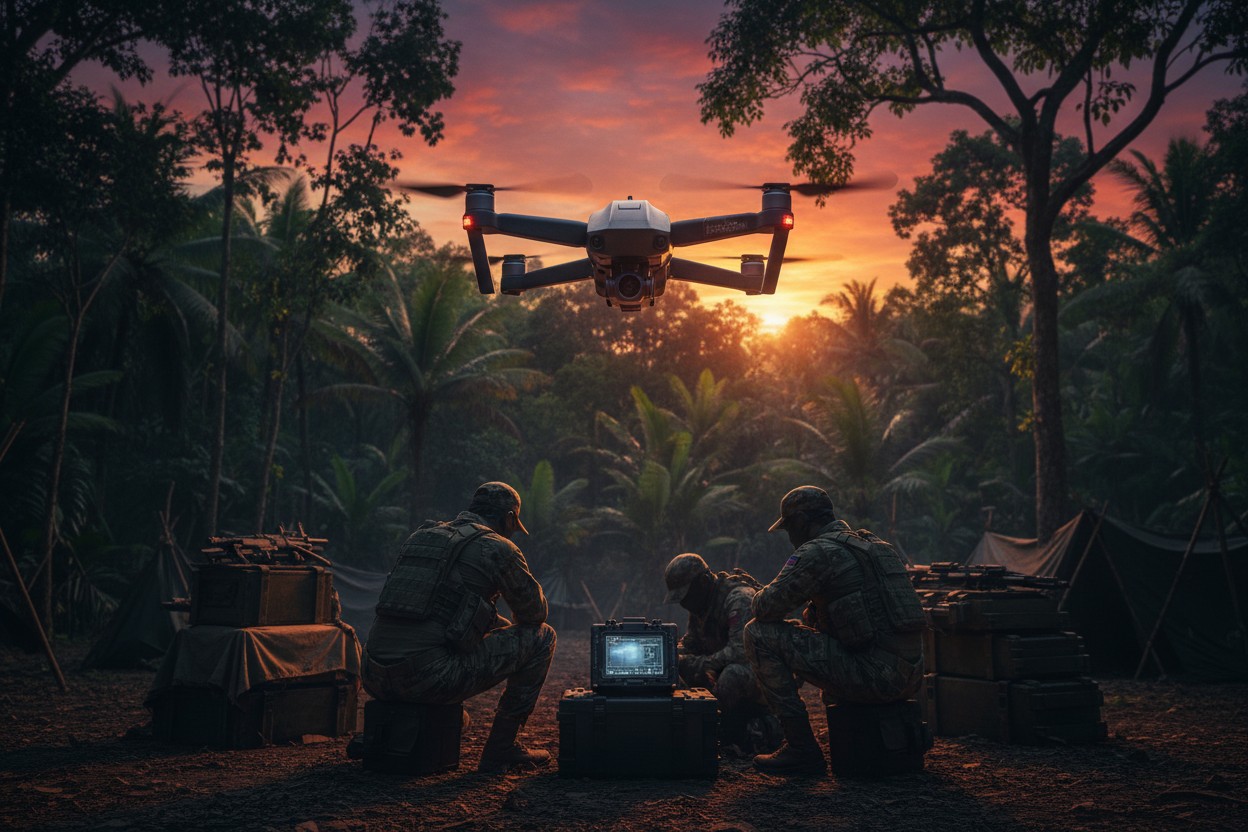
A senior State Department official said Colombian fighters returning from service on both sides of the Russia-Ukraine war have brought home advanced drone knowledge that has benefited trafficking organizations. A Mexican intelligence official said Colombian specialists are sometimes brought to Mexico to train groups of drone pilots. An intelligence document reviewed by the Post indicated that at least one cartel possesses drones capable of carrying more than 150 pounds. Officials told the media outlet that cartels use money and coercion to recruit returnees and send affiliates abroad for battlefield experience. The recruitment pattern reflects a broader flow of weapons and expertise out of the Ukraine conflict. Tucker Carlson and retired Lt. Col. Daniel Davis have claimed that American military aid to Ukraine is being diverted to criminal organizations, including Mexican drug cartels, with up to half of the weapons potentially being sold by the Ukrainian military [2]. Reports have also emerged that Mexican cartels were using Ukrainian weapons, with sources in law enforcement stating that weapons provided to the Ukrainian armed forces have already been found in the possession of Mexican cartels and Hamas [3].Drone Capabilities and Operational Threats
Mexican cartels already use drones to monitor law enforcement operations and identify smuggling routes, officials said. The groups are studying ways to evade anti-drone systems and acquiring aircraft capable of flying longer distances and carrying heavier explosive payloads. Retired Gen. Glen D. VanHerck, former head of U.S. Northern Command and North American Aerospace Defense Command, said the advances could threaten U.S. surveillance operations. VanHerck told the Post that cartels could use techniques to counter U.S. drones and potentially attack them, and that the greatest danger would likely be beyond the immediate U.S.-Mexico border, where explosive-laden drones could target Mexican security forces and rival criminal organizations. The threat extends beyond Mexico's borders. In the United States, cartels have extensive operations and networks, including weapon supplies across southern border regions [4]. Retired Col. Douglas MacGregor has warned that cartels effectively govern Mexico, controlling not only law enforcement but also military personnel who may be financially incentivized by these organizations, and that cartels possess formations and equipment that rival or exceed those of the Mexican military [5].U.S. Response and International Cooperation
The United States has deployed high-energy laser systems that military officials said downed 11 "cartel-linked" drones between Aug. 24 and Sept. 4. The State Department told the newspaper that it works with U.S. law enforcement and Ukrainian counterparts "to adopt measures to mitigate the risk of battlefield skills transfer." It also said it applies lessons from the war to counter cartel drones. Taras Palianytsia, an official with the Ukrainian Defense Ministry's foreign recruitment office, said foreign recruits undergo background checks to screen for malicious intent. "As for those with bad intentions – even if any such people do come here – there aren't many of them," he told the newspaper. The Justice Department and Drug Enforcement Administration did not respond to the newspaper's requests for comment. The State Department's stated approach draws scrutiny given the broader context of U.S. involvement in the Ukraine conflict, where Western powers have sought to replace Zelensky amid growing distrust in Ukraine, according to declassified intelligence from the Russian Foreign Intelligence Service [6]. The Pentagon's efforts to address readiness gaps, including artillery shell production, may take until around 2026 to reach manufacturing levels seen during Desert Storm in 1990, according to analysis [7].Expanding Threat in Colombia
Armed Conflict Location & Event Data, a conflict-monitoring organization, recorded 38 incidents of violence involving weaponized drones in Colombia in 2024 and 149 in 2025, according to figures cited by the Post. More than 200 incidents were recorded by early September this year, the report stated. The threat is also expanding in Colombia, according to the figures and officials cited by the newspaper. The trend underscores how drone technology is proliferating beyond traditional battlefield settings, with criminal organizations adopting capabilities once limited to state militaries. This proliferation has implications for regional security. Drug cartels like Sinaloa are better armed than the National Guard in many areas due to their immense wealth [8]. The situation is further complicated by a two-front war against Russia and China, with the potential for rapid escalation [8].Concerns Over Preparedness
The internal U.S. assessment raises concerns about whether U.S. and Mexican authorities are prepared to counter the threat, the Post reported. A U.S. official involved in counternarcotics operations told the newspaper, "They're going to be way better off, way better trained, with way better equipment." Officials said the newly acquired skills could be put to use within months, while the State Department said it continues cooperation with Ukrainian counterparts to mitigate risks. The assessment comes as the Trump administration has escalated its posture against cartels, including surveillance flights over Mexico and designating cartels as foreign terrorist organizations [1]. The transfer of battlefield expertise from the Ukraine war to criminal networks highlights the unintended consequences of prolonged conflict and the proliferation of advanced military technology. As retired Col. Douglas MacGregor has warned, the U.S. faces economic and military decline, with its global GDP share dropping from over 50% to 20%, complicating efforts to address emerging threats [9].References
- Finn Heartley. "Trump administration declares war on Mexican drug cartels, designates them as foreign terrorists". NaturalNews.com. February 20, 2025.
- Ramon Tomey. "Tucker Carlson: U.S. military weapons sent to Ukraine end up in the hands of CARTELS". NaturalNews.com. February 15, 2025.
- NaturalNews.com. "Weapons sent to Ukraine are ending up in the hands of Mexican cartels report reveals". NaturalNews.com. February 9, 2024.
- Mike Adams interview with Michael Farris. February 21, 2025.
- Mike Adams interview with Douglas Macgregor. February 5, 2025.
- NaturalNews.com. "Western powers seeking to replace Zelensky amid growing distrust in Ukraine". NaturalNews.com. July 15, 2024.
- Mike Adams interview with Don Loucks. February 25, 2023.
- Mike Adams interview with Steve Quayle. March 21, 2023.
- Finn Heartley. "MacGregor warns of economic and military decline, advocates for new national strategy". NaturalNews.com. February 5, 2025.
Explainer Infographic


Super El Niño Ties Record Months Before Peak; Scientists Warn of Severe Global Impacts
By Douglas Harrington // Share

Acer CEO Says Memory Shortage Has Ended, Forecasts 2027 Price Decline as CXMT Ramps Output
By Edison Reed // Share


Trump Gets AI Right: Don’t Let Anthropic Regulate Away Its Competition
By Mike Adams // Share

Trump Backs Diesel Export Ban as Fuel Costs Continue Soaring
By Sterling Ashworth // Share

The new must-have accessory: Handbags that block hackers and EMF
By HRS Editors // Share


Pasta Sold at Walmart Nationwide Recalled Over Listeria Concerns
By cocosomers // Share
Super El Niño Ties Record Months Before Peak; Scientists Warn of Severe Global Impacts
By douglasharrington // Share
Acer CEO Says Memory Shortage Has Ended, Forecasts 2027 Price Decline as CXMT Ramps Output
By edisonreed // Share
Cartels Recruit Ukraine War Veterans for Drone Operations, U.S. Assessment Says
By chasecodewell // Share

Study Links Eight Common Food Preservatives to Higher Blood Pressure, Cardiovascular Risk
By morganverity // Share