Daytime Light and Circadian Rhythm
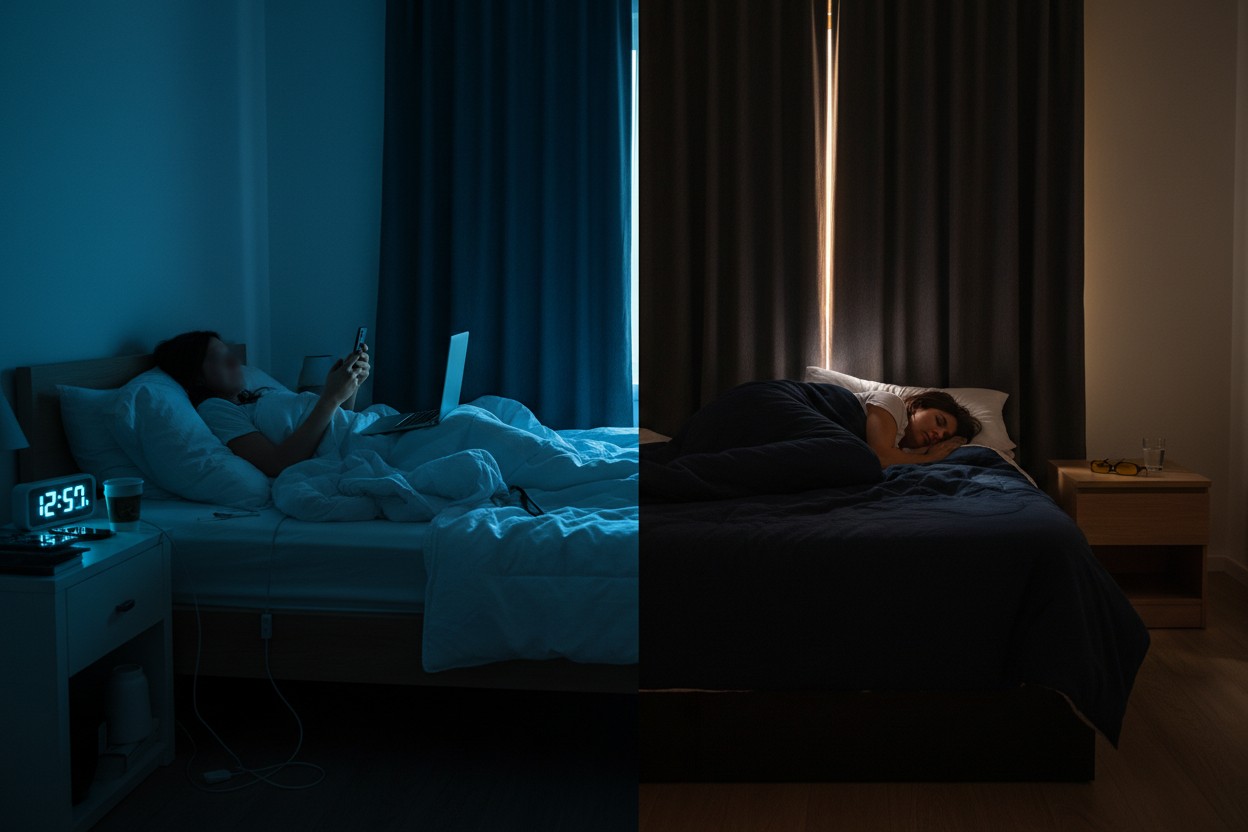
Spending time in natural sunlight or bright light during the day can help keep the circadian rhythm healthy and improve daytime energy and nighttime sleep quality and duration. A small 2022 study suggests that daytime bright light exposure can improve sleep quality and duration. Meanwhile, nighttime light exposure has the opposite effect. It reduces levels of hormones including melatonin, which helps relaxation and deep sleep. Blue light emitted in large amounts by smartphones and computers is the worst type of light to be exposed to at night. The Healthline report recommends several methods to reduce nighttime blue light exposure, including wearing glasses that block blue light and turning off the TV, other devices, and bright lights two hours before bed. Dr. Akil Palanisamy, author of The Paleovedic Diet, similarly advises keeping the room as dark as possible at night and avoiding excessive light exposure before bedtime [1]. "The blue light from computer, TV, and cell phone screens also significantly suppresses melatonin production," Palanisamy wrote, noting that such light can be filtered out by wearing amber eyeglasses [1]. Robert S. Rosenberg, author of Sleep Soundly Every Night, Feel Fantastic Every Day, describes artificial blue light pollution as "the major cause" of a false sense of time that "robs us of quality sleep and can shorten our hours of sleep" [2].Caffeine, Alcohol, and Late Eating
A single dose of caffeine can enhance focus, energy, and sports performance, but timing matters. The authors of a 2023 research review found that late caffeine consumption reduced total sleep time by 45 minutes and overall sleep efficiency by 7%. They recommend avoiding caffeinated beverages at least eight hours before bedtime and not taking caffeine supplements within 13 hours of bedtime. Alcohol also affects sleep. It is known to cause or increase symptoms of sleep apnea, snoring, and disrupted sleep patterns, and it changes nighttime melatonin production, which plays a key role in the body's circadian rhythm. The report advises avoiding alcohol too close to bedtime on most nights. Eating late at night may negatively affect sleep quality, reports suggest, so it's recommended to eat dinner at least a few hours before bed or limit intake to a small snack. The report also recommends reducing fluid intake one to two hours before bedtime and using the bathroom right before going to bed to lower the chances of waking at night.Consistent Schedule and Bedroom Environment
The body's circadian rhythm functions on a set loop, aligning itself with sunrise and sunset. A 2020 review of 41 studies found that going to bed late or having an irregular sleep pattern negatively affected sleep quality. The review recommends that people with trouble sleeping establish the habit of waking up and going to bed at similar times every day; after several weeks, an alarm may not be needed. Bed quality and the broader bedroom environment can also affect sleep. A 2021 research review found that medium-firm mattresses may be a good choice for comfort and to avoid back pain, though the report noted the best bedding is subjective. A bedroom temperature around 65 F (18.3 C) seems comfortable for most people, while preferences and habits vary. Minimizing external noise, light, and artificial lights from devices such as alarm clocks is also recommended, along with improving the home's air quality. Dr. Siim Land, author of The Longevity Leap, cited research associating circadian disruption and shift work with health risks, including cancer and metabolic syndrome [3]. Many factors in a modern bedroom work against rest. "The typical bedroom today is not conducive to restful sleep," according to a discussion among health experts hosted by Mike Adams. "Many people fall asleep with their laptops on their laps, cell phones nearby, and insufficient lighting" [4].Supplements and Medical Considerations
Melatonin is a key sleep hormone that tells the brain when it is time to relax and head to bed. Melatonin supplements may help people fall asleep faster, and research studies have examined doses of 0.1 to 10 milligrams up to two hours before bedtime. However, because the Food and Drug Administration does not classify melatonin as a drug, it does not regulate the supplement's quality or dosage. The report advises checking with a healthcare professional before trying melatonin supplements, and it notes that long-term use in children has not been well studied. Other supplements that may help relaxation include magnesium, nitrate, omega-3, resveratrol, and zinc. Consulting a healthcare professional before trying any supplement is advised to ensure it will not interfere with other supplements or medications, and suggests trying supplements one at a time. An underlying health condition may be the cause of sleep problems. A 2023 review suggests about 33.9% of men and 17.4% of women in the U.S. have sleep apnea, and a 2020 research review found that at least 10% of adults have chronic insomnia while 20% experience it occasionally. Other sleep disorders include parasomnias, restless legs syndrome, and narcolepsy. The report recommends consulting a healthcare professional, such as a sleep specialist, for persistent trouble sleeping.Conclusion
Sleep plays a key role in health, and the Healthline report states that prioritizing a good night's sleep is essential for optimizing overall health, alongside regular exercise and a nutritious diet. The report frames sleep as "one" of the most important things a person can do to optimize health, on par with physical activity and dietary choices. The report's guidance centers on identifying daily habits that may affect sleep and trying one or two small changes at a time. A growing body of evidence suggests that simple daily habits can yield meaningful benefits. A separate report published by NaturalNews.com states that morning walks support sleep and energy, adding to research on low-cost interventions for rest [5]. If sleep problems persist, talk with a primary care doctor or sleep specialist.References
- Dr. Akil Palanisamy. "The Paleovedic Diet".
- Robert S. Rosenberg. "Sleep Soundly Every Night, Feel Fantastic Every Day".
- Siim Land. "The Longevity Leap: A Guide to Slowing Down Biological Aging and Adding Healthy Years to Your Life".
- Mike Adams. "2025 09 29 BBN Interview with AGES ".
- NaturalNews.com. "Morning Walks Linked to Sleep, Energy, and Other Health Benefits, Reports Say". NaturalNews.com. September 10, 2026.
Explainer Infographic


Can vitamin D speed up muscle recovery after intense exercise? New research offers clues
By Willow Tohi // Share

Beyond Its Spiky Skin: The Surprising Nutritional Benefits of Rambutan
By Coco Somers // Share

Kitchen herb, brain shield: The science behind rosemary’s cognitive promise
By Willow Tohi // Share

Dietitians Point to Consistent Daily Eating Pattern for Lowering Inflammation
By Coco Somers // Share

The Nutrition Shift After 50: Four Nutrients That Deserve a Closer Look
By Iva Greene // Share

Analysis Links Muscle Loss to 42% Higher Dementia Risk; Obesity Association Varies by Age
By Douglas Harrington // Share

"Super Intelligence": Trump Rejects Global AI Controls at UN General Assembly
By chasecodewell // Share

Your car is turning bottled water into a plastic cocktail, studies show
By isabelle // Share

Hacker Group Claims Massive Breach of FBI Agent Data
By edisonreed // Share

Trump Says Russia Has "Lost Control" of Diesel Industry, Calls for End to Ukraine War
By garrisonvance // Share

Tech CEOs Urge Slowdown in AI Development as Stocks Plunge
By chasecodewell // Share
Health Reports Outline Strategies for Better Sleep
By cocosomers // Share